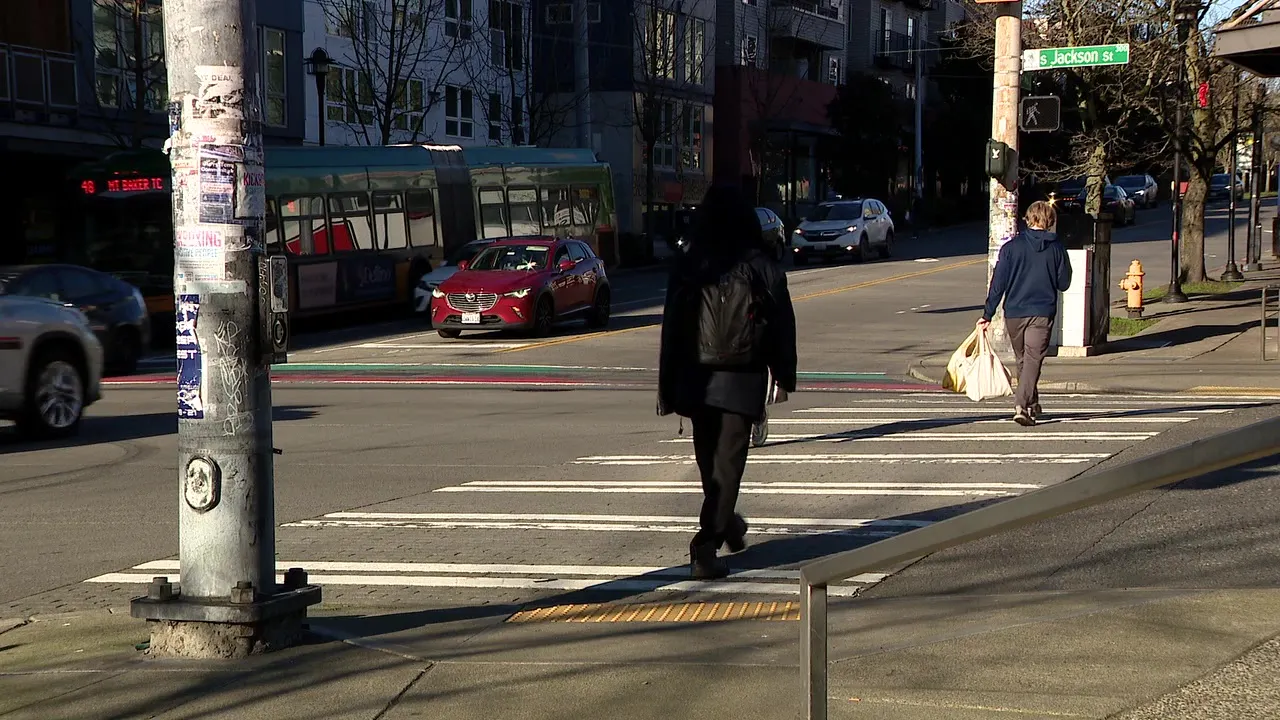
Seattle police officers arrested a 12-year-old boy after he assaulted a woman with a screwdriver and stole her handbag in the Central District. On January 17 around 6:50 p.m., patrol officers responded to a robbery near 23rd Avenue South and South Jackson Street, finding an injured 43-year-old victim. Police determined that a juvenile suspect wearing a “hot pink ski mask” had just robbed the woman at the Amazon Fresh store. According to the police report, the suspect “attacked the victim, hitting her multiple times in the face with his hands. He then brandished a screwdriver and poked at the victim in the face striking her on her left cheek.” After stealing her property, the suspect rifled through it in the parking garage, then returned to the victim and assaulted her again before running off.
When police found the suspect, he fled from them on foot. Based on his age, unique clothing description, and previous interactions with law enforcement, officers recognized the suspect and knew where he lived. Police went to his family’s house and got a search warrant for his arrest. They took the suspect into custody without incident and recovered the screwdriver. Officers booked him into juvenile detention at the Judge Patricia H. Clark Children and Family Justice Center, with robbery detectives assigned to the case.
The involvement of a 12-year-old in violent robbery with weapon represents deeply concerning case that raises questions about child welfare, family circumstances, mental health, community safety, and juvenile justice system’s capacity to address both accountability and rehabilitation needs. The fact that officers recognized the suspect based on age, clothing description, and “previous interactions with law enforcement” indicates this isn’t his first contact with police, suggesting pattern of behavior that earlier interventions apparently failed to address. Whether those previous interactions involved similar violent crimes, lower-level offenses, or simply police encounters without arrests affects assessment of escalation and missed intervention opportunities.
The violence of the attack, hitting the victim “multiple times in the face with his hands” before brandishing screwdriver and striking her left cheek, then returning after stealing property to assault her again, demonstrates aggression beyond what’s necessary to commit robbery. Whether the excessive violence reflects inability to control impulses, desire to intimidate and terrorize, lack of empathy for victim’s suffering, or other psychological factors affects both criminal culpability and appropriate intervention approach. The fact that he returned to attack victim again after already taking her property suggests either that she resisted or tried to follow, that he wanted to ensure she couldn’t pursue, or that he simply wanted to inflict more harm.
The “hot pink ski mask” represents unusual detail that aided identification but also raises questions about a 12-year-old’s choice of distinctive rather than inconspicuous disguise. Whether the bright color reflects lack of sophistication about concealing identity, limited clothing options, or simply poor decision-making by child affects interpretation of planning versus impulsive action. The fact that mask didn’t prevent identification when combined with previous police contact and known residence demonstrates that distinctive appearance sometimes works against criminals more than generic disguises would.
The Amazon Fresh store location at 23rd and Jackson in Central District represents commercial area with mix of retail, residential, and institutional uses where people shop for groceries and conduct daily activities. Whether the suspect targeted this location because he was familiar with it, because he knew it had customers with property worth stealing, or because he happened to be in the area when deciding to commit robbery affects assessment of planning versus opportunism. The parking garage setting where he rifled through stolen property provided relative privacy compared to storefront but also created containment if security or police arrived.
The screwdriver as weapon of choice represents improvised tool that could be legitimate possession for mechanical work but becomes dangerous weapon when used to threaten or strike people. Whether the 12-year-old brought screwdriver specifically intending to use it as weapon during robbery, or whether he had it for other purposes and opportunistically used it during crime, affects interpretation of premeditation. Screwdrivers can cause serious injuries including puncture wounds, eye damage, and facial trauma, making the attack on victim’s face particularly dangerous.
The victim being a 43-year-old woman shopping at grocery store represents ordinary person going about daily life who became target of violent crime. Whether she suffered lasting injuries beyond immediate trauma, whether she required medical treatment for facial injuries, and whether psychological impact affects her willingness to shop or go out in her neighborhood affects full scope of harm beyond what police report captures. Victims of violent robberies often experience PTSD, fear of public spaces, and lasting anxiety that persists long after physical injuries heal.
The police response including obtaining search warrant for arrest demonstrates attention to legal procedures even for juvenile suspect. Whether warrant was needed because suspect was inside residence when police wanted to arrest him, or whether it was precautionary measure to ensure admissibility of evidence, affects legal process. The fact that suspect was taken into custody “without incident” suggests either that he surrendered peacefully when confronted by police at home, or that family cooperated in his arrest rather than attempting to shield him.
The booking into Judge Patricia H. Clark Children and Family Justice Center, Seattle’s juvenile detention facility, represents initial custody pending court proceedings where judge will determine whether he should remain detained or be released to family with conditions. Whether a 12-year-old who committed violent robbery with weapon poses too great a risk to release, or whether family and community supervision with services could adequately manage risk while he awaits case resolution, creates difficult judicial decision balancing public safety against developmental needs of young adolescent.
The assignment of robbery detectives to the case indicates investigation continues beyond initial arrest, presumably to document evidence, interview victim and witnesses, review any surveillance video from Amazon Fresh, and build prosecution case. Whether detectives investigate suspect’s background to understand what led 12-year-old to commit violent robbery, whether social services are involved to address underlying issues, and whether family cooperation or dysfunction affects case approach determines how comprehensively system responds beyond just criminal charges.
For juvenile justice system, prosecuting 12-year-old for violent felonies creates tension between accountability for serious crime and recognition that adolescent brain development affects impulse control, judgment, and susceptibility to rehabilitation. Whether prosecution seeks detention in juvenile facility until age 21 which is maximum for juvenile offenses in Washington, or whether alternatives including intensive supervision, treatment, and family intervention are pursued, affects both immediate public safety and long-term outcomes for the youth and community.
The question of why 12-year-old is committing violent robberies rather than being in school, supervised by family, and engaged in age-appropriate activities reflects broader failures of family, community, schools, or systems that should provide structure and support for children. Whether he has parents or guardians providing adequate supervision, whether he’s in school regularly, whether he has diagnosed mental health or behavioral issues, whether substance abuse is involved, and whether he’s affiliated with older youth or adults who influence criminal behavior affects intervention approach.
For the Central District neighborhood, having 12-year-old committing violent robberies creates both immediate safety concerns and questions about what conditions produce such young offenders. Whether this represents isolated incident or pattern of youth crime in the area, whether other young people are similarly at risk of criminal behavior, and whether community resources exist to intervene with at-risk youth affects neighborhood response and demands on city services.
The fact that police knew where suspect lived based on previous encounters suggests he’s not transient or experiencing homelessness, but rather has stable enough residence for police to locate family home. Whether that residence provides supportive environment or whether family dysfunction contributes to his criminal behavior affects assessment of whether he can be safely supervised at home or needs placement outside family. The search warrant process presumably involved explaining to family why police were there and arresting their 12-year-old son, creating family crisis regardless of underlying circumstances.
The recovery of the screwdriver provides physical evidence linking suspect to attack, potentially with victim’s DNA or other forensic evidence if it struck her and drew blood. Whether prosecutors need that physical evidence to prove case or whether victim identification and witness statements provide sufficient proof affects importance of evidence recovery. For defense, arguing that screwdriver wasn’t weapon but tool being carried for legitimate purposes becomes difficult when it was used to strike victim in face.
For Amazon Fresh store and its customers, having violent robbery occur at their location creates safety concerns and potential liability questions if inadequate security or lighting contributed to victim’s vulnerability. Whether Amazon implements additional security measures, whether other customers witnessed attack and can provide statements, and whether store surveillance captured incident on video affects both investigation and civil liability considerations if victim sues over inadequate security.
The 12-year-old’s flight from police when initially encountered demonstrates consciousness of guilt but also raises questions about pursuit of child suspect. Whether officers chased him on foot through neighborhood, how that chase resolved, and whether he returned home where police later found him with warrant affects timeline and tactics. Police pursuing fleeing juveniles must balance apprehension against risks of dangerous pursuits, particularly with young children who might not understand consequences of their actions.
For Seattle’s approach to juvenile crime, this case represents test of whether system can effectively address violent offending by very young adolescents in ways that protect public while providing rehabilitation opportunities that might prevent adult criminal career. Whether Washington’s juvenile justice system, which has evolved toward more therapeutic and less punitive approaches, has tools to address 12-year-old committing adult-level violent crimes affects both this case and policy debates about juvenile justice reform.
The case of 12-year-old arrested after attacking woman with screwdriver and stealing her handbag, then returning to assault her again before fleeing, represents disturbing example of child engaged in violent criminal behavior that injured innocent victim and created public safety threat. Whether juvenile justice system can hold him accountable while addressing underlying causes of his behavior, whether family can provide support or represents part of problem, and whether community has resources to intervene with at-risk youth before they commit such serious crimes, determines both immediate case resolution and longer-term prevention of similar incidents where children commit violent offenses that harm victims and derail young offenders’ own developmental trajectories toward productive adulthood.