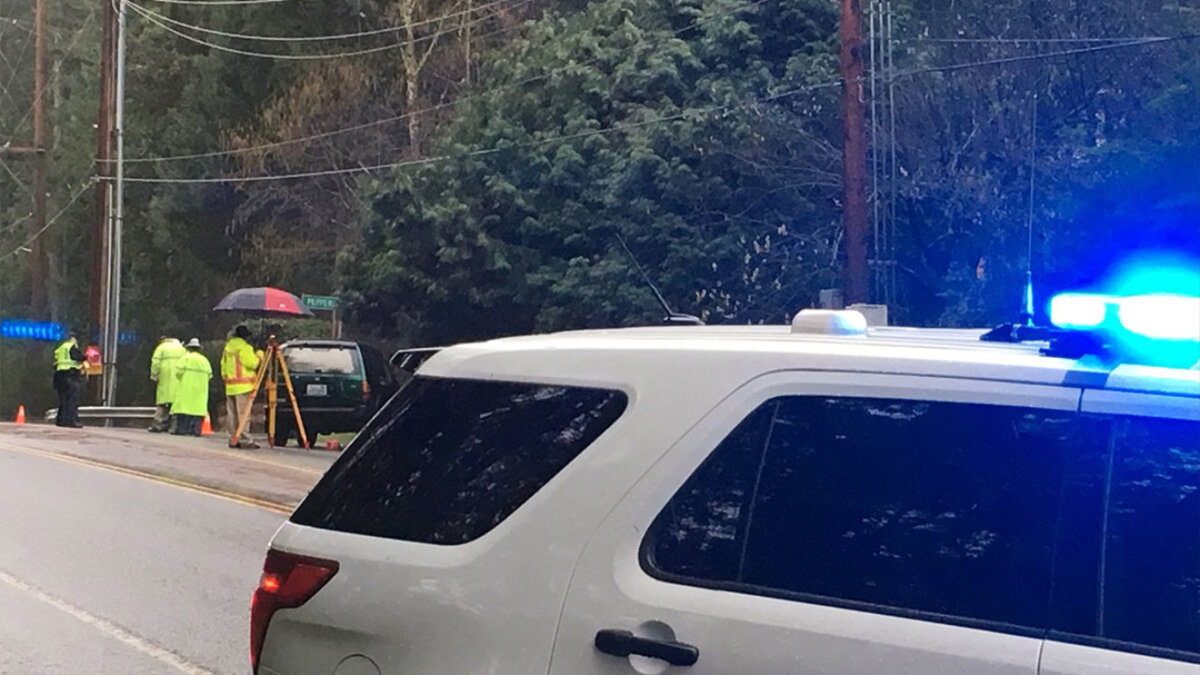
An 80-year-old woman sustained injuries Monday when a driver struck her and left the scene in Port Orchard, with authorities later arresting the suspect after he failed a field sobriety test.
A Kitsap County Sheriff’s Office report details the incident that occurred on Sunnyslope Road. The elderly victim was walking along the road when a driver hit her, causing her to land in a nearby ditch, according to KCSO.
Eyewitnesses at the scene told investigators that the driver of a blue sedan stopped briefly after the collision and then turned around to head south on Sunnyslope Road Southwest, fleeing the scene.
The driver left but eventually returned to the crash site. Police were present when he came back and administered a field sobriety test that he failed, authorities said.
KCSO reported his breathalyzer test registered twice the legal limit of 0.08. The suspect claimed he thought he had hit an animal, according to investigators, despite striking a pedestrian and leaving her injured in a ditch.
The elderly woman was walking near her home at the time of the crash. She was transported to a hospital in Tacoma on December 15 for treatment of her injuries.
The suspect was booked into jail on suspicion of vehicular assault.
The Sunnyslope Road location is a residential area where pedestrians frequently walk along roadways that lack sidewalks in many sections. The rural character of the area means drivers and pedestrians often share road space.
The 80-year-old victim’s age makes her particularly vulnerable to serious injuries from vehicle collisions. Elderly pedestrians face higher risks of fractures, head trauma, and other complications when struck by vehicles compared to younger individuals.
The ditch where the victim landed likely provided some cushioning compared to pavement, though it also created challenges for rescue personnel attempting to provide immediate medical care and extract her safely.
The eyewitness accounts proved crucial to the investigation. People who saw the collision and the driver’s subsequent actions provided information that helped authorities identify and apprehend the suspect when he returned.
The driver’s decision to stop and turn around suggests he was aware he had struck something. His subsequent flight from the scene indicates consciousness of the incident regardless of his later claim about thinking he hit an animal.
The return to the scene is unusual behavior for hit-and-run drivers. Most flee and never come back. His decision to return could indicate remorse, confusion, or an attempt to assess the situation he had created.
Police presence when the driver returned allowed immediate testing rather than a delayed investigation requiring officers to locate the suspect hours or days later. This timing preserved evidence of intoxication that dissipates over time.
The failed field sobriety test combined with the breathalyzer reading twice the legal limit establishes strong evidence of impaired driving. At 0.16 blood alcohol content or higher, drivers experience significantly reduced judgment, coordination, and reaction time.
The claim about thinking he hit an animal strains credulity given the impact severe enough to throw a person into a ditch. The size, sound, and visible aftermath of striking a human pedestrian differs substantially from hitting wildlife.
Vehicular assault charges apply when someone causes substantial bodily harm to another person while driving under the influence or with disregard for the safety of others. The charge is a felony in Washington carrying potential prison time.
The December 15 hospital transport to Tacoma indicates the victim’s injuries required treatment at a major medical facility rather than a local urgent care or community hospital. Tacoma hospitals serve as regional trauma centers for serious injury cases.