The county indicates a name and address are required for the civil penalty process, and therefore “has not been able to use fines to deter unpermitted mobile food vendors.”
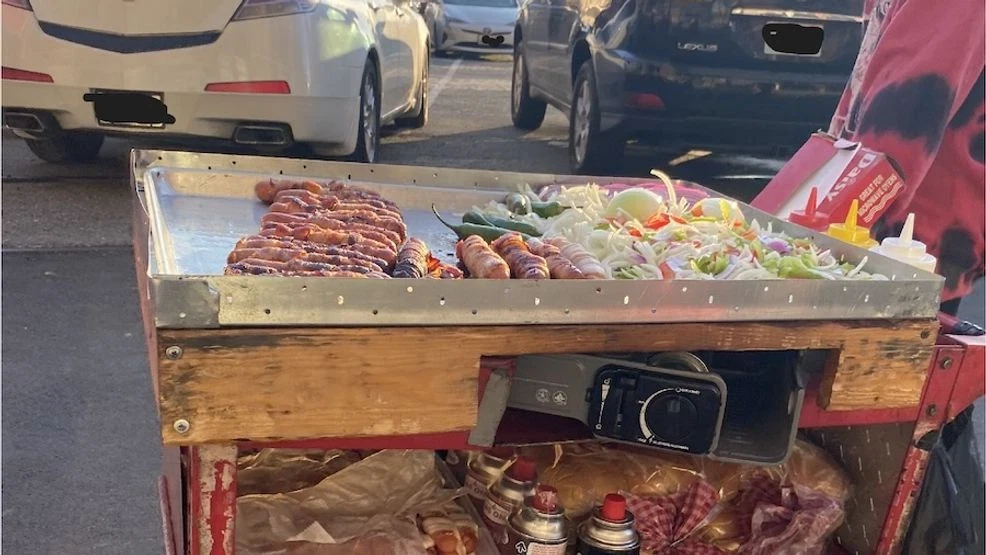
Unlicensed hot dog, taco and fruit stand vendors are proliferating outside western Washington’s largest events, from concerts to Seahawks games, and licensed vendors express frustration as a legal loophole enables operations without penalty.
In King County, despite a decades-old ordinance (6.01.140) authorizing $250 fines for selling food without permits, health officials acknowledge they haven’t issued a single citation.
“We don’t typically have a business owner name associated with the vendors and, by nature of the mobile setup, lack the property address required for the civil penalty process,” stated Kate Cole, spokesperson for King County and Seattle Public Health Office. “It’s really intended for fixed, brick-and-mortar establishments.”
Rule-abiding eatery owners indicated they believe the surge of unpermitted mobile food carts stems from enforcement gaps.
“If you’re not going to cite them, yeah, they’ll go home, whatever, they’ll come right back, and they do it every time,” stated Joshua Trujillo, who works at Korn Star, a licensed kettle corn stand near Lumen Field.
Meanwhile, licensed vendors like Sergio Garcia, who owns 12 Mex Kitchen taco truck, indicate they’re paying the price literally.
“All this is my license and everything. That’s a big book,” Garcia stated, displaying his permit stack.
He indicated he pays more than $50,000 annually to follow the law, including permit fees, taxes and insurance. He added that he believes it isn’t fair that these are costs unlicensed vendors can easily avoid.
“These guys, meanwhile, pay nothing, no pay. Nothing. It’s frustration for everybody here, especially for all the vendors right here at the games,” he stated.
Garcia reported observing up to 75 carts without licenses outside a concert several weeks ago.
“The little ones for the hot dogs,” Garcia stated.
His neighbors at the kettle corn stand echoed his frustration.
“We started out with like three or four that were doing hot dogs. Pretty soon we got to where they were taking up the whole entire block,” stated Trujillo.
In response, the city has posted warning signs near Lumen Field reminding the public that selling food without a license is illegal. Garcia is taking additional action, creating his own A-frame signs to warn the public about potential health risks from unregulated food. He indicates he plans to post “a hundred of them” along the pathway to the stadium.
State regulators are now reviewing Washington’s food safety laws. A Department of Health supervisor indicated Monday they are “evaluating whether updates to the state food code may be needed.”
For now, the hot dog carts continue operating and legal vendors indicate they’re still waiting for the rules to catch up.
If you see a food vendor who doesn’t appear to be following county health protocols, you can notify officials on King County’s website.
The civil penalty address requirement creating unintended enforcement loophole, with the administrative procedure designed for traditional restaurants backfiring when applied to mobile vendors who lack fixed locations enabling citation delivery and legal proceedings that depend on mailing addresses where defendants can receive notices and respond to charges.
The business owner name unavailability compounding enforcement challenges, with anonymous cash-based operations where vendors provide no identification to customers or inspectors preventing health officials from identifying responsible parties to name in citations even when violations are observed and documented through photographs or inspector testimony.
The mobile setup nature defeating brick-and-mortar regulatory framework, with food safety rules crafted when restaurants operated from permanent addresses creating system breakdown when confronting ephemeral vendors who appear at events, sell for several hours, then vanish without trace leaving no paper trail enabling follow-up enforcement actions.
Kate Cole’s candid admission that no citations have been issued revealing complete enforcement failure, with the Public Health Office spokesperson’s transparency about the system’s ineffectiveness demonstrating either commendable honesty about bureaucratic limitations or embarrassing acknowledgment of regulatory impotence that emboldens unlicensed vendors recognizing they face zero consequences.
The decades-old ordinance 6.01.140 providing legal authority without practical enforcement mechanism, with the $250 fine provision existing on paper since the regulation’s passage yet never being implemented demonstrating how laws without viable enforcement procedures become meaningless regardless of legislators’ original intent.
The rule-abiding vendor frustration reflecting legitimate grievance about competitive disadvantage, with licensed operators following all regulations while bearing substantial costs watching unlicensed competitors operate freely without similar financial burdens creating market distortion where rule-followers are penalized and rule-breakers rewarded.
Joshua Trujillo’s observation that vendors “come right back” after being told to leave highlighting futility, with the Korn Star kettle corn operator’s experience demonstrating that verbal warnings without financial or legal consequences provide no deterrent when vendors can simply relocate temporarily then return the next event knowing enforcement consists only of requests to leave.
The Lumen Field proximity concentrating unlicensed vending, with the stadium’s massive crowds for Seahawks games and concerts creating lucrative opportunities where vendors can generate substantial daily revenue far exceeding any potential fines if the $250 penalties were actually enforced making the risk-reward calculation heavily favor illegal operations.
Sergio Garcia’s $50,000 annual compliance cost quantifying the licensed vendor burden, with the 12 Mex Kitchen taco truck owner’s substantial expenditure on permits, taxes, and insurance demonstrating the financial penalty that legal operation imposes compared to unlicensed competitors who avoid these expenses while accessing the same customer base.
The “big book” of permits providing visual representation, with Garcia’s thick stack of documentation symbolizing the bureaucratic complexity and financial investment that legal food vending requires in stark contrast to unlicensed operators who need only a cart and product to begin selling without any regulatory compliance.
The fairness objection articulating moral dimension beyond economics, with Garcia’s complaint that unlicensed vendors face no costs while he pays tens of thousands annually raising questions about justice and equal treatment where government rewards rule-breakers through non-enforcement while punishing rule-followers through aggressive regulation.
The 75 unlicensed carts estimate at a single concert demonstrating scale, with Garcia’s observation of dozens of illegal vendors at one event indicating the phenomenon extends far beyond isolated individuals to represent systematic wholesale abandonment of permit requirements that health officials either cannot or will not address.
The “little ones for the hot dogs” description characterizing typical unlicensed operations, with the reference to small simple carts suggesting that unpermitted vendors typically operate basic setups requiring minimal investment enabling rapid deployment and easy escape when enforcement attempts occur.
The kettle corn stand’s escalating competition from three-four to entire block documenting proliferation, with Trujillo’s account of exponential growth in unlicensed hot dog vendors demonstrating how initial tolerance of a few illegal operators creates precedent attracting additional vendors who recognize the enforcement vacuum enabling their operations.
The city’s warning signs representing ineffective half-measure, with the posted notices near Lumen Field attempting to discourage illegal vending through public awareness rather than actual enforcement demonstrating that when government lacks tools to directly penalize violators it resorts to hoping consumers will voluntarily avoid illegal vendors.
Garcia’s self-help A-frame signs escalating beyond official warnings, with the licensed vendor’s plan to post “a hundred” signs along stadium pathways highlighting his desperation and frustration where private business owner assumes responsibility for public health messaging that government should be providing.
The health risk warnings focusing on consumer protection angle, with Garcia’s signs attempting to educate customers about dangers of unregulated food preparation where unlicensed vendors may not follow proper temperature controls, handwashing, or ingredient sourcing that permitted operations must demonstrate through inspections.
The state-level food code review suggesting potential legislative solution, with Department of Health’s evaluation of whether updates are needed indicating recognition that current regulations were not designed for mobile vendor enforcement requiring either new statutory authority or modified procedures enabling citations without fixed addresses.
The “rules to catch up” characterization framing this as regulatory lag, with licensed vendors’ complaint positioning the problem as outdated laws failing to address modern mobile vending reality rather than acknowledging that enforcement challenges may resist simple legislative fixes if jurisdictional and practical obstacles remain.
The King County website reporting mechanism providing citizen enforcement supplement, with the online complaint system enabling customers and competitors to document suspected violations that health inspectors might not witness requiring follow-up investigations though the underlying address requirement problem likely prevents meaningful consequences even when violations are confirmed.
The broader implications for regulatory effectiveness raising questions about government capacity, with the unlicensed vending problem demonstrating how determined actors can exploit administrative procedure requirements designed to protect due process rights but that inadvertently shield violators from consequences when they operate outside traditional business structures.