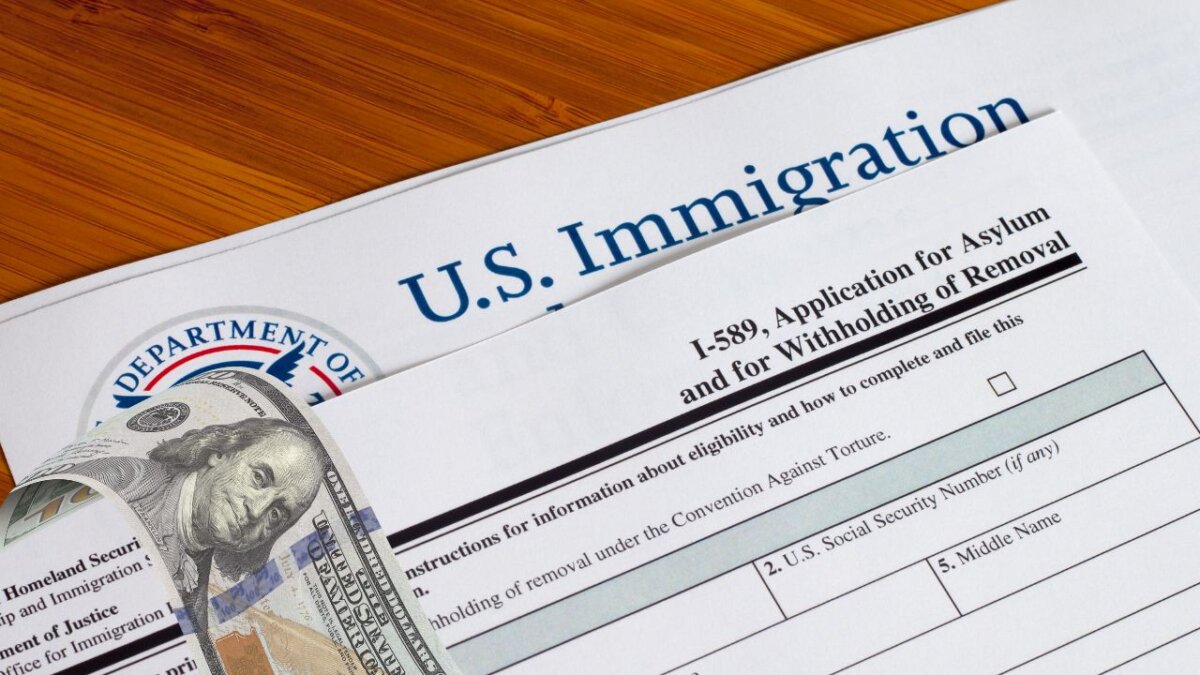
For the first time ever, asylum seekers and other people applying for humanitarian relief in the U.S. must pay application fees.
Asylum seekers specifically have begun receiving notices from the U.S. Citizenship and Immigration Services department, informing them they owe $100 for each application being processed by the federal government.
As an immigration attorney, Leslie Irizarry-Hougan is tracking these payment notices arriving for her clients who are asylum seekers.
The Trump administration’s “Big Beautiful Bill” is responsible for the changes.
“It’s not just one person of the family, so if you’re talking about a mother and father and several children each person has to pay the $100 fee,” Irizarry-Hougan explained. “They have to pay it when they’re advised of it within 30 days.”
In a Department of Homeland Security notice from July, the rules are explicit: “US citizenship and immigration services will reject or deny any immigration benefit requests that are submitted without all of the fees required.”
Originally, the federal government required this fee annually as long as the application remained pending. A federal judge has temporarily blocked that order.
For asylum seekers, especially those who have waited decades to have their cases heard, the stakes are substantial.
Latest data shows that in Washington state, the average wait time for asylum applicants is 3.8 years.
“All that you have worked for and waited for to present your case, why you’re fearful, why you should be allowed to stay in the US is gone,” Irizarry-Hougan said.
Federal officials stated the new charge is intended to help cover the cost of handling asylum cases. Irizarry-Hougan described the rollout as confusing.
Despite the fee not applying retroactively, she has received notices for clients who applied for asylum years ago.
“This one is dated 10-18-2025, and the receipt date which is 7-8-2019,” Irizarry-Hougan said whilst holding up a notice. “My client filed their asylum in 2019.”
She is advising people to pay to avoid all risks.
“I think it’s indicative of this administration of you’re not welcome in this country,” Irizarry-Hougan stated. “‘Let’s make this as complicated and confusing as possible,’ because in doing so, there are fewer people who will be able to navigate the system and win, or actually attend interviews.”
The fee changes extend beyond asylum applications. Asylum seekers typically can apply for a work permit whilst awaiting their case. Applying for the work permit used to be free as well. Now it costs $550.
People seeking relief through Temporary Protected Status, which is a humanitarian relief channel the U.S. offers to people from countries devastated by war or natural disasters, must now pay $530 instead of the original $80.
DHS has stated in its notice there will be no waivers available for any of the fees.
The new fee structure represents a fundamental shift in how the United States handles asylum applications. Historically, the absence of application fees reflected recognition that asylum seekers often flee their countries with minimal financial resources, arriving in the United States with little capacity to pay administrative costs.
The $100 per-person charge creates significant financial barriers for families, as the attorney noted. A family of five would face $500 in application fees alone, before considering the additional costs for work permits or other immigration benefits they might need whilst awaiting case resolution.
The 30-day payment deadline creates urgency that may prove challenging for applicants who are newly arrived, unfamiliar with the U.S. financial system, or struggling to establish economic stability. Missing the deadline could result in application rejection, potentially jeopardising years of waiting and preparation.
The temporary judicial block on annual fee requirements prevented an even more onerous financial burden. Had that provision remained in effect, asylum seekers with cases pending for multiple years could have faced hundreds or thousands of dollars in cumulative fees whilst waiting for case resolution.
Washington state’s 3.8-year average wait time for asylum cases illustrates the extended limbo many applicants experience. During this period, individuals cannot definitively plan their futures, face restrictions on employment and benefits, and live with uncertainty about whether they can remain in the country.
The confusion surrounding retroactive application of fees, evidenced by notices sent to clients who filed applications years before the fee requirement existed, suggests implementation challenges within the immigration bureaucracy. Such errors create additional stress for applicants who must determine whether they truly owe fees for applications submitted when no such requirement existed.
Irizarry-Hougan’s recommendation that clients pay despite apparent errors reflects pragmatic legal counsel. Given the consequences of application rejection, paying potentially unnecessary fees may constitute the safer approach compared to challenging notices and risking case dismissal.
The attorney’s characterisation of the policy as deliberately complicated and unwelcoming reflects broader debates about immigration policy intent. Critics argue that administrative barriers serve as de facto restrictions on asylum access, whilst supporters contend that fees represent reasonable cost-sharing for government services.
The $550 work permit fee represents an even larger financial hurdle. Work authorisation enables asylum seekers to support themselves whilst cases proceed, reducing reliance on social services and allowing economic contribution. The substantial fee may prevent some applicants from obtaining legal employment, potentially pushing them toward informal economy participation or extended dependence on community support.
The Temporary Protected Status fee increase from $80 to $530 represents a more than six-fold jump. TPS provides temporary refuge for nationals of countries experiencing armed conflict, environmental disasters, or other extraordinary conditions preventing safe return. Recipients often fled sudden crises with minimal preparation, making the elevated fee particularly burdensome.
The Department of Homeland Security’s stated justification that fees help cover processing costs reflects broader government funding debates. Immigration services traditionally relied on fee revenue rather than congressional appropriations, creating pressure to set fees at levels covering operational expenses.
The explicit prohibition on fee waivers eliminates safety valves previously available for applicants demonstrating genuine inability to pay. This categorical approach prevents individualised assessment of financial circumstances, potentially barring legitimate asylum seekers who cannot access required funds.
Immigration advocacy organisations have criticised the fee structure as violating international obligations and humanitarian principles. The 1951 Refugee Convention and its 1967 Protocol, to which the United States is party, establish protections for asylum seekers that some argue are undermined by financial barriers to application.
The policy’s practical impact extends beyond individual applicants to legal service providers, community organisations, and social service agencies that may face increased demand for financial assistance. Non-profit immigration legal services already struggle with resource constraints, and fee requirements add another dimension to their support responsibilities.