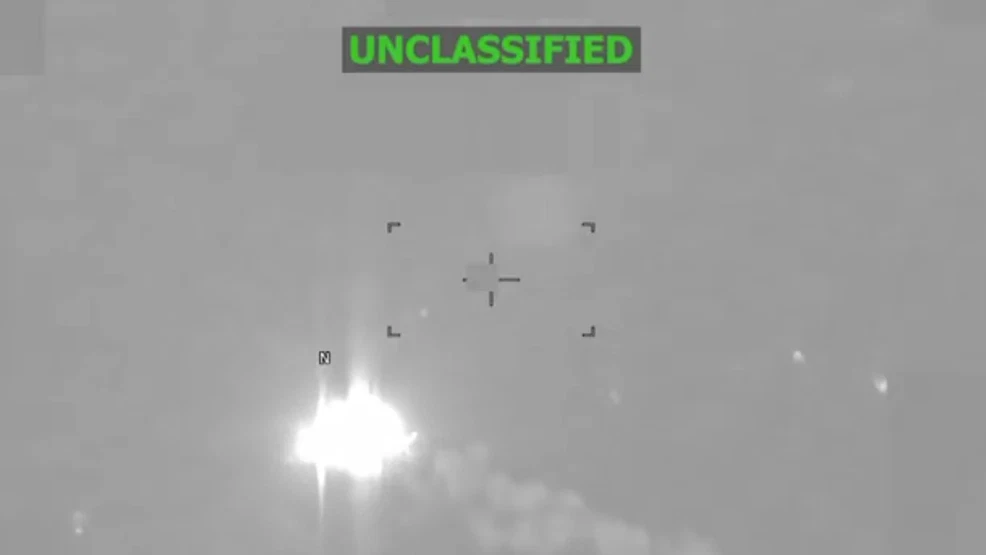
Secretary of Defense Pete Hegseth announced another military strike on Thursday targeting alleged narcoterrorists in the Caribbean, resulting in three deaths.
“To all narco-terrorists who threaten our homeland: if you want to stay alive, stop trafficking drugs. If you keep trafficking deadly drugs, we will kill you,” Hegseth wrote on social media.
No U.S. forces were harmed in the operation.
At least 70 individuals have been killed in the Trump administration’s military campaign in the Eastern Pacific and the Caribbean.
As the strikes continue, tensions escalate between President Donald Trump and Venezuelan President Nicolas Maduro. The U.S. has accused Maduro of involvement in drug smuggling operations.
“Every one of those boats is responsible for the death of 25,000 American people,” Trump stated earlier this month.
Although limited details were shared, Trump confirmed last month that he has authorised the CIA to carry out covert operations in Venezuela. The campaign has fuelled speculation that the Trump administration plans to remove the Maduro government.
The 17th strike represents an escalation in what has become a sustained military campaign against drug trafficking networks operating in Caribbean and Eastern Pacific waters. The operations reflect a shift toward more aggressive military intervention in counter-narcotics efforts compared to previous administrations’ approaches.
Hegseth’s direct warning to drug traffickers signals the administration’s willingness to use lethal force as a deterrent strategy. The explicit threat that continued trafficking will result in death represents unusually blunt messaging from a senior defence official.
The absence of U.S. casualties in the latest operation continues a pattern from previous strikes, suggesting either weak defensive capabilities among targeted groups or effective intelligence and operational planning by American forces.
The cumulative death toll of at least 70 individuals across 17 strikes averages approximately four deaths per operation. This figure indicates relatively precise targeting rather than large-scale bombardments, though questions remain about verification of targets’ involvement in drug trafficking.
The geographic focus on the Eastern Pacific and Caribbean reflects these regions’ significance as transit routes for cocaine and other drugs moving from South American production areas toward U.S. markets. Interdicting shipments in international waters allows military action without violating sovereign territory.
The escalating tensions with Venezuela represent a particularly volatile dimension of the campaign. Venezuela’s geographic position makes it a crucial transit point and alleged haven for trafficking organisations, whilst its strained relationship with the United States creates diplomatic complications.
The Trump administration’s accusations that Maduro personally participates in drug smuggling operations represent serious charges against a sitting head of state. Such allegations, if substantiated, would provide justification for more aggressive actions against Venezuelan government interests.
Trump’s claim that targeted vessels are “responsible for the death of 25,000 American people” attempts to establish a direct causal link between interdicted drug shipments and overdose deaths in the United States. The figure appears designed to justify lethal military force by framing drug trafficking as an act of war killing Americans.
The confirmation of CIA covert operations in Venezuela represents an extraordinary public acknowledgment of activities typically conducted without official disclosure. The unusual transparency suggests either a deliberate signalling strategy or acceptance that the operations’ scope makes secrecy impossible to maintain.
Speculation about regime change intentions reflects historical precedent of CIA involvement in Latin American governments and the Trump administration’s stated hostility toward Maduro. However, covert operations can serve multiple objectives including intelligence gathering, disrupting trafficking networks, or supporting opposition groups without necessarily pursuing full governmental overthrow.
The legal framework authorising these military strikes remains unclear from public reporting. Traditional counter-narcotics operations conducted by military forces typically require specific statutory authorisation and operate under constraints regarding use of force against civilians not engaged in hostilities.
The characterisation of traffickers as “narcoterrorists” may represent an attempt to invoke authorities related to counterterrorism operations, which generally permit more aggressive military action than counter-narcotics laws allow. This linguistic framing has significant legal and operational implications.
International law questions surround strikes conducted in international waters or potentially in other nations’ territorial waters without explicit permission. Whilst self-defence principles might justify interdicting threats to U.S. security, the extent to which drug trafficking meets that threshold remains debated.
Regional allies’ responses to the campaign will influence its sustainability and effectiveness. Countries in the Caribbean and Central America face their own security challenges from trafficking organisations but may have concerns about U.S. military operations in their vicinity without coordination.
The deterrent effect of the strikes on trafficking operations remains uncertain. Whilst some organisations might alter routes or methods in response to increased military pressure, the enormous profits in drug trafficking typically ensure that networks adapt rather than cease operations entirely.
Critics of militarised counter-narcotics approaches argue that supply-side interdiction has historically proven ineffective at reducing drug availability or prices in consumer markets. They contend that demand reduction and treatment programmes represent more effective long-term strategies.
The humanitarian implications of lethal strikes against alleged traffickers without apparent judicial process raise human rights concerns. Verification of targets’ actual involvement in trafficking, potential for mistaken identity, and absence of due process protections create accountability challenges.
The 17-strike tally suggests a sustained campaign rather than isolated incidents, indicating the administration has committed to ongoing military operations as a central component of drug policy. The trajectory suggests additional strikes will continue absent significant policy changes or unforeseen complications.