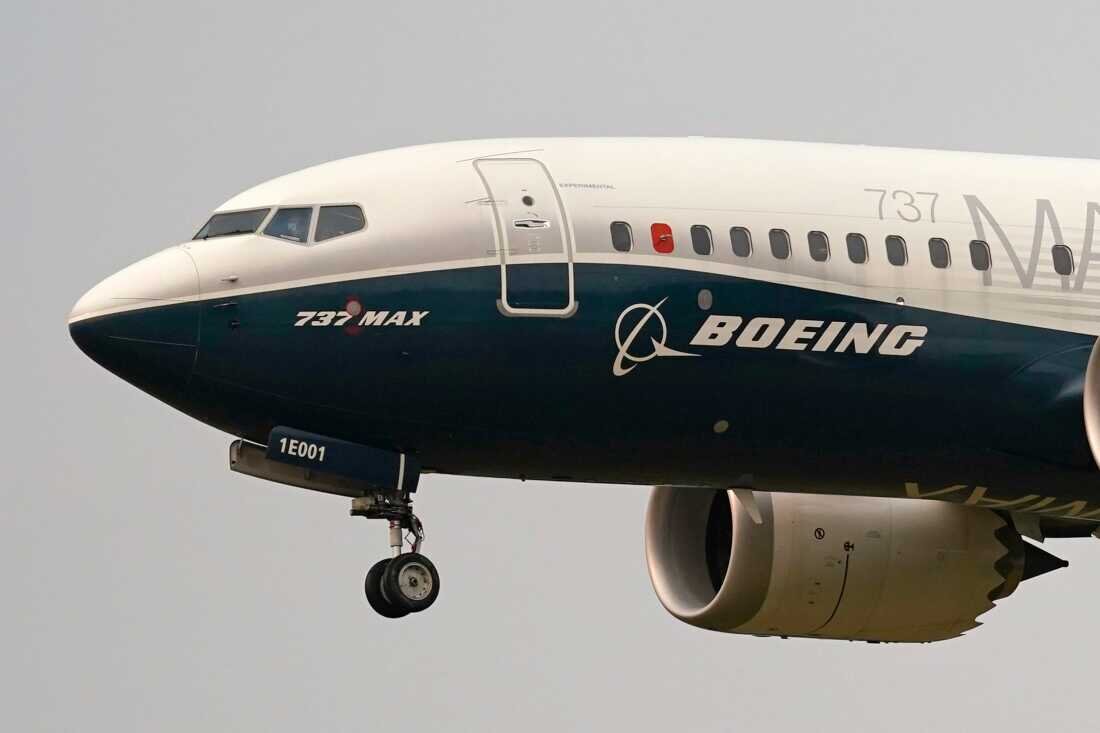
A federal judge in Texas has terminated criminal proceedings against Boeing connected to two catastrophic 737 Max crashes that claimed 346 lives, approving a government-negotiated settlement despite expressing reservations about its adequacy.
Boeing will avoid prosecution on criminal conspiracy charges related to the dual jetliner disasters after U.S. District Judge Reed O’Connor granted the Justice Department’s dismissal request on Thursday. The decision concludes a contentious legal battle that divided victims’ families and raised fundamental questions about corporate accountability in aviation safety failures.
The settlement requires Boeing to pay or invest an additional $1.1 billion encompassing fines, victim family compensation, and internal safety programme enhancements. Controversially, the agreement permits Boeing to select its own compliance consultant rather than submitting to an independent monitor, a provision that drew sharp criticism from families seeking stronger oversight.
Federal prosecutors had alleged Boeing systematically deceived government regulators about a flight-control system subsequently identified as the primary factor in both fatal accidents. The ruling arrived after an emotionally charged September hearing in Fort Worth where relatives of crash victims implored Judge O’Connor to reject the settlement and instead appoint a special prosecutor to pursue the case more aggressively.
In his Thursday order, O’Connor acknowledged the settlement “fails to secure the necessary accountability to ensure the safety of the flying public,” language that captured the tension between his personal assessment and his legal authority to intervene.
The judge explained that courts cannot block prosecutorial dismissals simply because they disagree with the government’s determination that a settlement serves public interests. The Justice Department has argued that proceeding to jury trial risks an acquittal that would permanently foreclose any criminal accountability for Boeing.
O’Connor further determined the government had not acted in bad faith, had adequately explained their reasoning, and had satisfied obligations under the Crime Victims’ Rights Act, which mandates victim consultation in major criminal cases.
The twin disasters unfolded less than five months apart during 2018 and 2019. A Lion Air flight plunged into the Java Sea off Indonesia’s coast in October 2018, followed by an Ethiopian Airlines flight that crashed into a field minutes after departing Addis Ababa in March 2019. All passengers and crew aboard both aircraft perished, totalling 346 deaths.
Several victims’ families have announced plans to appeal O’Connor’s decision, viewing it as a miscarriage of justice that prioritises corporate interests over accountability.
“When a company’s failures cost so many lives, ending a criminal case behind closed doors erodes trust and weakens deterrence for every passenger who steps onto a plane,” stated Paul Njoroge, a Canadian man who lost his wife and three young children in the Ethiopian Airlines disaster. His comments, released through the families’ legal representatives, articulated frustrations shared by many bereaved relatives.
The case has followed a tortuous path since the Justice Department initially charged Boeing in 2021 with defrauding the government whilst simultaneously offering a deferred prosecution agreement. Under that arrangement, Boeing would avoid trial if it paid financial penalties and implemented anti-fraud compliance measures.
Federal prosecutors declared last year that Boeing had breached the agreement’s terms, prompting Boeing to agree to plead guilty to the conspiracy charge. Judge O’Connor rejected that proposed guilty plea, forcing prosecutors to renegotiate terms.
Boeing issued a statement following Thursday’s ruling pledging to honour the agreement and continue “the significant efforts we have made as a company to strengthen our safety, quality, and compliance programmes.”
The Justice Department characterized the resolution as “the most just outcome” achievable under the circumstances. Prosecutors noted that families of 110 crash victims either actively supported concluding the case before trial or declined to oppose the settlement terms.
However, nearly 100 families have vigorously contested the agreement. More than a dozen relatives travelled to the 3 September Texas hearing from locations including Europe and Africa to voice their objections directly to the judge.
“Do not allow Boeing to buy its freedom,” implored Catherine Berthet, who journeyed from France to attend. Her daughter, Camille Geoffroy, died in the Ethiopian Airlines crash.
Separate from the criminal proceedings, the first civil trial concerning the Ethiopian crash commenced Wednesday in federal court in Chicago. The jury must determine compensatory damages Boeing owes the family of Shikha Garg, a United Nations consultant travelling to a U.N. environmental assembly in Kenya when the aircraft went down.
The criminal case focused on a software system Boeing engineered for the 737 Max, which airlines began operating in 2017. Boeing developed the aircraft as its competitive response to a new, fuel-efficient model from European rival Airbus. The company marketed the Max as an updated 737 requiring minimal additional pilot training, a selling point crucial for airlines seeking to avoid expensive retraining programmes.
The Max incorporated significant modifications, several of which Boeing minimised in communications with regulators and customers. Most consequentially, engineers added an automated flight-control system called MCAS designed to compensate for handling characteristics created by the aircraft’s repositioned, larger engines. Boeing omitted mention of this system from aeroplane operating manuals, leaving most pilots unaware of its existence.
In both fatal crashes, the MCAS software commanded the aircraft’s nose downward repeatedly based on erroneous readings from a single angle-of-attack sensor. Pilots operating the Lion Air and Ethiopian Airlines flights struggled unsuccessfully to override the system and regain control before impact. Following the Ethiopian disaster, aviation authorities worldwide grounded the 737 Max fleet for 20 months whilst Boeing redesigned the system and pilots underwent supplementary training.
Investigators subsequently determined that Boeing had withheld information from key Federal Aviation Administration personnel about modifications made to the MCAS software before regulators established pilot training requirements and certified the Max for commercial service. This concealment prevented regulators from accurately assessing the system’s potential hazards and requiring appropriate safeguards.