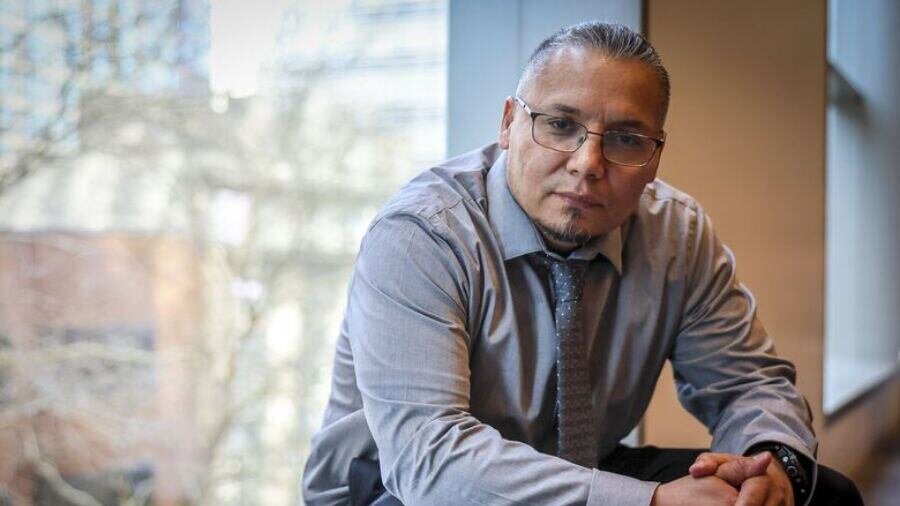
A man who spent 27 years imprisoned for a murder he did not commit is on the path to winning a seat on the Sunnyside School Board, transforming personal tragedy into public service aimed at helping the next generation avoid the injustices he experienced.
Evaristo Salas Jr. was convicted of killing 24-year-old Jose Arreola in 1995. He was 16 years old when he began what would become a 27-year sentence for a crime he did not commit.
Following his exoneration and release from prison in 2023, Salas has dedicated himself to supporting Sunnyside’s young population. He mentored at-risk students at Grandview School District whilst studying social work and criminal justice at Columbia Basin College.
Now, following the November general election, Salas holds a commanding lead for a seat on the Sunnyside School Board.
Salas received 245 votes (61.7%) compared to Laura Galvan earning 150 votes (37.8%).
“I’m surprised and happy about it,” Salas stated. “I put in a lot of work.”
In the August primary, Salas led Galvan by just one vote, 104 to 103, respectively. Washington uses a top-two primary system in local elections, meaning the two candidates who received the most votes in the primary advance to the general election in November.
Salas stated that every student, regardless of background, should have access to high-quality education that prepares them for adulthood.
“I’d track progress through graduation rates, equitable access to advanced coursework, culturally responsive curriculum, and student, family, and teacher feedback,” Salas explained. “Success isn’t just numbers. It’s whether our students feel seen, supported, and empowered.”
He defined the role of a school board member as a steward of public trust and a champion for students, holding the system accountable whilst serving as a bridge between families, educators, and administrators.
Both candidates stated they supported using bond measures and levies to address the school’s financial needs.
Arreola was sitting in the passenger seat of a parked truck when he was shot twice in the head through a window in 1995.
Salas was 14 years old when Arreola was killed, and 15 when he was criminally charged. His conviction came after Ofelia Cortez, an eyewitness, identified Salas in a photo lineup after 14 identification procedures. A police informant additionally claimed to have overheard Salas bragging about murdering Arreola in his neighbourhood to other children.
He was convicted and sentenced two days after his sixteenth birthday to 33 years in prison, serving 27 of them at Walla Walla State Penitentiary.
Bill Bruhn, the police informant, later revealed whilst filming the documentary series “Wrong Man” in 2018 that the lead detective on the case, Jim Rivard, gave him drugs and cash in exchange for supporting whatever narrative Rivard presented regarding Salas, according to the Washington Innocence Project.
Rivard denied providing any incentives to Bruhn for his work on Salas’ case.
Additionally, Cortez’s mother testified that she was subjected to hypnosis when identifying Salas.
“The victim’s mother, Reina Arreola, provided a declaration indicating that law enforcement had taken Ofelia into the other room and put her ‘to sleep’ on the day she identified Salas,” the Washington Innocence Project wrote. “The detective’s handwritten notes also indicated that Ofelia was willing to undergo hypnosis if it would help.”
Salas was fully exonerated and released from custody on 17 August 2023.
The case against Salas, built primarily on compromised eyewitness identification and incentivised informant testimony, exemplifies systemic failures in criminal justice that have been documented in wrongful conviction cases nationwide. The revelation that the lead detective allegedly provided drugs and cash to an informant in exchange for testimony supporting the prosecution’s theory represents one of the most egregious forms of misconduct that can corrupt criminal proceedings.
Bruhn’s admission during filming of “Wrong Man” in 2018, occurring two decades after Salas’s conviction, illustrates how wrongful convictions often require years or decades to unravel as witnesses recant, evidence emerges, or investigative misconduct comes to light. The documentary’s involvement highlights the role media investigations increasingly play in exposing miscarriages of justice that might otherwise remain hidden within closed case files.
The use of hypnosis on the key eyewitness, Ofelia Cortez, raises profound questions about memory reliability and investigative ethics. Hypnosis has been widely discredited as an investigative tool because it can create false memories, increase witness confidence in inaccurate recollections, and render testimony unreliable. Many jurisdictions have banned or severely restricted hypnotically-refreshed testimony due to these problems.
Reina Arreola’s declaration that law enforcement took her daughter Ofelia into another room and put her “to sleep” on the identification day, combined with detective notes indicating Ofelia’s willingness to undergo hypnosis, suggests investigators deliberately employed a technique known to compromise memory accuracy. This practice, particularly when applied to a witness who had already participated in 14 identification procedures, creates compounded unreliability.
The 14 identification procedures Cortez underwent before finally identifying Salas represent a staggering number that far exceeds accepted practices. Each repeated viewing of suspects or photographs increases the risk that witnesses identify someone due to familiarity from previous viewings rather than actual recognition from the crime scene, a phenomenon called “unconscious transference.”
Salas’s conviction at age 16, just two days after his birthday, for a crime that occurred when he was 14, reflects the harsh reality of juveniles prosecuted as adults facing lengthy sentences. The developmental differences between adolescents and adults, now widely recognised in neuroscience and increasingly acknowledged in law, raise questions about the appropriateness of such severe punishment for teenagers even when guilt is established, much less in wrongful conviction cases.
The 27 years Salas spent imprisoned at Walla Walla State Penitentiary represent the entirety of his young adulthood, from age 16 to 43. These are years typically devoted to education, career development, relationship formation, and life experiences that shape adult identity. His incarceration for crimes he did not commit robbed him of these formative experiences whilst imposing the trauma of prison life.