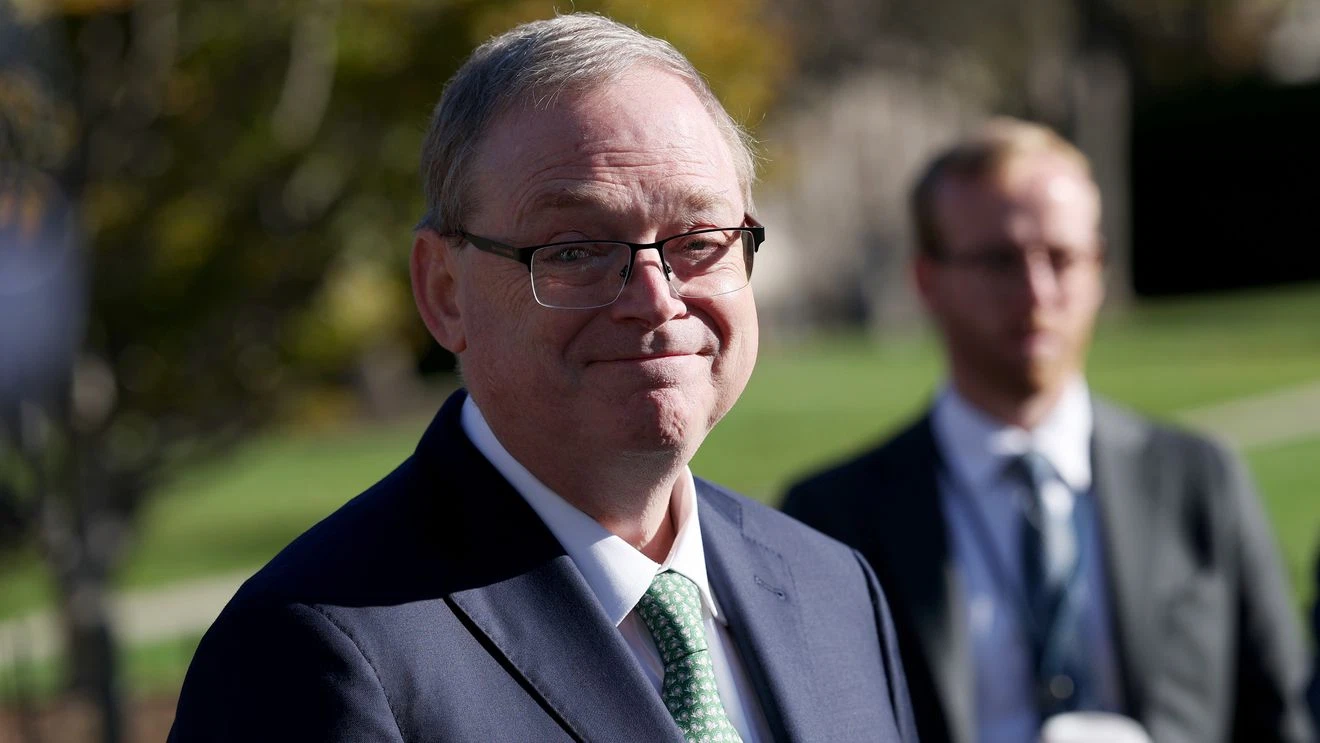
White House economic adviser Kevin Hassett stated 60,000 private-sector jobs were lost because of the government shutdown.
Those were not federal employees Hassett was discussing with reporters on Thursday. He was referring to Americans working outside government.
Hassett attributed the losses to a reduction of economic output during the shutdown, which he indicated cost the economy approximately $15 billion weekly.
Colorado State University economist Stephan Weiler characterised the 60,000 figure as “optimistic,” as the shutdown’s effects rippled through the economy.
Federal workers in limbo had to reduce their spending at shops, restaurants and other establishments.
That meant less economic activity, especially in areas with high concentrations of federal workers.
“That means no Starbucks, that means no lunches, that means cutting back on household goods,” Weiler stated. “All of those things will lead to private-sector job losses.”
Additionally, there were companies directly impacted by the shutdown. Businesses with government contracts or those supplying services to government agencies potentially had to reduce hours or staff to manage revenue reductions.
Some private business activity could recover quickly now that the shutdown has ended, Weiler indicated.
For example, grocery stores that rely on food stamp recipients might experience increased activity now that federal benefits will be paid.
However, there is another, more lasting impact that could affect private employment in an already weakening jobs market.
Approximately 150,000 federal employees opted into the deferred resignation programme, a Trump administration effort to reduce government workforce size.
Those federal workers left the payroll on 1 October, just as the shutdown was starting.
In addition to voluntary resignations, there were also permanent government redundancies, Weiler stated.
“The federal government is permanently smaller now,” he said.
Elise Gould, a senior economist at the Economic Policy Institute, expected a significant rebound in economic activity that was constrained by the shutdown.
However, she also indicated the permanent government redundancies and resignations could impact the wider economy.
“They really got muddied, because everything happened on Sept. 30,” Gould stated. “And so, it’ll take a couple of months for the data to sort of resolve itself and be able to disentangle those two effects.”
White House Press Secretary Karoline Leavitt indicated this week that the October jobs report will likely never be released.
Government economic data collection, like other activities, was halted during the shutdown.
However, Hassett stated the September jobs report “has already been cooked” and should be released soon. And the October jobs report should be released partially.
The Bureau of Labor Statistics conducts both an employer survey and a household survey as part of its monthly jobs report.
Hassett indicated they can probably compile the payroll data, which will reveal how many jobs were added or lost in October.
However, he stated the household survey was not completed. That means an unemployment rate, labour force participation rate and other metrics will not be available for October.
“The last word we got was very tepid growth at 22,000 in August, which isn’t a huge, long time away, but one shutdown away,” Weiler stated. “And that’s important.”
Entering the shutdown, the jobs market was relatively weak, Weiler indicated.
The economy had only created 107,000 jobs over the last four reported months, May through August.
Weiler stated losing 60,000 more jobs because of the shutdown would not help the struggling jobs market, but he indicated it is unlikely to deal a huge blow to it either.
Gould offered a similar assessment.
“I think that, for the most part, what happens in a shutdown is that you do have this reduced economic activity, but usually that will come back,” she stated.
Any persistent job losses are more likely because of continued economic weakness, not the shutdown, she indicated.
“There certainly are pockets of concern that I’ve seen in the data,” Gould stated. “And you’re seeing that maybe in certain geographic areas or for certain populations.”
She has tracked unemployment insurance claims data generated by states, which has remained available through the federal government shutdown.
Some locations, such as Washington, D.C., are experiencing elevated levels of unemployment insurance claims.
Gould also noted reports of more redundancies in the private sector.
Both the redundancy and firing rates have been low, as employers take a cautious approach in an uncertain economic and policy environment.
Labour economist Aaron Sojourner recently indicated that employers are “like deer in the headlights,” unsure about how to proceed.
Job stability has been strong, but securing employment has been difficult for those searching.
Gould stated she is concerned that the redundancy rate could accelerate whilst the hiring rate stays very low, resulting in shrinking opportunities for workers.