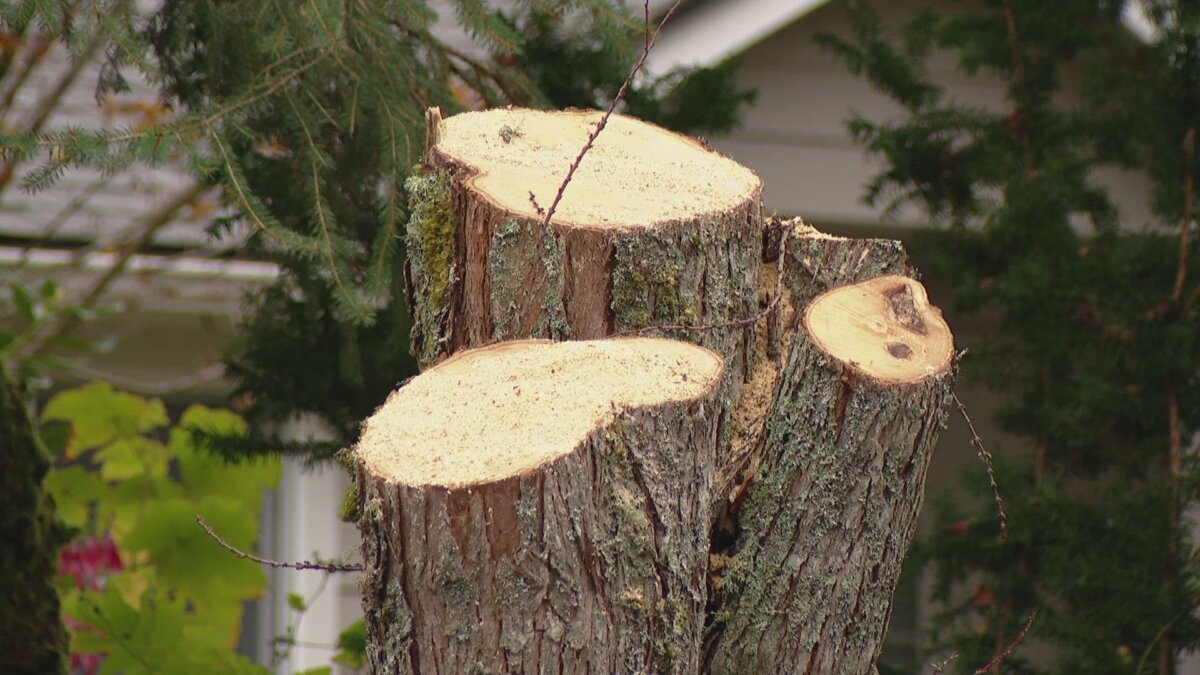
The City of Lacey is removing nearly 300 trees after their roots caused extensive damage to sidewalks, creating hazardous conditions for pedestrians in what officials acknowledge as a costly lesson in urban forestry planning.
The $1.3 million project targets the most severely damaged areas where tree roots have lifted concrete panels, making them dangerous and potentially impassable for wheelchairs, strollers, and pedestrians.
Scott Devlin, operations manager for Lacey’s Public Works Department, stated the city has identified 18,000 sections of sidewalk requiring repairs, but fixing all of them would cost hundreds of millions of dollars. Instead, the city is “fixing the worst things first,” focusing on locations where sidewalk panels have been lifted as much as six inches off the ground.
“As you can see this panel specifically is completely lifted off the ground,” Devlin stated whilst pointing out one problem area.
The removal has left stark gaps along major roads and residential neighbourhoods, drawing mixed reactions from residents.
“Like a Dr. Seuss book,” stated David Pond. “Where’d the trees go?”
Removing each tree and repairing the associated sidewalk costs nearly $5,000, Devlin indicated, making comprehensive repairs financially unfeasible for the city.
Devlin acknowledged that better decisions will guide future plantings.
“These may not have been the best trees to plant here, but at the time, they were the trees that, to the best of our knowledge, were the correct trees. And so now we’re learning better from that,” he stated.
The city plans to replace the removed trees with less-damaging species and will install underground barriers to prevent roots from reaching sidewalks in the future.
Peggy Kern, a blind Lacey resident who walks daily with her husband Dan, supports the project despite the loss of trees.
“It’s sad trees have to lose their lives, but better than people losing their, breaking their bones or whatever,” Kern stated.
The removal, repairs, and replanting is expected to be completed by mid-2026, Devlin indicated.
The removal of nearly 300 trees in Lacey represents a significant urban forestry setback that illuminates the long-term consequences of planting decisions made decades ago when municipalities lacked current understanding of tree root behaviour in confined urban environments and the infrastructure conflicts that emerge as trees mature.
The $1.3 million project cost, whilst substantial, pales in comparison to the hundreds of millions of dollars that would be required to address all 18,000 damaged sidewalk sections the city has identified. This vast gap between need and available resources forces the city into triage mode, addressing only the most dangerous conditions whilst less severe damage continues to pose moderate hazards and will likely worsen over time.
The $5,000 per-tree cost for removal and sidewalk repair reflects the labour-intensive nature of the work, including tree removal requiring specialised equipment and trained arborists, concrete demolition and disposal, grading and preparation of the sidewalk base, pouring new concrete panels, and ensuring proper curing before the sidewalk can be reopened to pedestrian traffic. This per-unit cost explains why comprehensive citywide repairs remain financially out of reach even for a municipality willing to invest significantly in infrastructure maintenance.
The sidewalk panels lifted as much as six inches off the ground create obvious trip hazards for pedestrians, particularly elderly residents, individuals with mobility impairments, and children. Beyond trip risks, these raised panels make sidewalks effectively impassable for wheelchair users, parents pushing strollers, and individuals using walkers or other mobility aids, forcing them into streets where they face vehicle traffic hazards.
Devlin’s acknowledgment that “these may not have been the best trees to plant here” represents candid admission of planning failures that are unfortunately common across municipalities that planted street trees without adequate consideration of mature size, root structure aggressiveness, or compatibility with nearby infrastructure. Many cities selected tree species based primarily on aesthetic qualities, growth rate, and availability from nurseries rather than long-term infrastructure compatibility.
The plan to install underground barriers preventing roots from reaching sidewalks in future plantings reflects lessons learned from this costly experience. Root barriers, typically constructed from rigid plastic or fabric materials, guide roots downward and away from sidewalks whilst still allowing trees access to soil moisture and nutrients beyond the barrier. This technology has become standard practice in contemporary urban forestry but was not widely understood or implemented when the removed trees were originally planted.