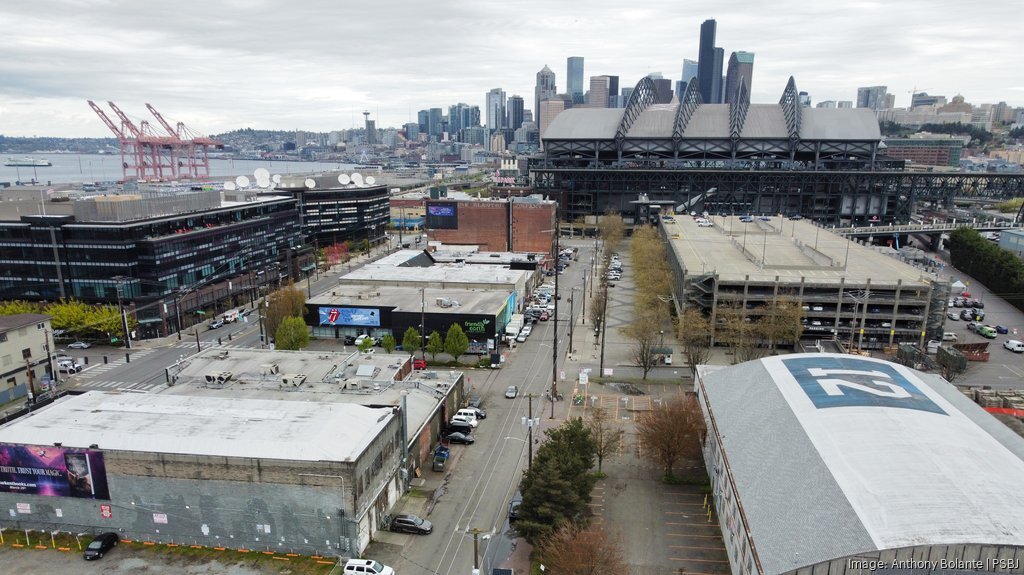
A state land-use board has rejected Seattle’s proposed rezoning of the Sodo industrial district, throwing the city’s plans to reshape the area into question and setting up a potential appeal process that could extend the planning uncertainty for months.
The state board will allow the city of Seattle to appeal the decision, though it remains unclear whether officials will pursue that option.
The rejection of Seattle’s Sodo rezoning proposal by the state land-use board represents a significant setback for the city’s long-term planning vision for the industrial area situated between downtown Seattle and the stadiums, an area that has attracted increasing development interest as land availability elsewhere in the city has tightened.
Sodo, short for “South of Downtown,” functions primarily as an industrial and warehouse district housing businesses including maritime industries, manufacturing operations, distribution centres, construction companies, and other enterprises requiring large floor plates, truck access, and proximity to transportation infrastructure including rail lines and highway connections. The area’s industrial character has remained relatively intact even as surrounding neighbourhoods have experienced residential and commercial transformation.
The city’s rezoning proposal likely sought to introduce mixed-use development possibilities or increase residential densities in portions of Sodo, a planning approach that has generated controversy amongst industrial businesses fearing displacement, labour unions concerned about blue-collar job losses, and environmental advocates worried about placing residential populations near industrial operations that may generate noise, truck traffic, and air quality impacts.
The state land-use board’s authority to review and reject local zoning decisions reflects Washington’s Growth Management Act framework, which requires municipal planning decisions to align with state-level policies promoting coordinated land use, environmental protection, and economic development. The board evaluates whether local zoning changes comply with these broader mandates and can overturn decisions it finds inconsistent with state requirements.
The rejection suggests the board identified conflicts between Seattle’s rezoning proposal and state planning requirements, potentially including concerns about industrial land preservation, environmental review adequacy, transportation impact analysis, or compliance with Growth Management Act mandates to maintain sufficient land for various economic activities including manufacturing and distribution.
Industrial land represents a finite and increasingly scarce resource in urban areas as residential and commercial development pressures drive land values upward, making industrial uses that generate lower per-acre revenues economically vulnerable to displacement. Once industrial land is rezoned and redeveloped for other purposes, reconverting it to industrial use becomes functionally impossible due to the capital invested in new structures and the incompatibility of returning residential areas to industrial operations.
The appeal option available to Seattle creates a decision point for city officials who must weigh the likelihood of success on appeal against the costs of continued litigation and the political implications of either pursuing or abandoning the rezoning effort. Appeals require legal resources, staff time, and political capital that could be directed toward other planning priorities, but abandoning the appeal might disappoint constituencies who supported the rezoning.
The uncertainty created by the rejection and potential appeal extends planning horizons for property owners, businesses, and developers in Sodo who cannot make long-term investment decisions without clarity about future zoning regulations. Industrial businesses considering facility expansions or relocations need to understand whether the area will remain hospitable to their operations, whilst developers evaluating potential projects cannot proceed without knowing what land uses will be permitted.