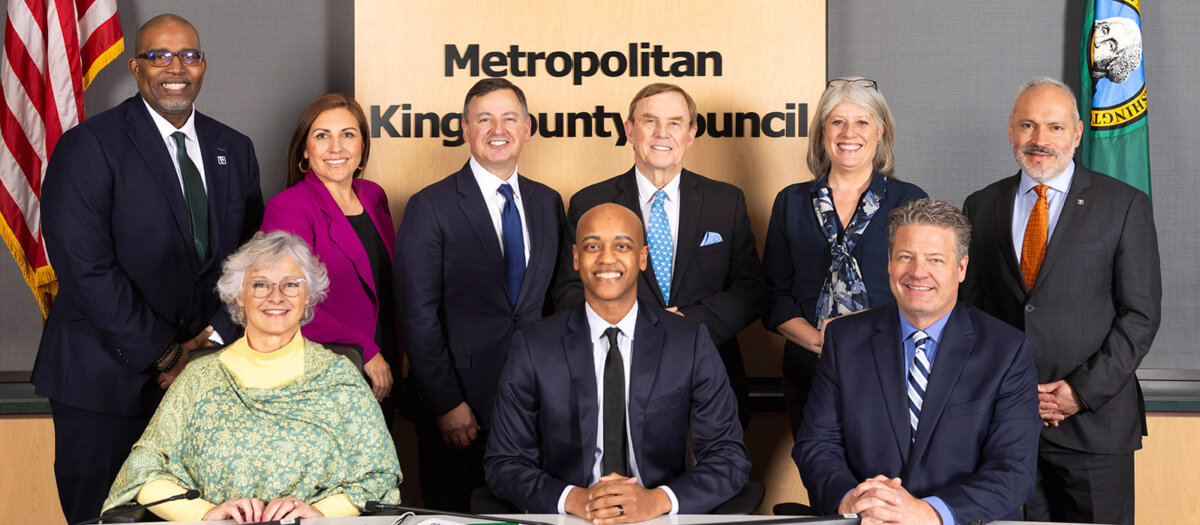
King County Council on Tuesday unanimously approved a $20 billion, two-year budget that increases spending on public safety, homelessness services and behavioural health whilst preparing for potential reductions in federal funding amid tightening revenue forecasts at the state level.
The budget includes more than $225 million for public safety and criminal justice and over $55 million for housing and homelessness initiatives. Council members also increased support for behavioural health services and the King County Sexual Assault Resource Center, and set aside contingency funding for programmes that could lose federal backing.
King County Executive Shannon Braddock stated the spending plan reflects key priorities from her 200-day plan and protects “essential services” during a period of financial uncertainty.
Whilst King County leaders celebrated the budget approval, state-level financial developments were less positive.
Washington’s projected Near General Fund revenues through 2029 dropped by approximately $66 million compared to September’s forecast, according to new estimates from the state Economic and Revenue Forecast Council. The decline is driven by fewer housing permits, lower employment and slower personal income growth, partially offset by increased tobacco settlement payments.
Governor Bob Ferguson indicated the latest forecast “does not change the scale of the problem” his team faces as it prepares his first supplemental budget proposal, expected in December.
“This budget will involve many difficult decisions,” Ferguson stated. “I will be proposing a balanced budget that preserves core services but still makes investments in important areas.”
The unanimous approval of King County’s $20 billion two-year budget demonstrates council consensus around investing in public safety, homelessness, and behavioural health even as state revenue forecasts signal tightening fiscal conditions that may constrain future spending flexibility and force difficult prioritisation decisions in coming budget cycles.
The $225 million allocation for public safety and criminal justice represents substantial investment in law enforcement, prosecution, courts, jails, and related systems that consume major portions of county budgets nationwide. This spending category encompasses sheriff’s department operations, prosecutor and public defender offices, superior and district courts, juvenile detention facilities, adult corrections, and programmes addressing recidivism through education, treatment, and reentry services.
The $55 million dedicated to housing and homelessness initiatives, whilst significant in absolute terms, represents a fraction of the public safety allocation, reflecting the political reality that visible crime and disorder typically command more political attention and budgetary resources than addressing the root causes of homelessness including housing affordability, mental illness, and addiction. The funding supports emergency shelters, transitional housing, permanent supportive housing, rental assistance, homelessness prevention, and coordinated entry systems connecting individuals to appropriate services.
The increased support for behavioural health services and the King County Sexual Assault Resource Center addresses critical gaps in mental health and trauma response infrastructure. Behavioural health funding supports crisis intervention, substance abuse treatment, mental health counselling, and integrated care models connecting physical and mental health services. The Sexual Assault Resource Center provides forensic nursing examinations, advocacy, counselling, and support services for sexual assault survivors, services that require specialised training and trauma-informed approaches.
The contingency funding set aside for programmes potentially losing federal backing demonstrates prudent financial planning given uncertainty surrounding federal budget priorities under changing administrations. Federal funding streams supporting county services include community development block grants, housing assistance, public health programmes, transportation infrastructure, environmental protection, and social services that could face reductions if federal priorities shift away from these areas.
County Executive Shannon Braddock’s characterisation of the budget as protecting “essential services” during financial uncertainty reflects the delicate balancing act local governments face maintaining baseline service levels whilst also investing in priorities like homelessness and behavioural health that require sustained funding to generate meaningful outcomes. The reference to her 200-day plan suggests the budget translates early executive priorities into concrete spending allocations.
The contrasting fiscal pictures at county and state levels, with King County approving increased spending whilst state revenues decline, illustrate how different government tiers experience divergent fiscal trajectories based on their revenue sources and spending obligations. Counties rely heavily on property taxes and sales taxes that may remain relatively stable even as state-level revenues from income-sensitive sources decline.