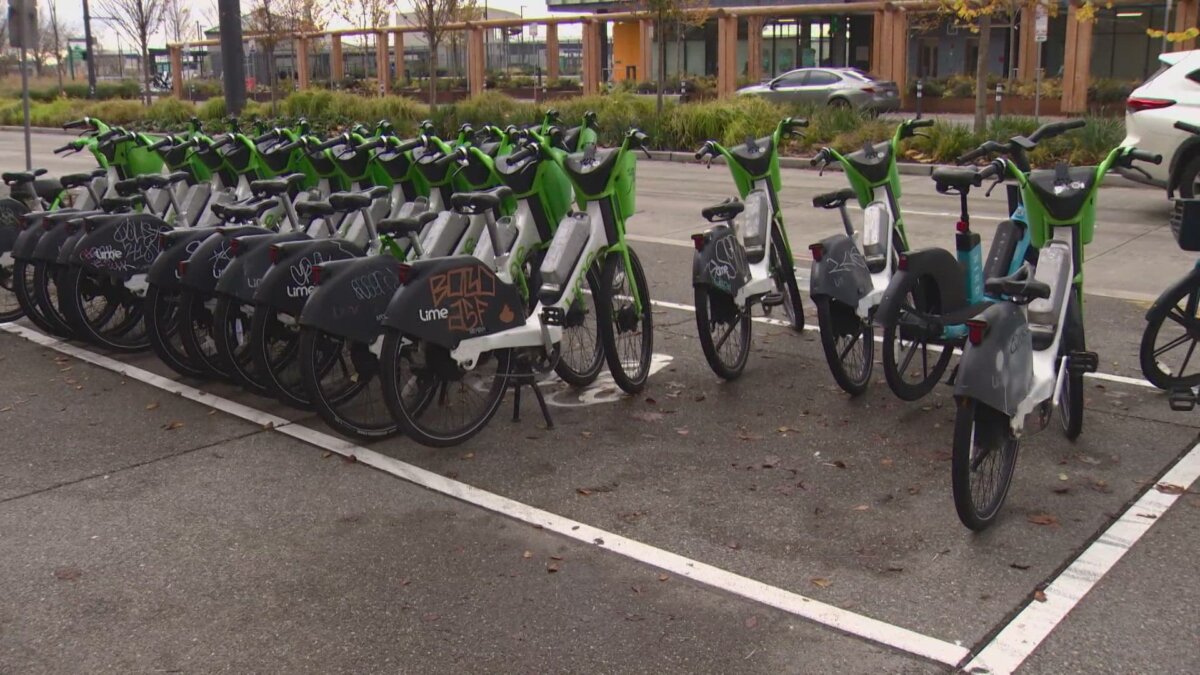
Seattle’s surging scooter and bike-share usage is creating mounting tensions on city sidewalks, with business owners in dense neighbourhoods reporting that improperly parked scooters increasingly block storefronts and obstruct pedestrian access.
In the University District, longtime business owner Shiga stated abandoned scooters routinely accumulate outside her establishment.
“I pick it up and put them in a corner… They leave them all over the street,” Shiga stated.
Her frustrations reflect a broader challenge across Seattle as shared scooter trips continue expanding. According to Seattle Department of Transportation data, the city logged 9.5 million scooter and bike-share rides in 2025, a record pace.
To address sidewalk clutter and improve access, SDOT is installing approximately 237 new parking corrals, which are designated areas where riders are expected to end their trips. According to SDOT, the city currently has about 210 on-street corrals and 55 on-sidewalk corrals already in place citywide. Many of the newly added downtown corrals will be on sidewalks because curb space is limited in the area.
Seattle has maintained a designated corral programme since 2018-2019, when the city first began setting aside marked zones for shared bikes and scooters. The agency indicated the new expansion builds on the earlier installations, and aims to create more consistent, visible and convenient places to park shared devices. Locations are being selected ahead of major events like the 2026 FIFA World Cup, and near hotels, transit hubs, and high-demand pickup and drop-off points.
Lime, one of Seattle’s scooter vendors, indicated its own analysis shows the city needs roughly 800 corrals in high-use areas to meet demand, more than triple SDOT’s current planning figure.
Don Blakeney, executive director of the U District Partnership, stated the neighbourhood’s high pedestrian traffic and narrow sidewalks complicate where any new corrals could be placed.
“We have some of the highest pedestrian counts in the city and some of the skinniest sidewalks,” Blakeney stated. “As we think about where to put these scooters, it’s going to be a challenge… How do we plug these corrals into a tight urban landscape without taking space from businesses?”
Scooter riders also indicated the current parking options are inconsistent. Wallingford resident Shane Small, who regularly rides scooters to and from the U District, stated he often tries to park responsibly but still encounters problems with the app.
“Designated areas fill up fast,” Small stated. “You try to do the right thing, but sometimes you’re on a schedule.”
SDOT indicated it is still evaluating potential corral locations and taking input from businesses, community groups, and riders.
Seattle residents voiced mixed reactions on SDOT’s social media after the department’s announcement. SDOT responded that it has distributed “thousands of helmets this year” and is working with scooter companies to educate riders, adding that the new corrals are part of broader improvements still underway. SDOT indicated the programme is funded by fees paid by scooter and bike-share companies, not taxpayers.
The record 9.5 million scooter and bike-share rides logged in Seattle during 2025 demonstrates the rapid adoption of micromobility options that provide convenient, affordable transportation for short trips whilst reducing car dependency and emissions. However, this explosive growth has outpaced the development of infrastructure needed to manage the devices, creating conflicts between riders seeking convenient parking, pedestrians requiring clear sidewalks, and businesses wanting unobstructed storefronts.