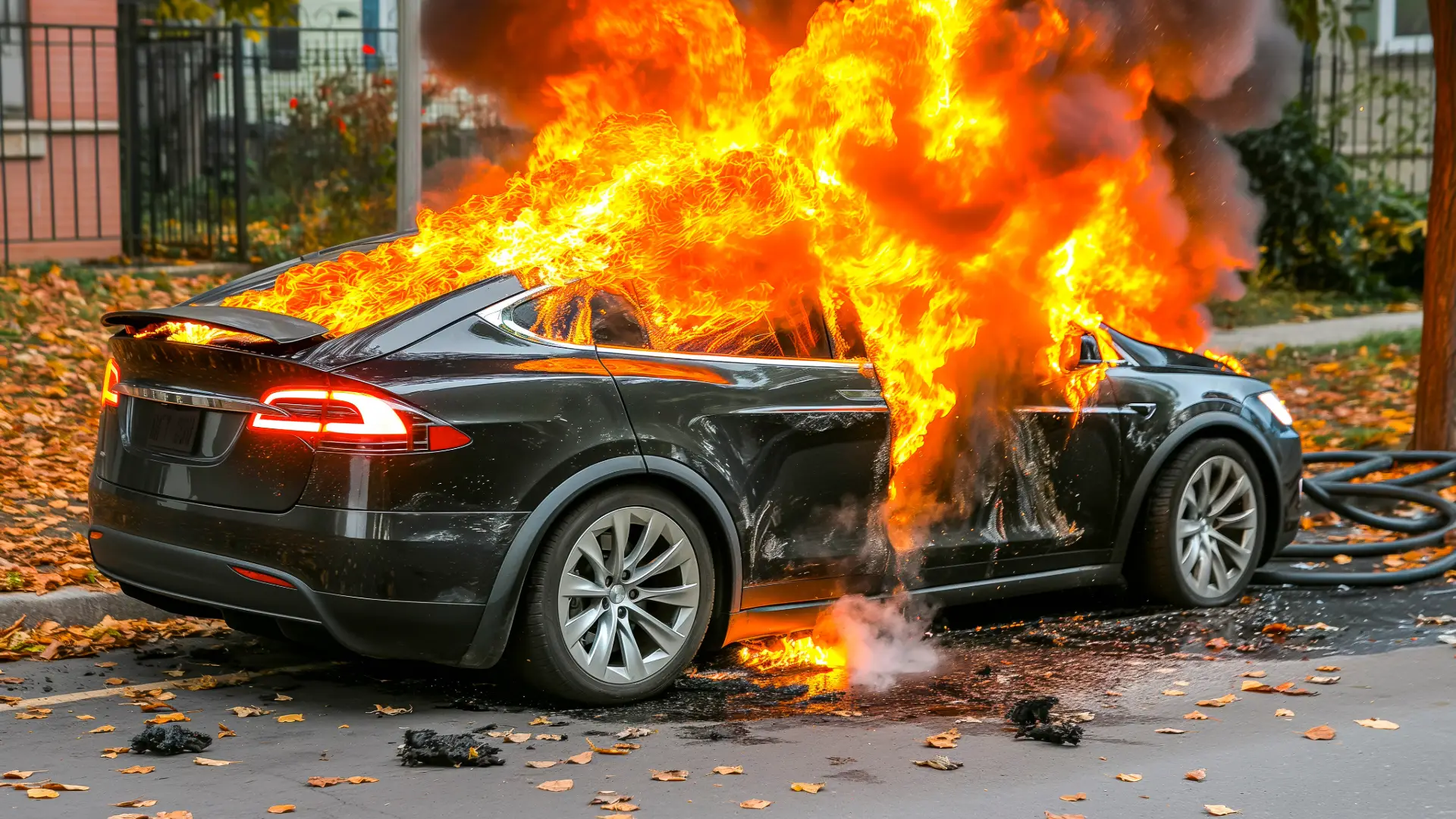
A fatal electric vehicle crash in Tacoma has raised urgent questions about passenger escape systems in modern cars that rely entirely on electrical power to operate doors and windows.
The 2018 incident, detailed in federal court filings, began when Jeffrey Dennis’s electric sedan unexpectedly accelerated before colliding with a utility pole. The impact triggered a rapid fire that consumed the vehicle’s interior within moments.
Bystanders rushed toward the wreckage to help, but found themselves unable to assist. The crash had severed electrical power to the vehicle, disabling the electronic door lock system. Flames spread quickly through the cabin as smoke reduced visibility to zero.
Wendy Dennis, trapped inside by doors that would not open, died at the scene. Her husband Jeffrey survived with severe burns that have left him permanently disabled. The couple’s routine drive through a Tacoma neighborhood, just 30 miles south of Seattle, ended in a tragedy that safety advocates say exposes a fundamental design vulnerability in electric vehicles.
Court documents allege that the vehicle’s power failure locked the doors shut, preventing escape even as fire engulfed the cabin. The lawsuit also claims braking systems failed to engage before impact and that the lithium-ion battery pack ignited into what emergency responders described as an exceptionally hot and difficult fire to control.
The incident occurred on streets typical of the Seattle metropolitan region, where electric vehicles have become increasingly common. Commuters throughout Puget Sound now routinely share highways with thousands of battery-powered cars, a number that continues growing as Washington state pushes toward ambitious electrification goals.
What happened to the Dennis family represents a scenario most electric vehicle owners never consider but that firefighters and safety experts say reveals critical risks in how these vehicles behave during catastrophic failures.
The central issue is not fire frequency. Electric vehicles statistically catch fire less often than gasoline-powered cars, a fact supported by multiple studies and insurance data. The danger emerges from what happens when fires do occur.
Electric vehicles depend on electrical power for nearly every function. Doors, locks, windows, and seat adjustments all operate electronically rather than mechanically. This design creates smooth, quiet operation under normal conditions but introduces vulnerabilities during emergencies.
When a severe crash occurs, vehicle safety systems are programmed to immediately cut electrical power. This prevents short circuits, reduces shock hazards, and theoretically protects occupants from electrical dangers. However, this same safety feature can simultaneously disable the mechanisms people need to escape.
Traditional gasoline-powered vehicles typically use mechanical door latches connected by cables or rods. Even after severe crashes that damage electrical systems, doors can usually be forced open manually. Many electric vehicles, by contrast, use electronic actuators that require power to release door locks.
Some electric vehicle manufacturers include manual door release mechanisms as backup systems. These manual releases, however, are often concealed in door panels, located in non-intuitive positions, or designed in ways that make them difficult to find and operate during high-stress emergencies.
Inside a smoke-filled cabin with flames spreading and toxic fumes accumulating, occupants have only seconds to locate and operate emergency releases. Most drivers and passengers have never practiced using these backup systems and may not even know they exist until the moment they desperately need them.
Fire departments throughout the Seattle area report that electric vehicle battery fires behave fundamentally differently from gasoline fires. Lithium-ion battery packs burn at higher temperatures, release toxic gases including hydrogen fluoride, and can spontaneously reignite hours or even days after initial suppression.
Conventional firefighting techniques prove inadequate for battery fires. Water alone cannot effectively cool battery packs to safe temperatures. Foam suppressants have limited effectiveness. Complete extinguishment may require thousands of gallons of water applied over extended periods, often measured in hours rather than minutes.
Regional fire departments now classify electric vehicle fires as hazardous materials incidents requiring specialized protocols. Crews train on techniques for safely disconnecting high-voltage systems, cooling battery compartments, and monitoring vehicles for reignition risks long after visible flames disappear.
Some departments have invested in specialized equipment specifically for electric vehicle emergencies. This includes thermal imaging cameras to detect hot spots in battery packs, insulated tools rated for high-voltage systems, and storage containers designed to isolate burned vehicles and contain potential reignition.
The challenges extend beyond the incident scene. Towing companies must transport damaged electric vehicles with care to prevent battery damage that could trigger delayed fires. Storage facilities worry about vehicles reigniting in impound lots. Insurance adjusters face new complexities in assessing damage to battery systems.
As Washington state pursues aggressive electrification targets, with goals to phase out new gasoline vehicle sales within the next decade, these safety considerations take on increased urgency. The number of electric vehicles on Puget Sound roads continues climbing, meaning more emergency responders will encounter battery fires and more drivers will depend on escape systems that may fail during crashes.
The Dennis case has attracted attention from safety advocates who argue that current vehicle design standards inadequately address the unique risks electric vehicles present during fires. They point out that safety regulations developed primarily for gasoline-powered cars may not account for the specific vulnerabilities created by all-electric architectures.
Industry defenders note that electric vehicles demonstrate superior overall safety records. Crash test ratings typically show strong structural protection. The reduced fire frequency compared to gasoline vehicles represents a genuine safety advantage for the vast majority of drivers who never experience catastrophic failures.
Safety experts emphasize, however, that risk assessment requires considering both probability and consequence. Even if fires occur less frequently, the severity of outcomes when escape systems fail demands attention and potential design changes.
Some manufacturers have responded to concerns by making manual door releases more visible, adding illuminated labels, or redesigning systems to ensure at least some doors retain mechanical backup operation. Consumer advocates argue these improvements should become industry-standard features rather than optional enhancements.
The tragedy in Tacoma serves as a reminder that transportation evolution brings new challenges alongside benefits like reduced emissions, lower operating costs, and quieter neighborhoods. As the region embraces electric mobility, understanding and mitigating these emerging risks becomes essential for protecting the people who will depend on these vehicles.
In an electric vehicle fire, the most critical danger may not be the flames themselves but the few precious seconds required to escape them.