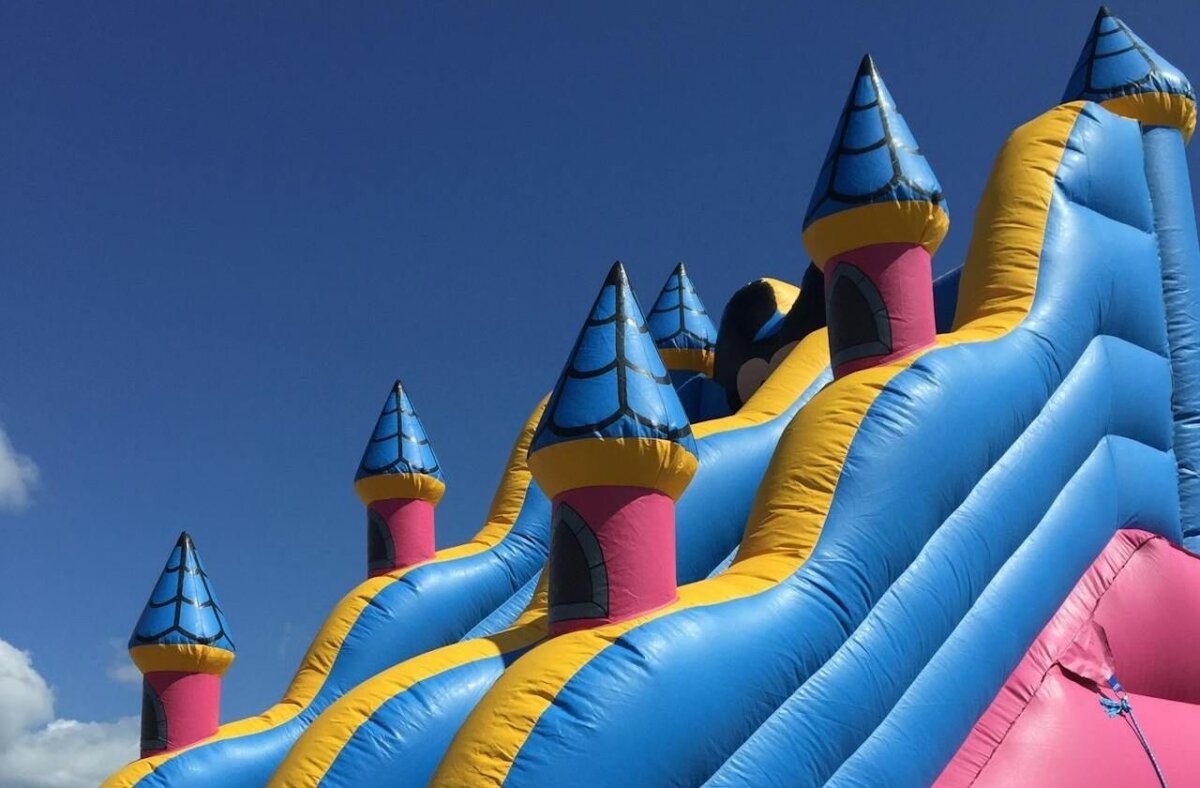
Four children required hospitalization Saturday after a bouncy castle became airborne during strong winds in southwestern Sydney, Australia, lifting the inflatable structure approximately 23 feet into the air before it cleared a neighboring fence.
The incident occurred Saturday morning when a powerful gust detached the inflatable castle from its ground anchors. Five children were inside the structure at the time it became airborne, though only four sustained injuries requiring medical attention.
The injured children, all boys ranging in age from 9 to 13 years old, were transported to hospitals for treatment. Medical personnel characterized their injuries as non-life threatening, offering relief to families and emergency responders who witnessed the dramatic incident.
The boys sustained injuries to their arms, backs, and shoulders according to initial reports. All four children are in stable condition following medical evaluation and treatment. The fifth child who was inside the bouncy castle at the time apparently escaped without injuries requiring hospitalization.
A spokesperson for the jumping castle rental company stated that the owners described encountering a “massive wind” they attributed to a “freak tornado.” The characterization suggests winds of unusual intensity for the area, though meteorological confirmation of an actual tornado was not immediately available.
The wind’s force extended beyond displacing the bouncy castle. The company spokesperson indicated that the same gust “ripped away” a generator associated with the inflatable equipment, demonstrating the power of the weather event.
Weather monitoring stations recorded significant wind activity in the region during the timeframe. Canterbury, a nearby area, registered wind gusts reaching up to 45 miles per hour. Sydney Airport, another relatively close location, recorded even stronger gusts of 55 miles per hour.
These wind speeds, while not reaching tornado intensity, represent conditions capable of lifting inadequately secured inflatables and other lightweight structures. Bouncy castles and similar recreational equipment are particularly vulnerable to wind due to their large surface area and relatively light weight when compared to their size.
SafeWork New South Wales, the state’s workplace health and safety regulator, has opened an investigation into the incident. The agency examines accidents involving commercial equipment to determine whether proper safety protocols were followed and whether regulatory violations occurred.
The investigation will likely examine whether the bouncy castle was properly secured to the ground according to manufacturer specifications and industry standards. It may also review whether operators monitored weather conditions appropriately and made timely decisions about shutting down operations when dangerous winds developed.
Bouncy castle accidents involving wind have occurred in multiple countries over the years, sometimes with tragic results. These incidents have prompted increased attention to anchoring requirements, weather monitoring, and operational guidelines for inflatable amusement equipment.
Industry standards typically require multiple anchor points using stakes, straps, or weights calculated based on the inflatable’s size and local wind conditions. However, sudden wind gusts can sometimes exceed the force that standard anchoring can resist, particularly if equipment is not secured to maximum specifications.
Weather monitoring represents another critical safety element. Operators should track forecasts and real-time conditions, shutting down inflatables when winds exceed safe thresholds. Many manufacturers specify maximum wind speeds for safe operation, often in the range of 15 to 25 miles per hour depending on the structure’s design.
The characterization of the wind as a “freak tornado” by equipment owners raises questions about predictability. True tornadoes can develop rapidly with little warning, though meteorological services typically issue severe weather alerts when atmospheric conditions favor their formation.
Microbursts and other localized wind phenomena can also create sudden intense gusts without the rotating funnel cloud characteristic of tornadoes. These weather events, while brief, can generate damaging winds that catch people by surprise.
The parents of the injured children and witnesses to the incident likely experienced significant distress watching the bouncy castle become airborne with children inside. Such accidents, even when injuries are not severe, create trauma for those involved and observing.
The stable condition of all injured children suggests they avoided the most serious potential consequences of such an incident. Falls from heights, impacts with the ground or structures, and crushing injuries all represent risks when inflatables overturn or become airborne.
Australian summer weather patterns can include sudden wind changes and storm development, making outdoor events and activities vulnerable to rapid weather deterioration. The incident occurred during a season when many families and children are engaging in outdoor recreational activities.
SafeWork New South Wales will determine whether any regulatory violations occurred and whether additional safety measures should be implemented for inflatable equipment operators. Their findings could influence future regulations and industry practices aimed at preventing similar incidents.
The jumping castle company will likely face scrutiny regarding their operational procedures, equipment maintenance, anchoring methods, and response to weather conditions. The outcome of the investigation could have implications for their business operations and potential liability.