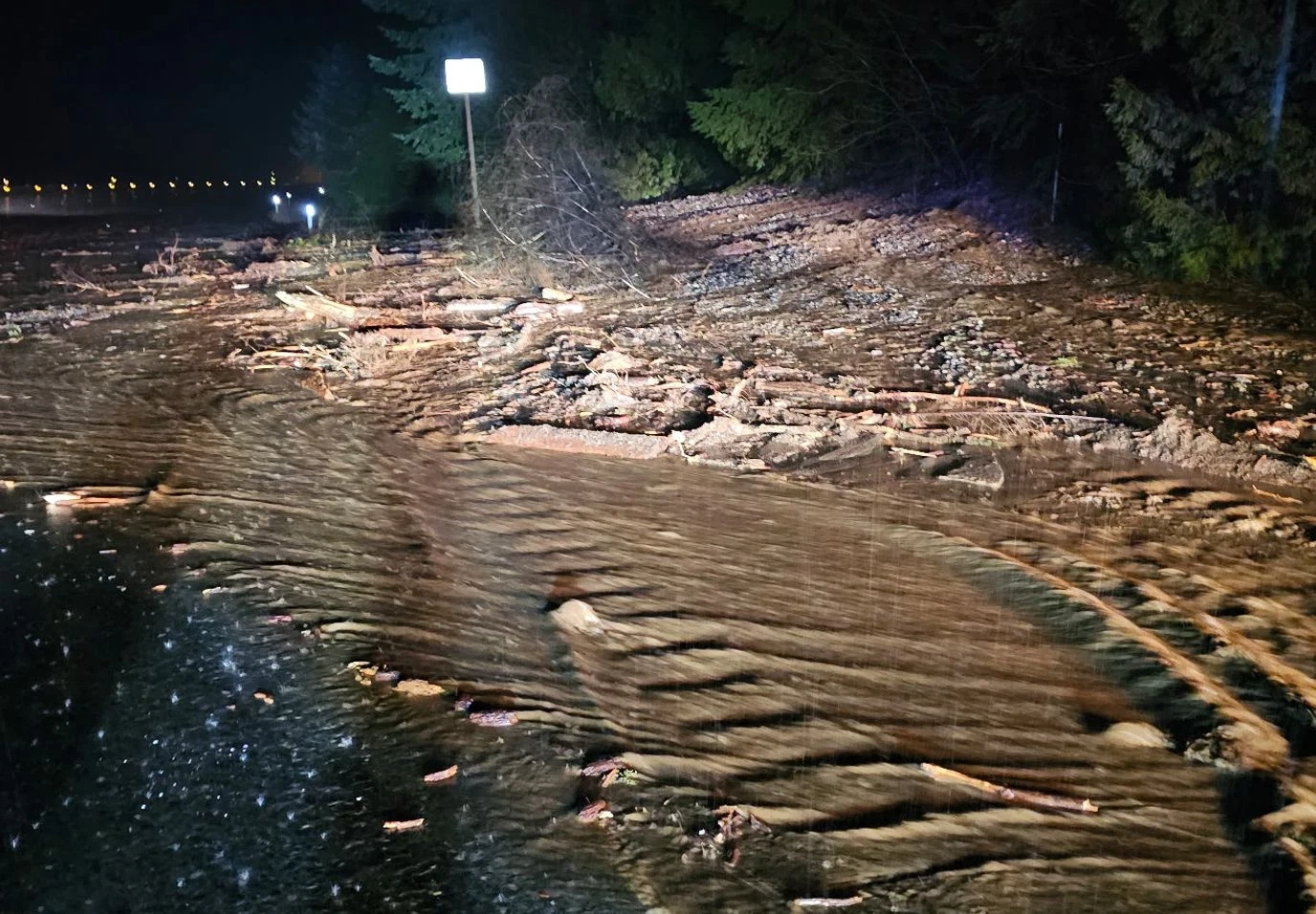
Eastbound Interstate 90 has reopened following a mudslide that blocked all lanes east of North Bend after heavy rainfall.
The highway was closed beginning around midnight, and the Washington State Department of Transportation indicated crews would assess conditions during daylight hours. However, crews cleared the roadway and reopened it around 5:45 a.m.
Travelers planning to use Highway 2 as an alternative route should prepare for winter conditions, as traction tires are advised in both directions due to snow, slush, and ice on the roadway.
Snohomish County Emergency Services emphasized the importance of recognizing early warning signs of potential landslides, including new cracks appearing in pavement, soil separating from house foundations, or trees displaying curved growth patterns on hillsides.
Officials said it is essential to call 911 immediately upon noticing any of these indicators and evacuate the area.
The mudslide closure demonstrates ongoing risks along Interstate 90’s mountain corridor during periods of heavy precipitation. The Cascade passes experience frequent slides during wet weather when saturated soil loses cohesion and flows downslope.
The midnight closure timing affected overnight travelers and early morning commuters heading east toward ski areas, recreation destinations, or eastern Washington communities. The approximately five-and-a-half-hour closure created significant disruption for those with time-sensitive travel plans.
WSDOT’s initial plan to wait for daylight assessment reflected standard safety protocols for evaluating slide areas. Darkness makes it difficult to determine slide extent, identify unstable slopes that may produce additional material, and ensure worker safety during cleanup.
The fact that crews completed work and reopened the highway before daylight suggests the slide was relatively contained and did not involve massive debris volumes requiring extended removal efforts. Smaller slides can often be cleared within hours once equipment reaches the site.
The Highway 2 winter conditions warning provides important context for travelers considering alternate routes. Stevens Pass along Highway 2 sits at higher elevation than Snoqualmie Pass on Interstate 90, frequently experiencing more severe winter weather.
Traction tire requirements indicate that standard all-season tires lack adequate grip for safe travel. Vehicles should have dedicated winter tires, all-wheel drive with appropriate tires, or carry chains that can be installed when conditions deteriorate.
Snow, slush, and ice create varying hazards requiring different driving approaches. Snow reduces traction but remains relatively predictable. Slush creates hydroplaning risks similar to standing water. Ice eliminates nearly all traction, making even gentle curves or braking dangerous.
Snohomish County Emergency Services’ landslide awareness campaign addresses the reality that slides can occur in populated areas, not just on remote highways. Residential properties built on slopes face risks during heavy rain events.
New cracks in pavement or driveways signal ground movement that may precede larger failures. These cracks indicate subsurface instability as soil shifts and separates, creating voids or displacement.
Soil pulling away from foundations suggests the ground is moving while structures remain anchored. This differential movement can damage buildings and indicates potentially hazardous slope conditions.
Curved tree growth on hillsides, called “pistol-butted” trees, results from soil creep where surface layers slowly migrate downslope. While creep itself is gradual, it indicates unstable slopes that may fail catastrophically during heavy rain.
The 911 call instruction emphasizes that landslide warnings require immediate emergency response. Fire departments, public works, and law enforcement need to assess threats, potentially evacuate residents, and close roads before slides occur.
The “leave the area” directive reflects the speed at which slopes can fail once movement begins. People who notice warning signs should not wait to see what develops but should evacuate immediately to safe locations.
The Interstate 90 mudslide and winter conditions on Highway 2 compound to create challenging mountain travel situations. Travelers face choices between routes with different but significant hazards.