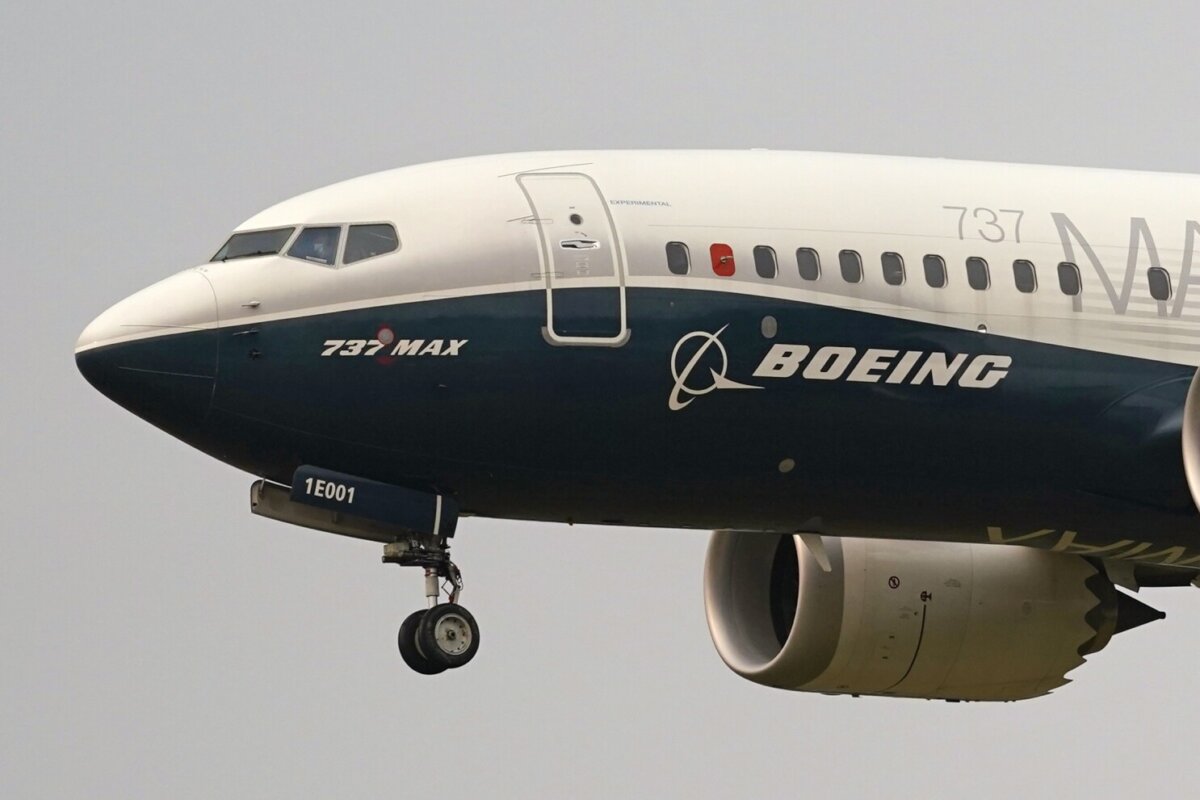
Boeing has completed its acquisition of Spirit AeroSystems, bringing its largest spare parts supplier back under company ownership in a deal valued at $4.7 billion.
The transaction, which had been in development for over a year, represents what CEO Kelly Ortberg called a “pivotal moment” for the company’s future.
“As we welcome our new teammates and bring our two companies together, our focus is on maintaining stability so we can continue delivering high quality airplanes, differentiated services, and advanced defense capabilities for our customers and the industry,” Ortberg said in a statement.
Boeing previously owned Wichita, Kansas-based Spirit but divested the company in 2005. Reabsorbing the supplier, which is not related to Spirit Airlines, reverses a longtime Boeing strategy of outsourcing major work on its passenger aircraft, an approach that faced mounting criticism in recent years as manufacturing problems at Spirit disrupted production and delivery of popular Boeing jetliners, including 737s and 787s.
When Boeing announced in July 2024 that it planned to reacquire Spirit, the company positioned the move as a step toward improving quality and safety. Concerns about safety had come to prominence almost six months earlier, after a door panel detached from an Alaska Airlines plane as it traveled at 16,000 feet over Oregon.
The incident left a gaping hole in the side of the jetliner, but no passengers suffered serious injuries. Investigators with the National Transportation Safety Board later determined that four bolts that help secure door panels were missing from the Alaska jet following repair work at a Boeing factory.
The finding renewed questions about Boeing’s safety culture and occurred as the company confronted an ongoing criminal case over two earlier fatal crashes involving its Max jetliners.
Those crashes, which happened off the coast of Indonesia and in Ethiopia less than five months apart in 2018 and 2019, killed 346 people and led to a worldwide grounding of the 737 Max for nearly two years. The Justice Department accused Boeing of deceiving regulators about a flight control system that was later implicated in the crashes.
The criminal case was resolved last month when a federal judge in Texas approved the Justice Department’s request to dismiss the charge as part of an agreement with Boeing. In exchange, Boeing agreed to pay or invest an additional $1.1 billion in fines, compensation for crash victims’ families, and internal safety and quality measures.
The total value of the Spirit acquisition is approximately $8.3 billion when including assumed debt and other obligations, Boeing has stated. Shares of Boeing rose roughly 2 percent in midday trading Monday following completion of the transaction.
The acquisition fundamentally changes Boeing’s manufacturing structure. The company will now directly control production of fuselages, wing components, and other major assemblies previously manufactured by Spirit under contract.
The 2005 divestiture of Spirit was part of a broader Boeing strategy to reduce capital investment and focus on final assembly and engineering. That approach aimed to make Boeing more financially efficient by shifting manufacturing costs and risks to suppliers.
However, quality problems at Spirit in recent years undermined that model. Production delays and defects in Spirit-manufactured components created cascading problems for Boeing’s assembly lines and airline customers awaiting deliveries.
The Alaska Airlines door panel incident particularly damaged confidence in the outsourcing approach. The missing bolts indicated quality control failures that went undetected through multiple inspection stages.
The NTSB investigation revealed systemic issues with documentation, inspection procedures, and communication between Boeing and Spirit regarding critical safety components.
Bringing Spirit in-house gives Boeing direct oversight of manufacturing processes and quality control at what is now a wholly owned subsidiary. The company can implement uniform standards and inspection protocols across all production facilities.
The $1.1 billion criminal settlement includes payments to families of the 346 people who died in the 2018 and 2019 crashes. The agreement also requires Boeing to invest in safety programs and submit to monitoring of compliance efforts.
The settlement closes a significant legal liability for Boeing but does not preclude civil lawsuits from crash victims’ families seeking additional compensation.