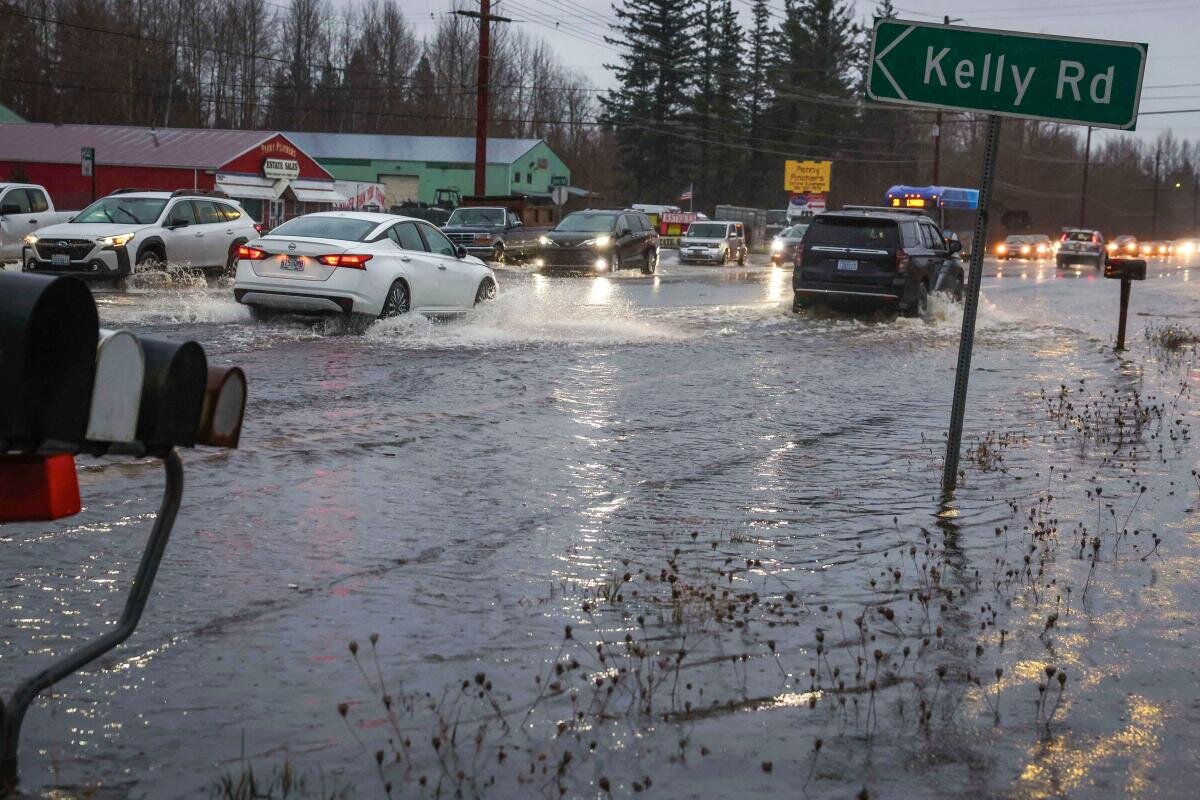
Residents of the Town of Concrete face an unprecedented convergence of natural disasters this week as earthquakes, landslides, and flooding all threaten the small Skagit County community simultaneously.
Emergency officials are urging homeowners to be prepared for sudden evacuation as the Skagit River near the town is forecast to reach major flood stage again following days of relentless rainfall.
The threats come as landslides, earthquakes, and continuous rain have battered the area throughout the week. Concrete sits at the confluence of the Baker and Skagit rivers, just downstream from the Lower Baker Dam to the north.
Emergency personnel have been conducting door-to-door visits warning residents who live in the 100-year floodplain about the potential for rapid evacuations due to dam releases that cause swift river rises in the Skagit River.
Gusty winds are expected to persist through mid-week, raising the risk of trees toppling onto homes and power lines while heavily saturated soil loosens on hillsides surrounding the community.
Four small earthquakes were recorded near Concrete this week, adding to residents’ mounting concerns about the multiple hazards. Local resident Tusten said he felt his house shake during one of the tremors.
“It was kinda startling when it hit. I thought the landslide started,” Tusten said, describing how the earthquake initially made him fear the nearby slope was giving way.
The earthquakes occurred just one day after 32 homes received “get set” evacuation notices for a landslide threatening properties near Burpee Hill Road. Tusten went to inspect the slide area and observed continued movement.
“I went up to see where it was sliding and just to see how much more. And it has slid more. I see a tree that wasn’t there yesterday,” Tusten said, noting the landslide’s ongoing progression.
On December 10, eight homes in the Erikson Road neighborhood received “go now” evacuation orders due to increased landslide potential from continued rainfall saturating the hillside.
As the rain continues with no immediate end in sight, local residents acknowledge the situation has moved beyond human control. Jay Thomas, who lives within the “get set” evacuation zone, expressed a fatalistic acceptance of the circumstances.
“If God chooses to do that, then there’s not much I can do about it anyway,” Thomas said.
The Town of Concrete’s location at the confluence of two major rivers creates inherent flood vulnerability. The Baker River drains a substantial watershed from the North Cascades, while the Skagit River carries runoff from one of Washington’s largest drainage basins.
The Lower Baker Dam’s proximity to town adds complexity to flood management. Dam operators must balance releasing water to prevent overtopping the structure against sending surges downstream into Concrete. During extreme rainfall events, this balance becomes precarious.
The 100-year floodplain designation means areas have a one percent annual chance of flooding. However, climate scientists note that historical flood patterns may not predict future risks as precipitation intensifies.
The door-to-door emergency notifications demonstrate how seriously officials view the threat. Rather than relying on electronic alerts that residents might miss, officials are ensuring face-to-face contact to convey urgency.
Dam releases create particularly dangerous flooding because water levels can rise rapidly without warning. Unlike gradual river rises that give people time to react, dam releases can inundate areas within minutes.
The four earthquakes, while small, rattled nerves in a community already dealing with landslide threats. The timing made residents wonder whether the tremors could trigger additional slope failures on saturated hillsides.
Tusten’s initial thought that the earthquake was the landslide starting reveals the heightened state of anxiety in the community. When multiple disasters threaten simultaneously, every unusual event triggers fear of the worst outcome.
The 32 homes under “get set” orders near Burpee Hill Road face agonizing waiting. These families must remain ready to evacuate at a moment’s notice but haven’t yet been told to leave. The psychological strain of this limbo state can be exhausting.
The visible progression of the Burpee Hill landslide that Tusten observed indicates the slope remains actively moving. Landslides can accelerate suddenly, particularly during continued rainfall that adds weight and reduces friction in soil.
The tree that appeared overnight that Tusten noticed demonstrates how landslides can move vegetation and alter landscapes dramatically. Trees uprooted upslope can be carried downhill as the slide mass flows.
The eight homes that received “go now” orders on Erikson Road represent the most immediate danger zone. These residents had to evacuate immediately, leaving behind homes and possessions as the hillside threatened to fail catastrophically.
The continued rainfall exacerbates every threat Concrete faces. More rain means more dam releases, more saturated slopes, and more landslide potential in a dangerous feedback loop.
Jay Thomas’s philosophical response to the threat reflects a mindset some residents adopt when faced with natural forces beyond human control. After taking reasonable precautions, some people find peace in accepting uncertainty.