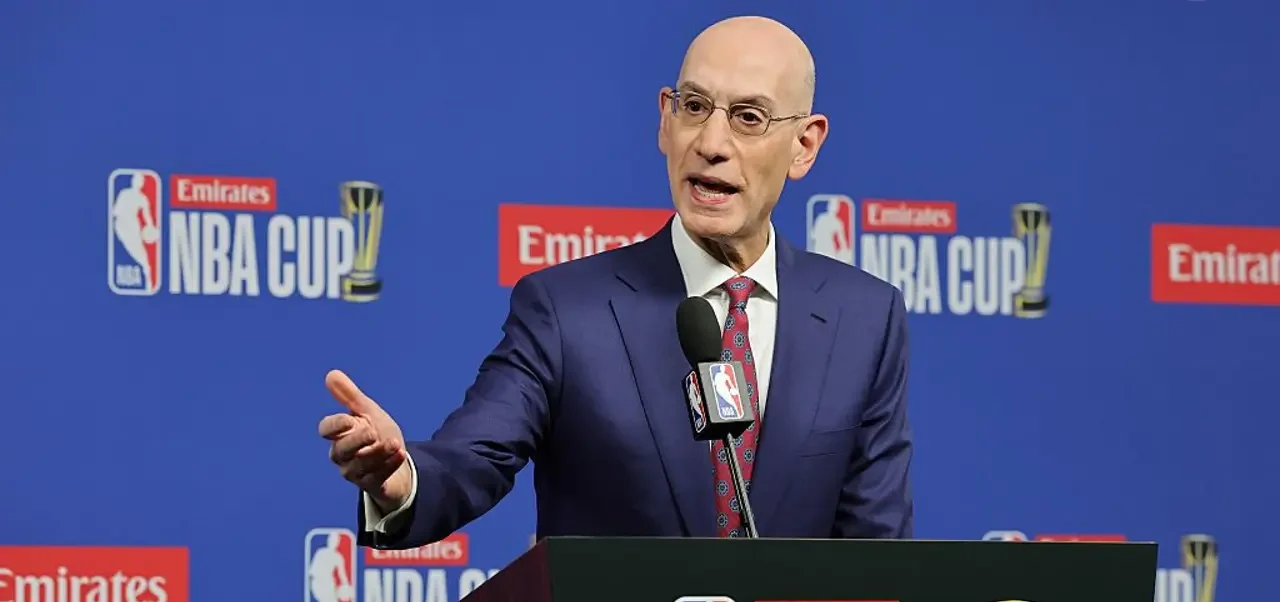
The NBA plans to make a decision on domestic expansion sometime in 2026, Commissioner Adam Silver confirmed Tuesday, providing the most concrete timeline since the league began seriously exploring adding teams beyond the current 30-franchise structure.
Silver addressed expansion plans before the NBA Cup final between San Antonio and New York, acknowledging what has long been an open secret: Seattle and Las Vegas top the list of cities under consideration for potential franchises.
“Not a secret, we’re looking at this market in Las Vegas. We are looking at Seattle,” Silver said. “We’ve looked at other markets as well. I’d say I want to be sensitive about this notion that we’re somehow teasing these markets, because I know we’ve been talking about it for a while.”
Expansion has been a topic of speculation for years in NBA circles, and Seattle, which lost the SuperSonics when the team relocated to Oklahoma City in 2008, and Las Vegas have long been pushing for franchises.
“I think Seattle and Las Vegas are two incredible cities,” Silver said. “Obviously we had a team in Seattle that had great success. We have a WNBA team here in Las Vegas in the Aces. I don’t have any doubt that Las Vegas, despite all of the other major league teams that are here now, the other entertainment properties, that this city could support an NBA team.”
Silver described the current phase of the process as working with existing teams to gauge their level of interest in expansion and developing a clearer understanding of the economics.
“We’re in the process of working with our teams and gauging the level of interest and having a better understanding of what the economics would be on the ground for those particular teams and what a pro forma would look like for them, and then sometime in 2026 we’ll make a determination,” Silver explained.
The 2026 timeline represents the first time Silver has committed to a specific decision window, signaling the league is moving closer to actually adding franchises rather than simply discussing the possibility.
Seattle’s case for an NBA team rests on the city’s basketball history and its status as one of the largest U.S. metropolitan areas without a team. The SuperSonics won an NBA championship in 1979 and remained a fixture in the city for four decades before the controversial relocation.
The loss of the SuperSonics left Seattle as the largest U.S. market without representation in the NBA, creating persistent demand for the league’s return. The city has maintained NBA-quality arena facilities and demonstrated strong fan support for basketball through college and WNBA teams.
Las Vegas has transformed into a major league sports city in recent years with the arrival of the NHL’s Golden Knights and the NFL’s Raiders. The city has proven it can support professional teams despite earlier skepticism about whether a tourism-dependent economy could sustain franchises.
The WNBA’s Las Vegas Aces that Silver referenced have thrived in the market, winning back-to-back championships in 2022 and 2023 while drawing strong attendance and community support.
Beyond Seattle and Las Vegas, other cities have expressed varying levels of interest in NBA franchises, though Silver did not specify which markets the league has examined. Cities like Kansas City, Louisville, and Nashville have been mentioned in media speculation, though none have achieved the frontrunner status of Seattle and Las Vegas.
The expansion process Silver described involves existing team owners evaluating whether adding franchises serves their financial interests. Expansion fees paid by new ownership groups get distributed among existing owners, providing significant one-time revenue.
However, expansion also means dividing television revenue, league sponsorships, and other income streams among more teams. Owners must determine whether the upfront expansion fee payment justifies accepting slightly smaller ongoing revenue shares.
The pro forma financial projections Silver mentioned would model revenue and expenses for potential new franchises, helping the league and prospective owners understand whether teams in specific markets would be financially viable.
Silver’s comments about being “sensitive” to not teasing markets acknowledges frustration in Seattle and Las Vegas where expansion talk has persisted for years without concrete action. Fans and local officials in both cities have grown weary of speculation without decisions.
The 2026 timeline suggests the league needs approximately two more years to complete its economic analysis and secure buy-in from existing owners. This extended timeline reflects the complexity of adding franchises and the need for consensus among 30 current ownership groups.