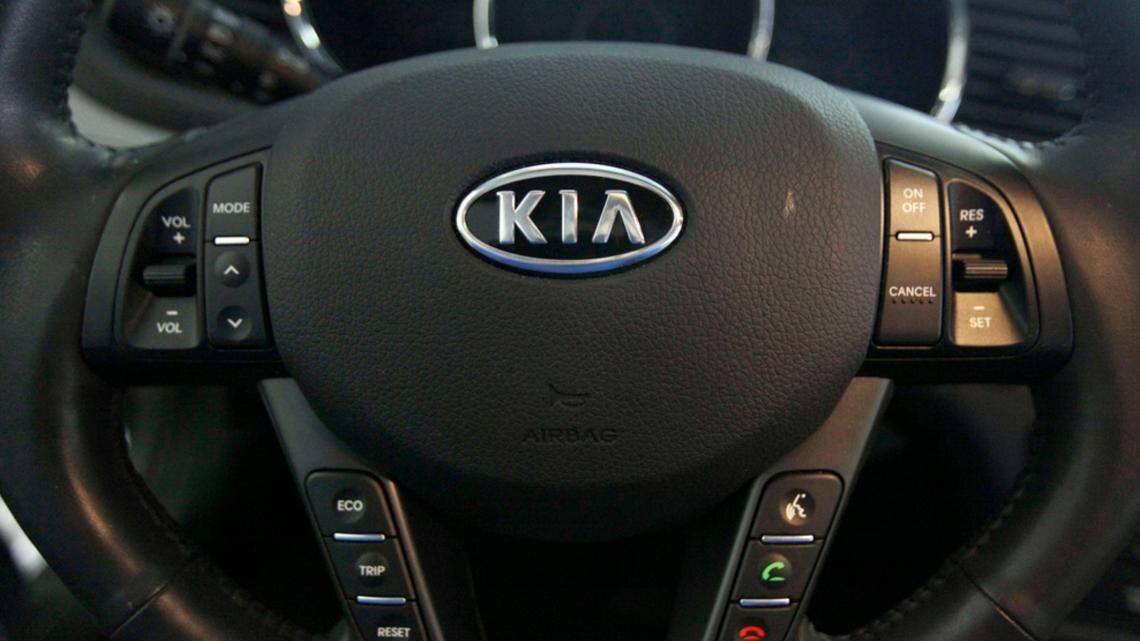
Washington and 35 other states have reached a settlement with Hyundai and Kia requiring the automakers to provide restitution to consumers and install fixes on millions of eligible vehicles nationwide that lacked industry-standard anti-theft technology.
Washington Attorney General Nick Brown’s office announced details of the settlement Tuesday, in which Hyundai and Kia have agreed to several key provisions addressing the widespread theft vulnerability.
The automakers will equip all future vehicles sold in the United States with engine immobilizer anti-theft technology as standard equipment.
They will offer free zinc-reinforced ignition cylinder protectors to owners or lessees of eligible vehicles, including vehicles that previously were only eligible for the companies’ software updates.
The settlement provides up to $4.5 million in restitution to eligible consumers whose cars were damaged by thieves.
Hyundai and Kia will pay $4.5 million to the states to offset the costs of the investigation.
Eligible car owners can receive up to $4,500 for a total loss or up to $2,250 for a partial loss, according to compensation details on the settlement website. The claim deadline is March 31, 2027.
An engine immobilizer prevents thieves from starting a vehicle’s engine without the vehicle’s smart key, which stores the vehicle’s electronic security code. The absence of this technology on millions of cars resulted in what officials described as “an epidemic of car thefts and joyriding” across Washington and the country.
“Security is a key piece for families looking to buy a vehicle, but Hyundai and Kia spent years selling people cars that lacked the industry’s standard protections,” Brown said in a statement. “Year after year, consumers have been easily victimized because of the automakers’ failure here.”
In late 2020, teenage boys began posting videos on social media demonstrating how to steal the cars simply by removing a plastic piece under the steering wheel and using a USB cord. Posts with the hashtag “Kia Boys” accumulated more than 33 million views on TikTok by September 2022. The videos included teens engaged in reckless driving of the stolen vehicles.
Despite years of evidence showing the theft epidemic, Hyundai and Kia waited until 2023 to launch a service campaign updating the software on most of the affected vehicles, Brown’s office said. Thieves easily bypassed the update.
Seattle City Attorney Ann Davison filed a separate lawsuit against Kia and Hyundai in January 2023 seeking damages for impacts on the city.
“The corporate choices by the automakers to cut corners have had very negative impacts and put the public at risk in Seattle,” Davison said in a statement Tuesday.
“I am confident that we will prevail in our lawsuit, and the car companies will finally be required to help in the fight to improve public safety. My action is not to replace criminal prosecution of car thieves, but to hold corporate actors accountable for making choices that prioritize profit over public safety,” she added.
In May 2023, Hyundai and Kia agreed to a consumer class-action lawsuit settlement worth $200 million addressing rampant thefts of the Korean automakers’ vehicles. The Seattle City Attorney’s Office said at the time that while it represented “a good first step for consumers,” the settlement involving individual owners “does not include the litigation brought by the City.”
Under the new multistate settlement, eligible consumers will be notified by the companies that they have one year from the date of notice to make an appointment to have the zinc-reinforced ignition cylinder protector installed at their local Hyundai or Kia authorized dealerships. Consumers are urged to schedule the installation as soon as possible.
Consumers who previously installed the software update on their vehicles or were scheduled to do so but nonetheless experienced a theft or attempted theft of their vehicle on or after April 29, 2025, are eligible to file a claim for restitution for certain theft and attempted-theft related expenses.
The settlement addresses a problem that affected specific Hyundai and Kia models manufactured between approximately 2011 and 2022 that were equipped with traditional key-operated ignition systems rather than push-button start systems with electronic immobilizers.