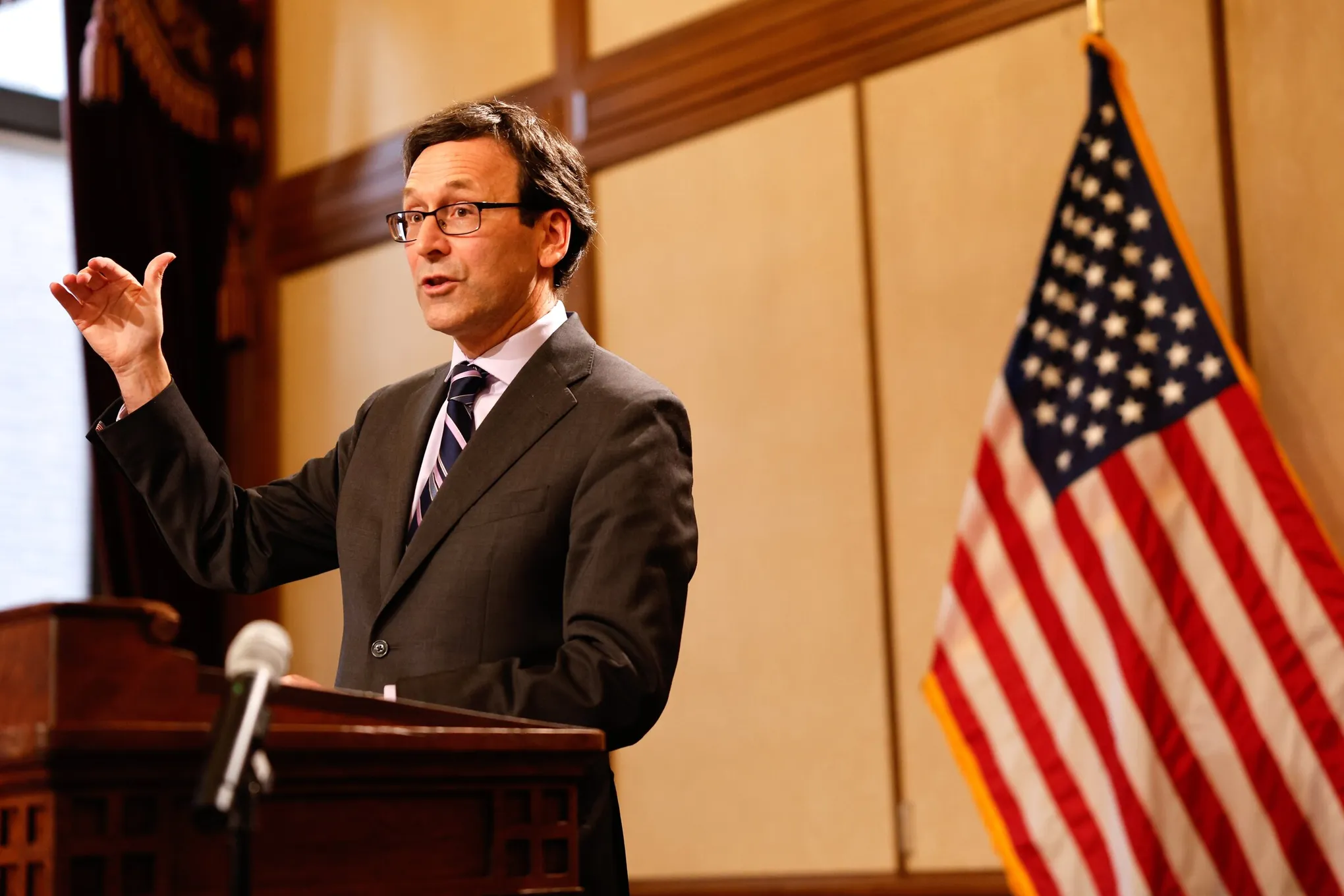
Washington Governor Bob Ferguson said Tuesday he would support a “Millionaires’ Tax” on high earners, suggesting it could raise $3 billion annually while acknowledging it would likely face a legal challenge.
“I want to be clear that I will not support income tax for people who make less than $1 million in a year. Progressive tax reform cannot just mean increasing contributions from those who can afford it. We must use the gains from the millionaires tax to return money directly to working families and small business owners who have been hit hard by the affordability crisis,” Ferguson said during a nearly hour-long press conference to unveil his supplemental budget.
Ferguson noted there would likely be a legal challenge, given past State Supreme Court rulings and Initiative 2111, which Democrats and Republicans voted for in the legislature to ban state and local income taxes.
He also rejected an idea from State Representative Shaun Scott to create a statewide payroll tax on large companies, saying he wasn’t a fan of the proposal.
The supplemental budget, as proposed by Ferguson, would avoid furloughs of state employees but could involve job reductions based on nearly $800 million in departmental cuts.
Ferguson is also calling for taking $1 billion from the rainy day fund and says his budget would avoid raising taxes beyond the millionaires tax proposal.
The 60-day short legislative session begins on January 12.
The $3 billion annual revenue estimate from a millionaires tax represents a substantial sum that could significantly impact state finances. However, the estimate depends on how many high earners would remain in Washington versus moving to states without income taxes.
The promise not to support income tax for people making less than $1 million draws a clear line but raises questions about enforcement. Once the constitutional barrier to income tax is broken, future legislatures could lower that threshold.
The past State Supreme Court rulings Ferguson referenced include decisions that found income to be property under the state constitution, and property must be taxed uniformly. This constitutional interpretation has blocked income taxes for decades.
Initiative 2111’s passage with bipartisan support demonstrates how politically toxic income taxes remain in Washington, even when targeted at high earners. Voters approved the measure banning state and local income taxes, creating both legal and political obstacles.
The rejection of Scott’s payroll tax idea suggests Ferguson wants to avoid fights on multiple tax fronts simultaneously. A payroll tax on large companies would affect different constituencies and face different legal challenges than an income tax.
The $800 million in departmental cuts represent significant reductions in state spending. While avoiding furloughs protects current employees from unpaid time off, job reductions mean people will lose their positions entirely.
The $1 billion withdrawal from the rainy day fund represents a substantial portion of the state’s reserves. Rainy day funds exist to smooth over temporary budget shortfalls, but using them requires eventual replenishment or accepting reduced emergency capacity.
Ferguson’s claim that his budget would avoid raising taxes contradicts the millionaires tax proposal unless he’s distinguishing between taxes he can implement without legislative approval versus those requiring new laws.