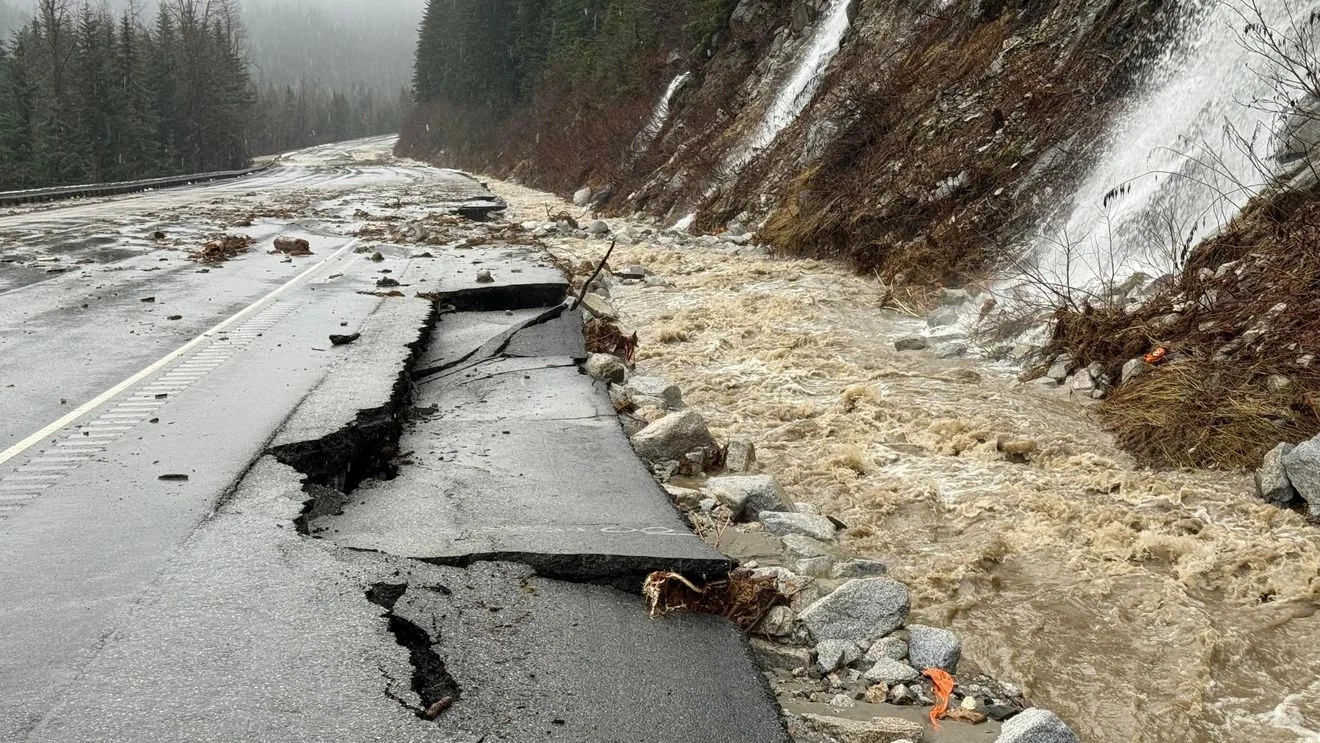
A 20-mile section of U.S. Highway 2 between Coles Corner and Stevens Pass will reopen Monday morning, allowing skiers and travelers to reach the resort from Leavenworth after more than a week of closure.
Governor Bob Ferguson announced Friday that the limited reopening would begin at 6 a.m. Monday, restoring access to Stevens Pass from the east whilst the western approach remains closed indefinitely.
“We all understand how critical reopening Highway 2 is for residents of our cities and communities, for our economy, for the ski resort, for travel across our state,” Ferguson said.
The reopening covers only a portion of the 49-mile stretch of Highway 2 that has been closed since heavy rains and swollen rivers caused road collapses, landslides, and fallen trees across the vital mountain corridor.
Traffic will be reduced to a single lane near the summit, with a pilot car guiding vehicles for the final seven to eight miles approaching Stevens Pass, Ferguson said. The controlled access reflects the tenuous condition of roadways that survived the flooding but remain vulnerable.
The highway has been closed between Skykomish and Leavenworth since storms damaged several sections of roadway, cutting off one of the main passes across the Cascade Mountains during the holiday travel season.
Access from the west side of the pass, located at milepost 54 near Skykomish, remains closed and is expected to take considerably longer to reopen as crews continue assessing the damage.
A bridge just east of Skykomish presents “significant challenges,” Ferguson said. Crews are removing debris from on and under the structure before they can fully evaluate its integrity.
“So I do want to be clear,” Ferguson said. “Fully opening Highway 2 is going to take time, a long time.”
Secretary of Transportation Julie Meredith said officials are still evaluating the full extent of the damage to that critical bridge and surrounding roadway.
“Once they can complete a full inspection of that bridge and determine what damage is there, we will report what the next steps will be,” Meredith said. Officials expect to provide more information on Tuesday about access from the west.
WSDOT has reopened more than 90 roads damaged by recent storms statewide, though some routes require additional time and extensive repairs, Meredith said.
“Reopening a road is not just about clearing what you can see,” she said. “After storms like these, the greatest dangers are often the hidden ones: washed-out roadbeds, unstable slopes, undermined bridges, and saturated soils.”
The Monday reopening will be a relief for Stevens Pass, which has been largely cut off from its customer base during prime ski season. The resort typically draws skiers from both sides of the mountains, but with only eastern access available, the Seattle-area market remains unreachable.
The pilot car escort for the final seven to eight miles indicates significant concerns about road conditions near the summit. Pilot car operations slow traffic considerably, as vehicles must wait for the escort vehicle to make round trips guiding groups through damaged sections.
Single-lane traffic with pilot car control can reduce highway capacity by 80 percent or more compared to normal two-lane operation. What would normally be a 30-minute drive from Leavenworth to Stevens Pass could take an hour or longer with controlled access.
The timing of the reopening, starting at 6 a.m. Monday, allows early skiers to reach the resort for first chair, though the controlled traffic will likely create backups on busy weekend days.
The western closure remaining indefinite creates serious economic impacts for Skykomish and communities along that corridor that depend on pass traffic. Businesses that serve travelers heading to and from Stevens Pass have lost their customer base for more than a week during what should be peak season.
The bridge east of Skykomish being described as presenting “significant challenges” suggests structural concerns beyond simple debris removal. Bridges can suffer hidden damage during floods when high water scours away material supporting foundations or when debris impacts create structural stresses.
Debris under the bridge as well as on it indicates the structure was partially submerged or faced significant debris flows. Material trapped underneath can continue eroding foundations or create flow patterns that undermine stability.
Ferguson’s warning that fully opening Highway 2 will take “a long time” sets expectations for a closure measured in weeks or months, not days. The choice to reopen the eastern section with restrictions rather than wait for full repairs demonstrates the economic and social pressure to restore any access possible.
Meredith’s emphasis on hidden dangers explains why reopening takes so long. Road surfaces that look intact can be undermined from below, ready to collapse under vehicle weight. Slopes that appear stable can give way hours or days after rain stops as saturated soil slowly shifts.
The 90 roads WSDOT has already reopened statewide demonstrates the widespread nature of the flooding damage across Washington. Highway 2 represents one of the most critical closures, but dozens of other routes also suffered damage requiring repairs.