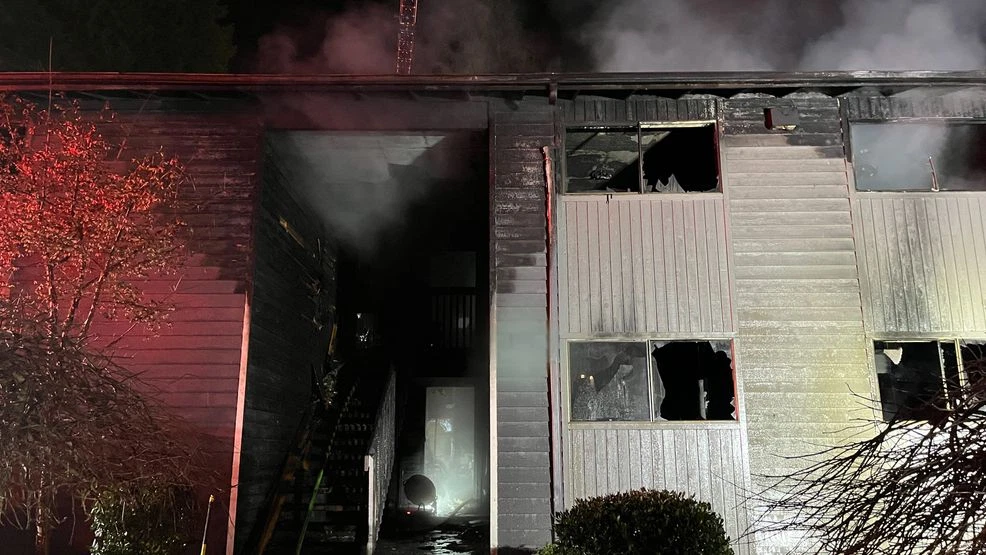
A woman was found dead inside a Lynnwood apartment after a two-alarm fire tore through a complex Sunday night, damaging eight units and displacing a dozen residents.
Just before 11:40 p.m., South County firefighters were dispatched to a fire at a two-story apartment complex in the 16000 block of 44th Avenue West. Crews arrived about six minutes later to find flames spreading from the first floor to the second floor.
Firefighters immediately upgraded the response to two alarms to summon more resources. Icy conditions on the roof of the building made fighting the fire a challenge, according to South County Fire.
During a search of the complex, firefighters found a woman in her 30s dead on the first floor. A man in his 30s was transported to Swedish Hospital in Mill Creek, where he was treated for smoke inhalation and released. No one else was injured.
South County Fire said eight units were affected by the fire, and 12 people, including children, were displaced.
The Snohomish County Fire Marshal’s Office is investigating the cause of the fire with help from South County Fire.
The 11:40 p.m. timing means most residents were likely asleep or settling in for the night when the fire erupted. Late-night fires are particularly dangerous because people don’t notice smoke or flames as quickly as they would during waking hours.
The six-minute response time from dispatch to arrival represents good performance for emergency services, but in a rapidly developing fire, those six minutes can mean the difference between containment and spread to multiple units.
The flames spreading from first floor to second floor indicates the fire had significant intensity and found vertical pathways through the building’s structure. Two-storey apartment buildings often have shared walls, ductwork, and utility chases that allow fire to spread between floors.
The immediate upgrade to two alarms shows incident commanders recognised they needed more firefighters, trucks, and equipment than a standard response provides. Two-alarm fires typically bring 8 to 10 fire engines and 40 to 50 firefighters to the scene.
The icy conditions on the roof created serious hazards for firefighters attempting to ventilate the building or attack flames from above. Ice makes roofs slippery and unstable, increasing fall risks whilst firefighters are wearing heavy gear and managing hoses.
The woman found dead on the first floor suggests she either couldn’t escape due to the fire’s location blocking exits, was overcome by smoke before she could evacuate, or had a medical condition or disability that prevented escape. Fire investigators will examine the scene to understand what prevented her from getting out.
The man treated for smoke inhalation and released indicates he survived by getting out or being rescued but breathed enough smoke to require medical evaluation. Smoke inhalation can cause respiratory damage even when burns aren’t present.
Eight units affected in a two-storey complex suggests either a large building or fire damage that extended horizontally as well as vertically. Water damage from firefighting efforts often affects units beyond where flames actually burned.
The 12 displaced residents, including children, now face finding temporary housing whilst their apartments are uninhabitable. Apartment fire displacements typically last weeks or months depending on damage severity and insurance processes.
The Snohomish County Fire Marshal’s Office leading the investigation with South County Fire assistance indicates the death triggered a more thorough investigation than typical structure fires receive. Fire marshals examine potential criminal causes, building code violations, and other factors beyond just fire origin.
The cause remaining under investigation means multiple possibilities exist: electrical failure, cooking equipment, heating sources, smoking materials, or intentional setting. Investigators will examine burn patterns, witness statements, and physical evidence to determine origin and cause.
Sunday night fires create particular challenges for displaced families. With many services closed until Monday, finding immediate shelter, clothing, and necessities becomes more difficult than during weekday business hours.