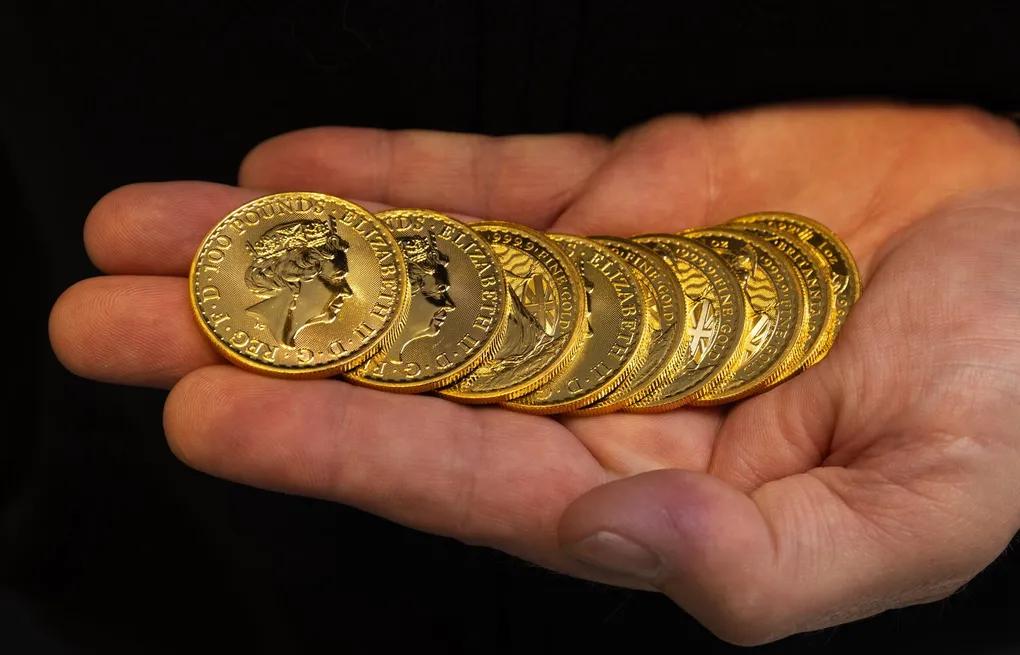
Craig Rhyne has operated Washington Gold Exchange for years, but he’s looking at property in Idaho now, planning to move his entire business across the state line.
“I am right now looking to move to Idaho and move my entire business there,” Rhyne said.
Starting January 1, the price of precious metals and coins like gold and silver will jump significantly in Washington state as a 40-year tax exemption is lifted.
The change impacts buyers and sellers of precious metal coins and bullion, which includes smelted or refined gold, silver, platinum, and rhodium, amongst other metals.
In the New Year, the sales will no longer be exempt from a 10.3 per cent tax, plus the Business and Occupation Tax.
Rhyne is confident that will drive customers to Oregon or Idaho.
“Think about it. If a dealer charges $4,500 for a one-ounce gold coin and the state wants $450 more for sales tax, do you think a Washington resident would be so stupid as to buy locally? No! He’ll go out of state,” Rhyne explained.
Lawmakers projected this change could generate up to $34 million in revenue every two years, but Carolyn Beko with Redmond Rare Coins anticipates coin shows and events will vanish, ultimately reducing revenue for the state.
Additionally, potentially losing customers would be devastating to her business, already operating on razor-thin margins.
“I have to wait for my precious metals to go up at least 11 or 12 per cent to break even, just to break even, and that’s unfair,” Beko stated. “It’s completely regressive.”
Beko said she plans to keep the storefront because they committed to a long lease, but they now aim to sell mainly to wholesalers with a reseller permit as a way to avoid the sales tax.
Redmond Rare Coins is part of the newly formed Washington Coin and Bullion Association, urging people to email their state lawmakers to repeal taxes on precious metals and coins.
The $450 tax on a $4,500 gold coin Rhyne described represents a 10 per cent surcharge that makes Washington instantly uncompetitive with neighbouring states that don’t tax precious metals purchases.
The 40-year exemption existed because lawmakers recognised precious metals function differently than typical retail goods. Gold and silver coins serve as investments and inflation hedges, not consumer products, making sales tax application economically problematic.
The exemption’s removal treats precious metals like any other retail purchase, ignoring the fact that buyers often hold these assets for years or decades before selling, potentially paying sales tax on purchase and capital gains tax on profits.
Oregon having no sales tax and Idaho’s lower overall tax burden create obvious advantages for dealers relocating just across the border. A Washington buyer can drive to Portland or Coeur d’Alene, purchase precious metals tax-free, and save hundreds or thousands of dollars on significant purchases.
The lawmakers’ $34 million revenue projection assumes Washington dealers will continue selling at current volumes despite the new tax. Beko’s prediction that coin shows and events will vanish challenges that assumption.
Coin shows and bullion events attract buyers from across regions who travel to conventions featuring multiple dealers. If Washington dealers stop hosting these events or relocate to other states, the concentrated buying activity moves with them.
Beko’s statement about needing precious metals to rise 11 to 12 per cent just to break even demonstrates how the tax erodes dealer margins. Precious metals dealers typically operate on spreads between buying and selling prices of 3 to 8 per cent, meaning an 11 per cent hurdle nearly eliminates profitability.
The “completely regressive” characterisation refers to how sales taxes disproportionately impact lower-income people. Whilst precious metals buyers skew wealthier than average, the tax still applies equally regardless of buyer income, and smaller investors seeking to protect savings get hit hardest.
Beko’s plan to keep the storefront whilst selling mainly to wholesalers with reseller permits represents adaptation to survive. Wholesalers don’t pay sales tax when purchasing for resale, allowing Beko to maintain some business volume without passing costs to end consumers.
However, shifting to wholesale-focused business reduces retail presence and customer interactions that build community engagement and repeat business. The model change fundamentally alters what Redmond Rare Coins does.
The newly formed Washington Coin and Bullion Association demonstrates how the tax united previously independent dealers into organised opposition. Industry groups form when businesses face existential threats requiring collective political action.
The association urging people to email state lawmakers suggests dealers hope public pressure can reverse the policy before it causes permanent damage. January 1 implementation means the window for legislative action is narrow.
The timing, effective New Year’s Day, gives dealers almost no transition period to adjust business models or relocate operations if they choose that path.
Rhyne actively looking at Idaho property whilst still operating in Washington shows he’s serious about relocation, not making empty threats. Moving an established business involves substantial costs, yet he views it as preferable to operating under the new tax regime.
The competitive disadvantage extends beyond just the tax rate. Washington dealers who stay must convince customers to pay 10.3 per cent more for identical products available tax-free an hour’s drive away, an almost impossible sales pitch.