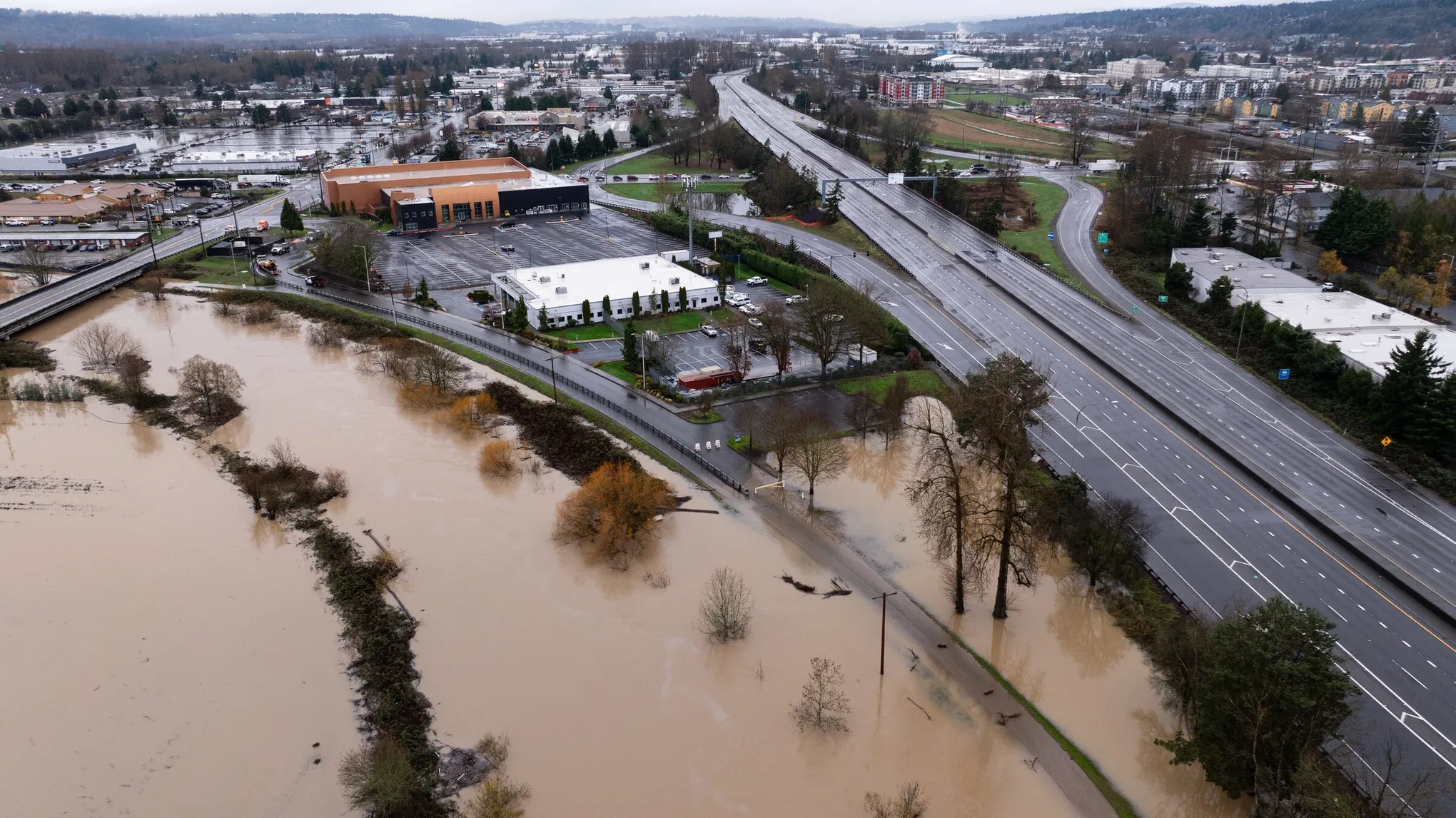
King County opened Disaster Assistance Centers this weekend to help residents affected by devastating December flooding that damaged or destroyed homes across western Washington.
From Friday through Monday, January 2 to 5, centres in Auburn, Issaquah, and Carnation will assist community members in applying for Washington state’s Individual Assistance programme, the county said.
Recently, some homeowners in parts of western Washington whose properties were damaged or destroyed by the historic flooding learned they may have the option to sell their homes to local governments through voluntary flood buyout programmes.
Homes that sustained major damage may qualify for financial aid, according to King County.
In addition to financial assistance, the centres will offer various resources for both residents and businesses, the county said.
The locations and hours are:
Auburn Library: 1102 Auburn Way South, Auburn, Washington 98002 Friday, January 2, 10 a.m. to 6 p.m. Saturday, January 3, 1 p.m. to 6 p.m.
King County Library System Administrative Office: 960 Newport Way Northwest, Issaquah, Washington 98027 Sunday, January 4, 11 a.m. to 6 p.m.
Carnation Library: 4804 Tolt Avenue, Carnation, Washington 98014 Monday, January 5, 11 a.m. to 5 p.m.
To apply, individuals should bring the following documents: personal identification, proof of King County residency, proof of income, and evidence of damage, such as photographs.
For eligibility for Washington State Individual Assistance, applicants must:
Earn 80 per cent or less of the area median gross income, as defined by the U.S. Department of Housing and Urban Development.
Show that their primary residence was destroyed or seriously damaged, with water reaching the electrical outlets on the home’s first floor, by flooding events between December 5 and December 22, 2025.
For those unable to attend in person, online applications will also be available, or by phone at 833-719-4980.
The weekend timing of the assistance centres provides access for people who work during weekdays and couldn’t visit government offices during normal business hours. Opening centres Friday through Monday ensures four consecutive days of availability.
The scattered locations in Auburn, Issaquah, and Carnation reflect the geographic spread of flood damage across King County. Auburn sits in the Green River valley, Issaquah near Issaquah Creek, and Carnation along the Snoqualmie River, all areas severely impacted by flooding.
The requirement to bring personal identification, proof of residency, proof of income, and damage evidence creates barriers for people who lost documents in flooding. Homeowners whose houses were destroyed may not have easy access to paperwork that was damaged or swept away.
The 80 per cent of area median income threshold means assistance targets lower and middle-income residents rather than wealthy homeowners. In King County, where median incomes are high due to Seattle’s tech economy, 80 per cent still represents substantial earnings but excludes the affluent.
The specific damage threshold requiring water to reach electrical outlets on the first floor establishes a clear, verifiable standard for “seriously damaged.” This prevents disputes about whether damage qualifies whilst ensuring only homes with significant structural issues receive aid.
The December 5 to 22 window captures the period of historic atmospheric river storms that battered western Washington, causing rivers to overflow and infrastructure to fail.
The voluntary flood buyout programmes mentioned represent a longer-term solution where governments purchase flood-prone properties, demolish structures, and convert land to open space that can flood without damaging homes. These programmes help residents escape repeated flood cycles whilst reducing future disaster costs.
The phone number 833-719-4980 and online applications provide alternatives for elderly residents, people with disabilities, or those without transportation to reach the physical locations.
The centres offering resources for businesses alongside residents acknowledges that flooding damaged commercial properties, warehouses, and shops, not just homes.