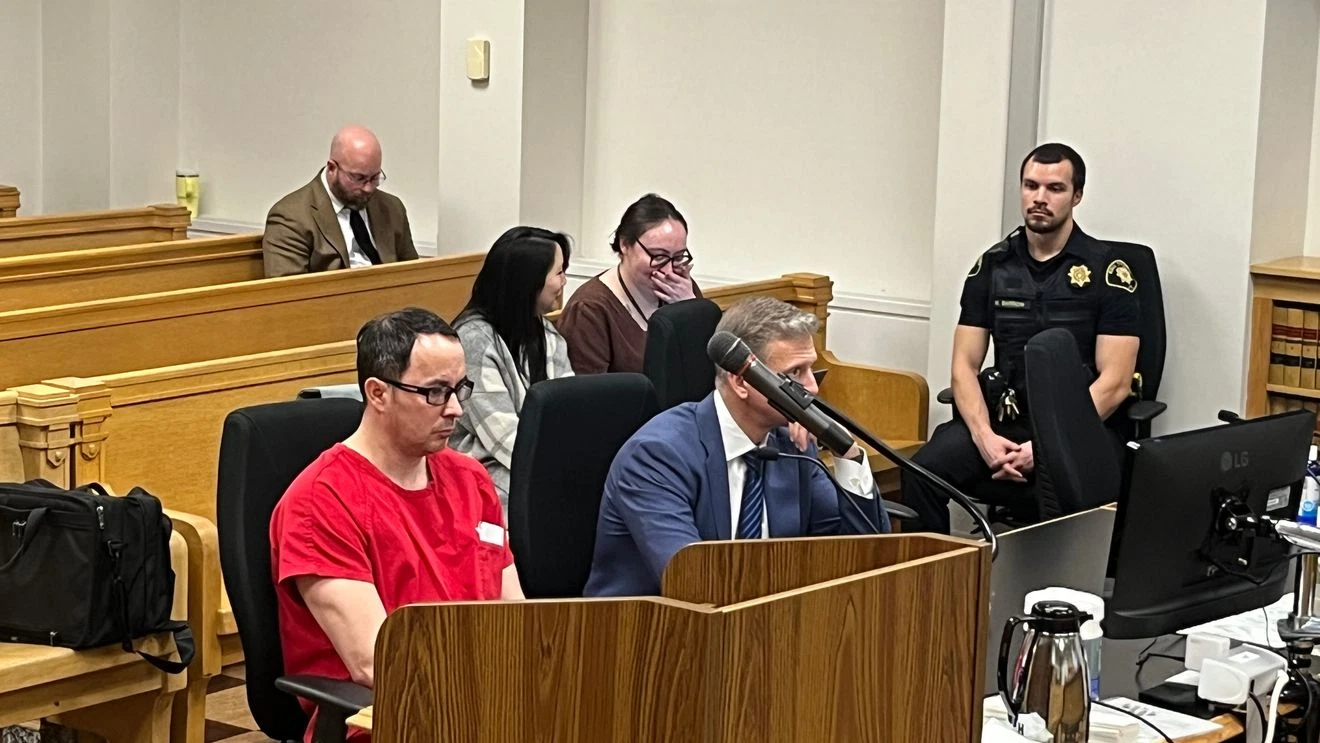
A Lynnwood man was sentenced Friday to four years in prison for placing spy cameras in Expedia Group headquarters bathrooms in Seattle, secretly recording colleagues during their most private moments between December 2023 and January 2024. Marcelo Vargas-Fernandez, a former Expedia employee arrested at his Lynnwood apartment on February 1, 2024, pleaded guilty to 14 felony crimes and two gross misdemeanors. But the case reveals something more disturbing than one individual’s criminal behavior: systematic failures in how workplaces detect surveillance crimes that can continue for months before discovery, and patterns of escalating voyeuristic behavior that often extend from personal relationships into professional environments.
Vargas-Fernandez placed cameras under sinks aimed at toilets in two all-gender bathrooms at the Expedia office building, recording employees for months before an Expedia vanpool driver discovered the devices and reported them to security. That months-long gap between installation and discovery raises questions about how many people were recorded during that period and whether earlier detection was possible. All-gender bathrooms, while important for inclusivity, can create different surveillance vulnerabilities than traditional gendered facilities because they’re typically single-occupancy spaces where individuals have complete privacy, making hidden cameras less likely to be noticed by multiple users in quick succession.
When Seattle police searched Vargas-Fernandez’s apartment after his arrest, they found at least 33 various spy cameras ranging from full to partial to no concealment, plus at least 22 SD cards and six hard drives with at least 20 terabytes of storage. That quantity of equipment and storage capacity indicates someone engaged in extensive surveillance operations, not isolated criminal behavior. Twenty terabytes can store thousands of hours of video. The 33 cameras suggest either redundancy for reliability or deployment across multiple locations beyond the two Expedia bathrooms where cameras were discovered.
Four victim impact statements were read at sentencing. One victim, through an advocate, described Vargas-Fernandez as “a seemingly reliable colleague turned out to be a voyeuristic predator” who “knowingly filmed unsuspecting victims, leaving us exposed to the risk that our most sensitive personal information could be exploited or even shared online.” That fear of online distribution reflects how workplace voyeurism in 2025 carries risks beyond the immediate violation. Recorded footage can be uploaded to pornography sites, shared in online communities dedicated to voyeuristic content, or used for blackmail. Victims often don’t know if their images have been distributed beyond the original recording.
Another victim stated that the trauma of learning she was filmed triggered menopause, having had her last period during the time she was recorded. That biological response to psychological trauma demonstrates the profound physiological impact of discovering you’ve been surveilled in moments of extreme vulnerability. The victim connected her body’s cessation of menstruation directly to the trauma of violation, a response that shows how surveillance crimes affect victims beyond emotional distress.
Vargas-Fernandez apologized during sentencing, saying “This is my fault; I should have asked for help” and telling Expedia “I am sorry because you were there for me I should have asked for help and recognized that I was mentally and emotionally unstable.” That framing, positioning the crimes as resulting from untreated mental health issues rather than deliberate predatory behavior, is common in sentencing statements. It attempts to generate sympathy and reduce culpability by suggesting the defendant was struggling rather than predatory. Whether mental health struggles motivated the crimes or simply coexisted with calculated voyeurism is something victims and prosecutors dispute.
What’s undisputed is the pattern of escalating surveillance that extended from personal relationships into the workplace. Vargas-Fernandez told investigators after his arrest that he had previously used spy cameras to surveil his ex-wife in her own home without her knowledge while they were going through a divorce. He also admitted using a hidden camera in his own apartment to record interactions between him and his daughter “to show he was not doing anything to her because his ex-wife had told him she had safety concerns of him being with their daughter.”
That progression, from surveilling an ex-wife, to recording interactions with his daughter in response to safety concerns, to placing cameras in workplace bathrooms, shows how voyeuristic behavior often escalates across contexts. The justification for recording his daughter, that he needed evidence he wasn’t harming her, reveals twisted logic where surveillance is positioned as protective rather than invasive. His ex-wife had safety concerns about him being alone with their daughter. Rather than addressing whatever behaviors caused those concerns, Vargas-Fernandez responded by secretly recording their interactions, creating documentation of his own behavior while violating his daughter’s privacy.
For Seattle’s tech industry, which includes major employers like Expedia, Amazon, Microsoft, and numerous smaller companies concentrated in downtown offices and South Lake Union, this case highlights vulnerabilities in workplace environments. Office bathrooms are typically cleaned by janitorial staff but not routinely inspected for surveillance devices by security personnel. Employees generally trust that workplace bathrooms are private spaces. That trust makes them vulnerable to exactly the kind of surveillance Vargas-Fernandez conducted. The cameras were only discovered because a vanpool driver happened to notice them, not because Expedia had systems in place to detect such devices.
The case raises questions about what workplace surveillance detection measures should exist. Should building security conduct regular sweeps for hidden cameras in bathrooms and other private spaces? Should companies provide training to employees on what spy cameras look like and how to spot them? Should bathroom designs eliminate hiding spots like the undersink areas where these cameras were placed? Each measure has costs and complications, but the alternative is relying on chance discovery by observant employees after months of secret recording.
Investigators tracked an Amazon order to Vargas-Fernandez that matched the cameras found in the bathrooms. That digital trail, linking online purchases to deployed surveillance devices, is how many voyeurism cases are solved. But it only works after cameras are discovered and investigators have devices to match against purchase records. The cameras Vargas-Fernandez bought on Amazon were openly sold as spy cameras, marketed for purposes that range from legitimate security to voyeurism. Amazon and other retailers face ongoing criticism for selling surveillance devices that are frequently used to violate privacy, but First Amendment protections and the devices’ legitimate uses make restricting their sale complicated.
The sentence, four years in prison plus lifetime protection orders for any identified or yet-to-be-identified victims, represents the middle range of what voyeurism convictions typically receive. Vargas-Fernandez pleaded guilty to 14 felonies, meaning each charge averaged about three and a half months of imprisonment. The lifetime protection orders prevent him from contacting victims, which matters more practically than the sentence length since he’ll eventually be released while the protection orders remain permanently in effect. He also agreed to forfeit any personal property in Seattle Police possession, which presumably includes the 33 cameras, 22 SD cards, and six hard drives containing recorded footage.
What happens to the recorded footage is significant. If law enforcement destroys it, that protects victims from future distribution but eliminates evidence if additional victims are identified. If law enforcement retains it as evidence, that preserves the ability to identify additional victims but creates risk of future leaks or unauthorized access. There’s no perfect solution. Voyeurism investigations require balancing victims’ privacy interests against the need to document crimes and identify all victims.
The reference to victims “yet to be identified by law enforcement” suggests investigators haven’t confirmed everyone who was recorded. With months of bathroom surveillance and 20 terabytes of storage containing unknown footage, there are likely victims who were recorded but haven’t been notified because investigators either can’t identify them from video footage or haven’t yet reviewed all material. Those unidentified victims live with the possibility they were surveilled without confirmation, unable to access protective orders or victim services until their presence in recordings is documented.
For Expedia employees who used those bathrooms during the relevant months, whether or not they were identified as victims in court proceedings, the knowledge that surveillance occurred in spaces they used creates lasting unease. Do you use the bathroom differently after learning cameras were hidden there? Do you check under sinks every time? Does the violation of that space’s privacy contaminate it permanently, or does it eventually feel safe again? These aren’t questions with satisfying answers, which is why workplace voyeurism creates harm beyond the immediate victims who were recorded.
The case also highlights the pattern of voyeurism extending from domestic relationships into workplace settings. Vargas-Fernandez surveilled his ex-wife and daughter before targeting colleagues. That progression suggests workplace surveillance crimes often aren’t isolated but rather escalations of existing voyeuristic patterns. Employers conducting background checks or responding to domestic violence protective orders might have information suggesting surveillance risks, but those signals don’t always translate into workplace safety measures. How should companies balance employee privacy against surveillance risks when hiring or managing employees with histories suggesting voyeuristic behavior?
Four years in prison for recording dozens or possibly hundreds of people in bathroom facilities, maintaining extensive surveillance equipment, and demonstrating years-long patterns of voyeuristic behavior across multiple contexts will strike some as insufficient and others as appropriate. The sentence reflects how voyeurism crimes, despite profound impacts on victims, typically receive moderate penalties compared to offenses involving physical violence or property crimes. Whether that sentencing framework adequately reflects the harm voyeurism causes, or whether it undervalues privacy violations, is an ongoing debate in criminal justice.
What’s certain is that Marcelo Vargas-Fernandez systematically violated colleagues’ privacy in one of the most intimate contexts possible, workplace bathrooms where people reasonably expect complete privacy. He did so for months before detection, using sophisticated equipment purchased openly online, in a workplace environment that had no systems to detect such surveillance. The victims deal with trauma that ranges from emotional distress to physiological responses like menopause, uncertainty about whether their images were distributed, and knowledge that someone they worked alongside was secretly recording them. The case provides no blueprint for preventing similar crimes, only documentation of how they unfold when detection comes months too late.