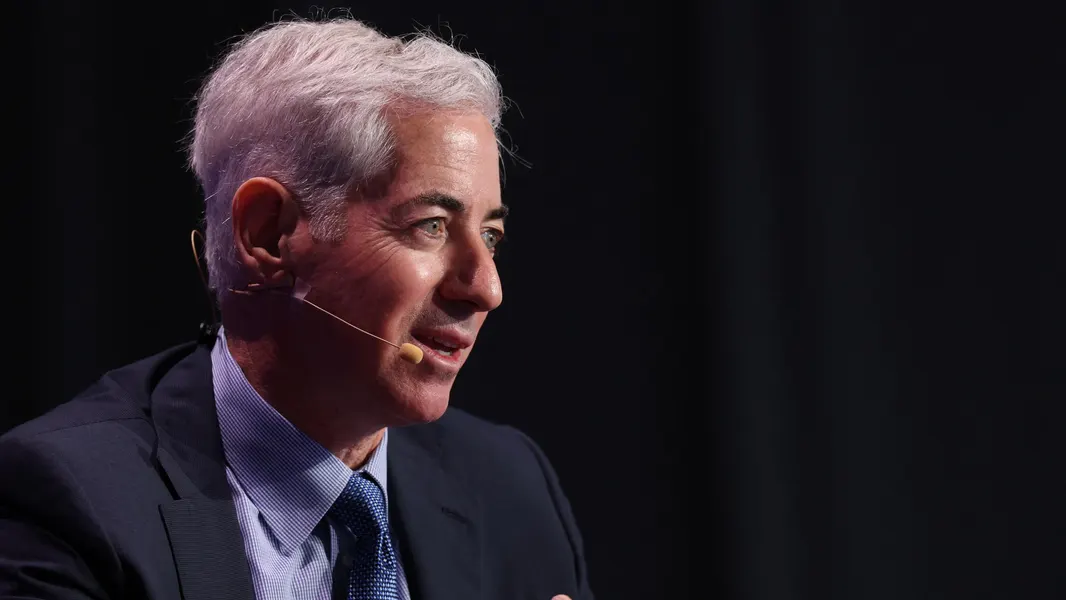
Billionaire Bill Ackman donated $10,000 to a GoFundMe for Immigration and Customs Enforcement agent Jonathan Ross, who fatally shot Renee Nicole Good in Minneapolis last week, confirming the contribution in a social media post where he also said he intended to support Good’s family but their fundraiser had closed after receiving more than $1.5 million. The donation, listed prominently on Ross’s page alongside a description calling him “1000 percent justified in the shooting,” transforms Good’s death from a contested law enforcement incident into a partisan culture war where billionaires and the public choose sides through financial contributions that signal political allegiances as much as they provide material support. The fact that both fundraisers attracted massive donations, $10,000 from a billionaire for the agent and $1.5 million from the public for Good’s family, reveals how the shooting has become a proxy battle over immigration enforcement, police accountability, and whose version of events deserves support.
The GoFundMe page for Ross states it was created “after seeing all the media bs about a domestic terrorist getting go fund me,” referring to Good’s fundraiser and characterizing her as a terrorist, language that echoes Department of Homeland Security Secretary Kristi Noem’s description of Good’s actions as “an act of domestic terror.” That framing, repeated by the fundraiser creator and implicitly endorsed by Ackman’s $10,000 donation, positions Good not as a protester or citizen killed during an ICE operation but as a terrorist who attacked federal agents. Whether that characterization holds up depends entirely on which narrative about the shooting is accurate, the federal claim that Good tried to run over Ross with her vehicle, or the local officials’ claim that video shows her trying to escape a threatening situation.
Ackman’s social media post framing his donation reveals his perspective on the incident: “I am big believer in our legal principal [sic] that one is innocent until proven guilty. To that end, I supported the @gofundme for Jonathan Ross and intended to similarly support the gofundme for Renee Good’s family.” That statement invokes presumption of innocence for Ross while characterizing the “whole situation” as “a tragedy” involving “an officer doing his best to do his job, and a protester who likely did not intend to kill the officer but whose actions in a split second led to her death.”
That framing accepts the federal narrative that Good’s actions threatened Ross, describing her as making split-second decisions that led to her own death rather than describing Ross as making split-second decisions that led to shooting her. The language “likely did not intend to kill the officer” suggests Ackman believes Good was attempting to run over Ross, just without lethal intent, rather than accepting Minneapolis officials’ characterization that video shows her trying to leave the scene rather than attack anyone. His call for Americans to “work together to resolve the complex issues that are tearing us apart” positions the shooting as a misunderstanding or tragedy resulting from broader political tensions rather than as excessive force or murder.
The contrast between fundraising outcomes reveals public sentiment. Ross’s GoFundMe attracted Ackman’s high-profile $10,000 donation plus other contributions, though the page’s total isn’t specified in available reporting. Good’s fundraiser received more than $1.5 million before being paused, donations from thousands of people who viewed her death as unjust killing deserving of support for her family. That 150-to-1 ratio in public donations, $1.5 million for Good versus apparently much less for Ross despite a billionaire’s contribution, suggests broader public sympathy lies with Good rather than the agent who shot her, even as high-profile wealthy conservatives signal support for federal law enforcement.
The characterization of Good on Ross’s fundraiser page as part of an “ICE Watch” network is accurate. ICE Watch groups organize community members to monitor and document ICE operations, often attempting to warn targets or obstruct arrests through presence and documentation. Whether that activity constitutes legitimate protest and community defense or illegal interference with federal law enforcement depends on perspective and specific actions taken. Federal authorities view ICE Watch as obstruction. Immigrant rights advocates view it as necessary accountability for enforcement they consider unjust. Good’s participation in such networks is documented, making her presence during the ICE operation consistent with her activism.
The shooting occurred during what federal officials describe as an active ICE operation. Good was inside an SUV when Ross fired his weapon, and she died at the scene. Those basic facts aren’t disputed. What’s contested is whether Good was attempting to run over Ross, as federal officials claim and as Ackman’s framing accepts, or whether she was trying to escape a threatening situation, as Minneapolis Mayor Jacob Frey and Minnesota Governor Tim Walz argue after viewing video evidence.
New video released Friday showing the agent’s perspective led to further debate about fault rather than resolving it. Different viewers watching the same footage reach opposite conclusions based on their priors about law enforcement legitimacy and protester actions. Those who trust federal authorities’ characterization see video confirming that Good drove toward Ross in a threatening manner. Those skeptical of federal claims see video showing a woman trying to leave while an agent positioned himself in front of her vehicle and fired.
Vice President JD Vance’s Thursday statement that Good was “attempting to interfere with federal officers” and framing her death as “the result of escalating hostility toward law enforcement” represents the administration’s political positioning. By describing Good’s actions as interference and connecting her death to broader “hostility toward law enforcement,” Vance shifts focus from whether the shooting was justified to whether protesters who obstruct ICE operations should expect violent consequences. That framing justifies Ross’s actions by making Good responsible for creating the dangerous situation that led to her being shot.
Minnesota Governor Tim Walz and Minneapolis Mayor Jacob Frey’s strong disputes of federal claims, with Frey saying the agent was “recklessly using his power that resulted in somebody dying,” represent local officials’ political positioning. By characterizing Ross’s actions as reckless rather than defensive, they shift responsibility for Good’s death from her alleged threatening behavior to Ross’s decision to shoot. Frey’s Friday news conference demanding fair investigation signals distrust of federal authorities’ handling of the case.
The FBI’s takeover of the investigation Thursday, sidelining state authorities and the Minnesota Bureau of Criminal Apprehension, became a flashpoint precisely because it removed local oversight from an incident involving federal agents killing a state resident. The jurisdictional dispute isn’t just procedural, it’s about who controls the narrative and investigation outcome. Federal investigators answering to the Trump administration are likely to conclude the shooting was justified. State investigators answering to Governor Walz might reach different conclusions. By excluding state authorities, the FBI ensures federal control over findings and evidence.
For Ackman, the $10,000 donation is financially insignificant, he’s worth billions, but symbolically important. High-profile wealthy conservatives publicly supporting the ICE agent signals to federal law enforcement that they have backing from powerful people even when local officials and public opinion turn against them. That backing matters for agent morale and for political battles over immigration enforcement. If federal agents believe shooting protesters who obstruct operations will cost them their careers and result in prosecution, they might hesitate in future confrontations. If they believe billionaires will fund their legal defenses and political leaders will characterize their actions as justified, they might be more willing to use lethal force.
The fact that Ackman also intended to donate to Good’s family fundraiser, but it had closed by the time he tried, allows him to position himself as supporting both sides rather than taking a clear stance. Whether that reflects genuine desire for evenhandedness or political calculation to appear reasonable while his actual donation went only to the agent is unknowable. The practical effect is that Ross received Ackman’s financial support while Good’s family didn’t, regardless of stated intentions.
The $1.5 million raised for Good’s family before the fundraiser was paused demonstrates massive public support for a woman characterized by federal officials and conservative donors as a domestic terrorist who attacked law enforcement. That contradiction, DHS calling her a terrorist while the public donates $1.5 million to support her family, reveals the partisan divide over this incident. Conservatives see justified shooting of someone interfering with law enforcement. Progressives see murder of a protester by federal agents operating with impunity in a city whose leaders oppose their presence.
The description on Ross’s fundraiser that he was “1000 percent justified” reflects absolute certainty despite contested facts and ongoing investigation. That certainty, echoed in Ackman’s framing that accepts federal narrative, contrasts with local officials’ certainty that video shows unjustified shooting. Both sides claim the evidence clearly supports their interpretation, suggesting the evidence is ambiguous enough to be read through partisan lenses that produce opposite conclusions.
For federal immigration enforcement operating in sanctuary cities that oppose their presence, incidents like Good’s shooting create challenges for maintaining operations while facing local political opposition and hostile public reactions. The fundraising dynamics, where a billionaire donates to the agent while the public raises $1.5 million for the victim’s family, illustrate the support and opposition federal agents face. That agents can expect financial backing from wealthy conservatives might embolden aggressive enforcement. That they face massive public opposition and local officials calling their actions reckless might create hesitation. How those competing pressures affect future enforcement operations will shape immigration policy’s ground-level reality beyond abstract debates over deportations and sanctuary jurisdictions.
Ackman’s invocation of “innocent until proven guilty” applies that standard to Ross while characterizing Good’s actions as creating the situation leading to her death, an asymmetry that reveals whose innocence gets presumed. Ross is innocent until proven guilty of wrongdoing, but Good is implicitly guilty of threatening actions that justified her being shot. That framing, common in police shooting debates, starts from assumption that officer’s use of force was necessary and forces critics to prove it wasn’t, rather than starting from assumption that killing requires justification and forcing officers to prove it was necessary.
The “whole situation is a tragedy” language that Ackman uses, and that officials often employ after controversial law enforcement killings, describes structural inevitability rather than individual culpability. Tragedies happen, people die, it’s sad but no one is really at fault. That framing diffuses accountability by suggesting Good’s death resulted from complex circumstances rather than from Ross’s decision to shoot her or from federal enforcement policies that create confrontations between agents and activists in sanctuary cities opposing their presence.
Whether Ross faces any consequences, whether civil liability or criminal charges or simply career impact, depends on investigations controlled by federal authorities who’ve already characterized the incident as justified self-defense against a domestic terrorist. The FBI takeover of investigation from state authorities makes conclusions favorable to Ross more likely than if Minnesota investigators retained control. Ackman’s $10,000 contribution and prominent conservatives’ characterization of the shooting as justified create political pressure against any accountability. The $1.5 million raised for Good’s family creates opposite pressure demanding justice, but public pressure doesn’t always translate into legal outcomes when investigations are controlled by authorities aligned with the party whose conduct is being investigated.
For Minneapolis and other sanctuary cities watching this unfold, the lesson is that federal agents operating in their jurisdictions despite local opposition face no meaningful accountability when shootings occur, investigations get taken over by federal authorities, billionaires fund their legal defenses, and national political leaders characterize protesters as domestic terrorists whose deaths result from their own actions. That lesson will shape how sanctuary cities respond to future federal operations and how activists decide whether monitoring ICE activity is worth risking their lives when agents can shoot with apparent impunity and characterization as justified self-defense.