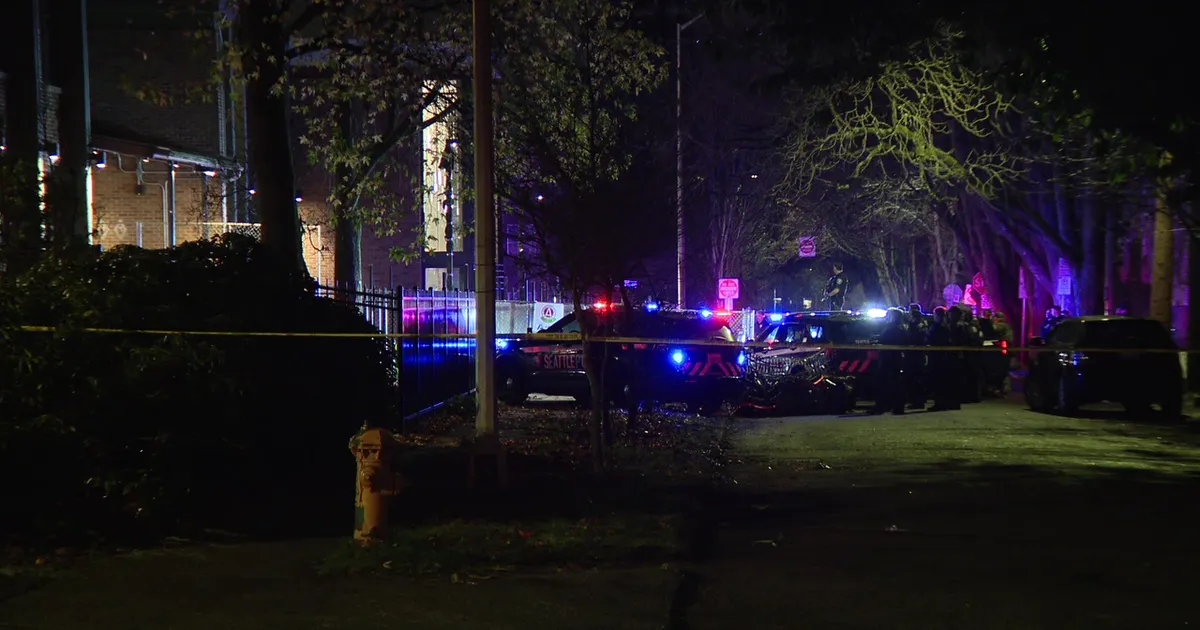
A 47-year-old armed man was arrested by Seattle police following a tense standoff in the University District on Tuesday evening after police received reports around 4:30 p.m. of a man armed with a machete and possibly a knife outside a church near NE 50th Street and 16th Avenue NE. Authorities safely evacuated everyone inside the church as a precaution while the man remained outside, barricaded behind a fence, as officers and SWAT team members responded and worked to negotiate a peaceful surrender. No injuries were reported, and the man is expected to be booked into King County jail. The incident demonstrates how Seattle police handle armed standoffs by evacuating potential victims, establishing perimeters, deploying specialized negotiators, and waiting for peaceful resolutions rather than forcing confrontations that increase risks of violence, though questions remain about what motivated the man’s actions and whether this represents mental health crisis requiring treatment rather than simply criminal behavior warranting incarceration.
The location near NE 50th Street and 16th Avenue NE places the incident in a residential area of the U-District a few blocks east of University of Washington campus, in a neighborhood with mix of single-family homes, apartments, and community institutions including churches. The specific church hasn’t been identified in available reporting, but the area contains several religious institutions serving diverse congregations. Whether the man had connection to the church, was targeting it specifically for religious or personal reasons, or simply happened to be near it when police were called affects interpretation of the incident and potential charges he faces.
The weapons reported, a machete and possibly a knife, represent serious threats capable of causing significant injury or death but also commonly owned tools that people possess for legitimate purposes including yard work, camping, or collecting. Whether the man was brandishing the machete in threatening manner, using it to damage property, or simply had it visible while behaving erratically determines whether his possession constitutes criminal threat or mental health crisis. The fact that police evacuated the church and deployed SWAT suggests they assessed him as presenting genuine danger rather than simply being armed person behaving oddly.
The decision to evacuate everyone inside the church as a precaution reflects standard active threat protocols prioritizing potential victim safety over convenience or maintaining normal activities. Church evacuations can be complicated if services or meetings are in progress, particularly for congregations with elderly members, young children, or people with mobility limitations who require assistance evacuating quickly. The fact that evacuation occurred safely without reported injuries suggests either that the church wasn’t heavily occupied at 4:30 p.m. Tuesday, or that evacuation was orderly and well-managed by both church leadership and responding officers.
The man’s position “barricaded behind a fence” rather than inside a building or vehicle created somewhat unusual tactical situation. Fences provide limited protection compared to structures but can create standoff if subject refuses to leave area and police don’t want to force confrontation by breaching the fence and physically restraining him while he’s armed. The fact that he remained behind the fence throughout the incident suggests either he viewed it as protective position, or he simply didn’t leave that location while police established perimeter and began negotiations. Whether the fence was part of the church property or adjacent property affects property owner involvement and potential damage from incident.
The deployment of SWAT team indicates police assessed the situation as requiring specialized tactical response beyond patrol officers’ capabilities. SWAT teams train specifically for armed standoffs, hostage situations, and high-risk arrests where specialized equipment, tactical positioning, and negotiation expertise increase likelihood of peaceful resolution. The decision to call SWAT rather than attempting to resolve the situation with patrol officers suggests either the man made specific threats, his weapons and position created significant danger if he decided to attack, or his behavior indicated he wouldn’t surrender to standard police requests.
The negotiation process that led to peaceful surrender likely involved trained crisis negotiators attempting to establish rapport, understand the man’s motivations or grievances, and convince him that surrendering was his best option. Successful negotiations can take minutes or hours depending on subject’s state of mind, whether he’s experiencing mental health crisis, whether substances are involved, and whether he believes he has viable alternatives to surrender. The fact that this standoff resolved without injuries suggests negotiators successfully convinced him that police wouldn’t harm him if he surrendered peacefully, or that he recognized continued resistance was futile.
The absence of injuries represents the outcome police prioritize in armed standoff situations. When someone is armed and refusing to comply with police orders but not actively attacking anyone, time typically favors peaceful resolution over forceful intervention. By establishing secure perimeter that prevents the subject from harming others, evacuating potential victims, and engaging in patient negotiation, police can often wait out subjects who eventually surrender when they recognize the situation won’t end favorably for them through continued resistance. That approach requires resources, time, and public patience with disrupted neighborhoods during extended standoffs, but it produces outcomes without the deaths or injuries that often result from forced confrontations.
The expected booking into King County jail means prosecutors will review the case and decide what charges to file. Potential charges could include felony harassment if he threatened people with weapons, assault if he attempted to harm anyone, weapons violations if he possessed weapons illegally or used them unlawfully, and possibly trespassing or property damage depending on his actions at the church. Whether he faces mental health diversion rather than standard prosecution depends on assessment of his mental state during the incident and whether he qualifies for therapeutic courts designed to address underlying mental illness rather than simply punishing criminal behavior resulting from untreated conditions.
For the church community, this incident created disruption and potential trauma even though no physical injuries occurred. People evacuated from the building during armed standoff likely experienced fear and anxiety about what might happen. Church members may now feel unsafe returning to a place that experienced violent threat, even though the threat was resolved peacefully. Whether the church implements additional security measures, offers support to members affected by the incident, or simply returns to normal operations depends on leadership’s assessment of ongoing risks and community needs.
The U-District neighborhood, while generally safe compared to some Seattle areas, experiences periodic incidents of violence, mental health crises, and criminal activity related to its urban density, proximity to university population, and mix of residential, commercial, and institutional uses. Residents near NE 50th and 16th Avenue NE likely heard police activity, saw emergency vehicles, and possibly received alerts to shelter in place or avoid the area during the standoff. That disruption to normal evening activities affects quality of life and can contribute to perceptions of neighborhood safety that influence where people choose to live and whether businesses thrive.
The fact that no details about the man’s motivations or statements during the incident have been released suggests either that investigation is ongoing and police don’t want to compromise potential prosecution by disclosing information prematurely, or that his statements revealed mental health crisis that authorities don’t want to publicize out of respect for privacy and concern about stigmatizing mental illness. Whether he was experiencing psychotic episode, responding to perceived threats that existed only in his mind, protesting some grievance against the church or religion generally, or acting on other motivations will emerge through court proceedings if charges are filed and the case goes to trial.
The successful resolution through negotiation rather than force validates Seattle Police Department’s approach to crisis response that emphasizes de-escalation and patience when time and circumstances allow. Not every armed standoff can be resolved peacefully, particularly if subjects are actively harming people or creating imminent threats that can’t be contained. But when perimeter can be established, potential victims evacuated, and time invested in negotiation, outcomes like Tuesday’s arrest without injuries represent policing success that receives less attention than shootings or violent confrontations but which protects both community members and subjects experiencing crises.
For Seattle’s approach to mental health and criminal justice, this incident may represent another case where someone experiencing crisis committed acts that look criminal but stem from untreated mental illness. Whether the man receives mental health assessment and treatment or simply faces prosecution and potential incarceration depends on how prosecutors and courts evaluate his case. Seattle has worked to expand mental health diversion programs and therapeutic courts that address underlying conditions rather than cycling mentally ill people through jails without treatment, but capacity limitations and eligibility restrictions mean many people who could benefit from treatment instead face standard criminal prosecution.
The 47-year-old man’s age suggests this isn’t juvenile behavior or early-onset crisis but rather someone who’s lived decades with whatever conditions or circumstances led to Tuesday’s armed standoff. Whether he has history of similar incidents, whether this represents escalation of chronic mental illness, whether substance use contributed, or whether this was unprecedented crisis will inform how authorities respond. People with extensive criminal histories involving violence and weapons face harsher charging and sentencing than first-time offenders who appear to be experiencing isolated mental health crisis.
The peaceful resolution of this U-District church standoff represents what Seattle police aim for in armed crisis situations: no deaths, no injuries to subjects or officers, no harm to bystanders, and arrest that allows criminal justice system or mental health system to address whatever drove the incident. Whether that success came primarily from effective police tactics and negotiation skills, or from the subject’s own decisions to surrender rather than escalate, or from fortune that the situation didn’t deteriorate despite risks, is difficult to assess. What’s clear is that Tuesday evening ended without the tragedies that similar standoffs sometimes produce when peaceful negotiation fails and force becomes necessary to protect lives and public safety.