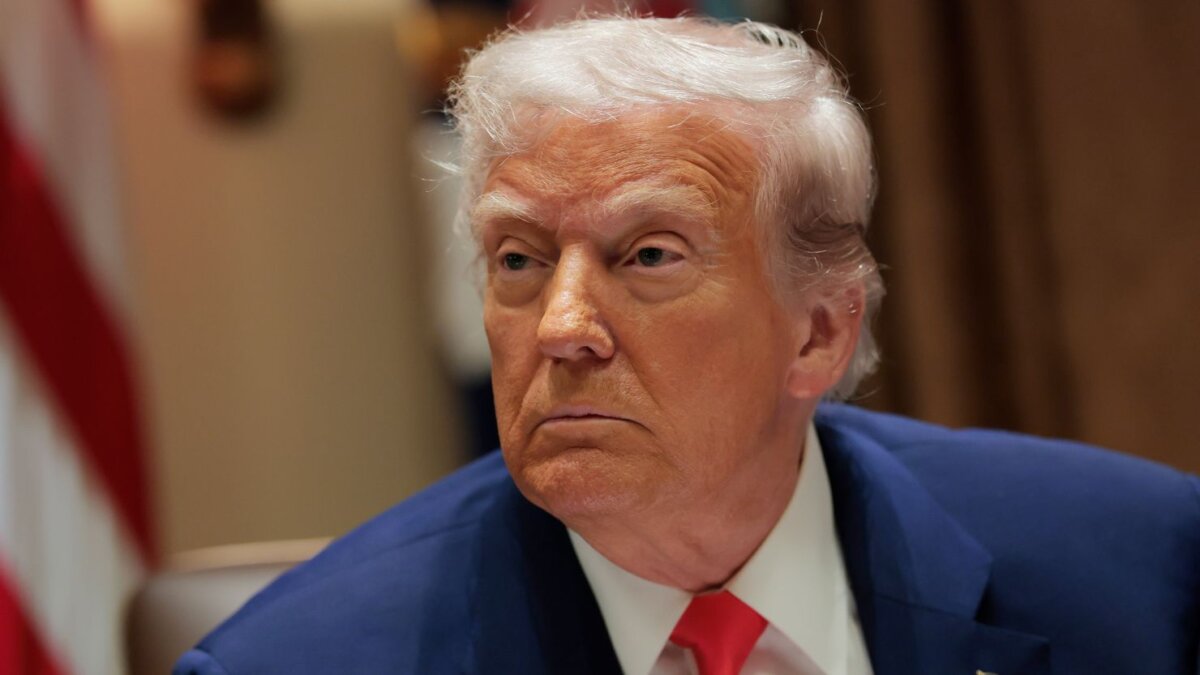
Donald Trump said Wednesday he has been told “the killing in Iran has stopped,” but the US president hasn’t ruled out military action against the country over its violent crackdown on anti-government protesters that human rights groups say has killed more than 2,400 people. Trump’s comments came after the US and UK both reduced personnel at Al-Udeid air base in Qatar as a “precautionary measure,” Iran closed its airspace to nearly all flights for five hours overnight, multiple airlines rerouted flights around Iran, and the UK temporarily closed its British embassy in Tehran to operate remotely. The developments follow Trump’s earlier threats of “very strong action” if Iran executed protesters like 26-year-old Erfan Soltani, whose execution scheduled for Wednesday was reportedly postponed, though Iranian state media denied he was sentenced to death while authorities have failed to give his family information about his case beyond that he was arrested during protests.
Trump told reporters his administration had been told “on good authority” that “the killing in Iran is stopping, and there’s no plan for executions,” claiming “very important sources on the other side” informed him of developments but declining to specify who those sources were. The vague attribution to “good authority” and “important sources on the other side” without identifying specific Iranian government officials or intermediaries raises questions about whether Trump received direct communications from Iranian leadership, indirect messages through third parties, or intelligence assessments interpreting Iranian actions. Whether Iran actually ceased violence against protesters or whether Trump is simply declaring success based on limited information affects interpretation of both the situation on the ground and Trump’s approach to foreign policy crises.
Iranian Foreign Minister Abbas Araghchi told Fox News that “hanging is out of the question” and there would be “no hanging today or tomorrow,” potentially representing the communication Trump referenced. But Araghchi also warned Trump “not repeat the same mistake that you did in June,” adding “if you try a failed experience, you will get the same result,” referring to June 2025 when the US bombed three of Iran’s nuclear sites over fears Tehran could use them to build nuclear weapons. That warning suggests Iran interprets Trump’s threats as potential prelude to military strikes similar to the nuclear site bombings, creating dangerous cycle where threats and counter-threats escalate toward actual military conflict.
The US-based Human Rights Activists News Agency confirmed killing of 2,435 protesters plus 13 children, with a further 882 deaths under investigation, indicating the scale of violence that preceded Trump’s claim that killing stopped. Whether violence actually ceased or simply declined from peak levels, or whether internet blackout imposed since last Thursday simply prevents documentation of ongoing killings, affects assessment of whether Iranian authorities responded to international pressure or simply became more effective at preventing information from leaving the country. The BBC and most international news organizations are unable to report from inside Iran, making verification extremely difficult.
The case of Erfan Soltani illustrates both the urgency of execution threats and the confusion about what’s actually happening in Iran’s judicial system. His family told BBC Persian he was scheduled for execution Wednesday, then told Norwegian-based Kurdish human rights group Hengaw the execution was postponed. Iranian state media denied he was sentenced to death while confirming arrest during protests. Authorities reportedly haven’t given his family information beyond his arrest connection to protests. That pattern, where families receive information through informal channels while official sources provide contradictory or minimal information, reflects opacity of Iranian judicial system particularly regarding politically sensitive cases.
The evacuations and security measures by multiple countries suggest assessment that military conflict between US and Iran is increasingly likely. The US and UK reducing personnel at Al-Udeid air base, the largest US military installation in Middle East with 10,000 American personnel plus 100 UK staff, indicates concern about Iranian missile or drone strikes targeting the base. Qatar, hosting the base, said it would “implement all necessary measures to safeguard the security and safety of its citizens and residents,” indicating host nation concerns about becoming target if US-Iran conflict escalates.
Iran closing its airspace for five hours overnight and multiple airlines rerouting flights around Iranian and Iraqi airspace reflects aviation industry’s assessment of risk from “escalating conflict and anti-aviation weaponry,” as Germany’s notice to air operators stated. Airlines remember Iran’s 2020 shooting down of Ukrainian International Airlines Flight 752, killing all 176 people aboard, which occurred during heightened tensions after US assassination of Qasem Soleimani. The combination of potential military conflict and Iran’s air defense systems creates unacceptable risk for commercial aviation transiting Iranian airspace.
The UK’s temporary closure of its Tehran embassy to operate remotely represents significant diplomatic step, effectively suspending in-person UK-Iran relations while maintaining technical diplomatic presence. Italy and Poland urging their citizens to leave Iran indicates European governments are preparing for potential military conflict or civil unrest that could endanger their nationals. The US Mission to Saudi Arabia advising personnel to “exercise increased caution and limit non-essential travel to any military installations in the region” suggests concerns extend beyond Iran to potential Iranian proxy attacks on US facilities across Middle East.
Trump’s earlier urging of Iranians to “KEEP PROTESTING” via Truth Social, promising “HELP IS ON ITS WAY,” positioned him as supporting protest movement while raising questions about what “help” means. Military intervention to support protesters? Sanctions relief if regime changes? Communications technology to bypass internet blackout? Material support for opposition? Without specificity, the promise creates expectations Trump might not intend to fulfill while allowing Iranian authorities to characterize protests as foreign-backed insurrection justifying crackdowns.
Trump’s reluctance to support specific opposition figures like Reza Pahlavi, the exiled son of Iran’s last shah, despite many protesters calling for Pahlavi’s return, reflects caution about backing leaders who might not have broad support inside Iran. “I don’t know whether or not his country would accept his leadership, and certainly if they would, that would be fine with me,” Trump said. “He seems very nice, but I don’t know how he’d play within his own country.” That hedge prevents Trump from being tied to failed opposition leader if protests don’t result in regime change, while keeping options open if Pahlavi emerges as viable alternative to current leadership.
The difficulty establishing Pahlavi’s actual support inside Iran reflects challenges of assessing political dynamics in authoritarian states with internet blackouts and limited press freedom. Some protesters invoke Pahlavi and his grandfather’s era as symbols of resistance to Islamic Republic, but whether that reflects genuine desire for monarchy restoration or simply nostalgia for pre-revolutionary era is debated. Iranian diaspora communities often support Pahlavi more strongly than Iranians inside the country, where memories of shah’s authoritarian rule and corruption temper enthusiasm for restoration.
Trump’s statement that Iranian government “could fall due to the protests” but “any regime can fail” frames situation as potentially historic while hedging against prediction if protests are suppressed. That non-committal positioning allows Trump to claim credit if regime actually falls while avoiding responsibility if it survives. The pattern reflects Trump’s approach to many foreign policy challenges: threatening action, declaring success based on ambiguous evidence, while maintaining flexibility to escalate or declare victory regardless of actual outcomes.
For Iran’s clerical leadership, the protests that began over currency collapse but expanded into “wider crisis of legitimacy” represent most serious challenge since 1979 Islamic Revolution, according to reporting. Whether authorities can suppress protests through violence and internet blackouts, or whether demonstrations persist and expand into revolution that overthrows the government, depends on factors including protester resilience, security forces’ willingness to continue killing civilians, international pressure, and economic conditions that sparked initial protests.
The internet blackout since last Thursday prevents protesters from coordinating, documenting violence, and communicating with outside world, tactics authoritarian governments increasingly use to suppress dissent while limiting international awareness. Whether blackout successfully isolates protesters or simply delays information flow while intensifying anger about government repression affects protest dynamics. Countries that successfully suppressed protests through internet shutdowns include Myanmar and Sudan, though shutdowns also occurred during ultimately successful uprisings in Egypt and Tunisia.
The 882 deaths under investigation beyond the 2,435 confirmed killings suggests actual death toll is substantially higher, likely exceeding 3,000 once investigations complete. For comparison, Iran’s 2019 protests resulted in roughly 1,500 deaths according to Reuters, making current crackdown significantly deadlier. Whether international community responds to mass killings with meaningful consequences or simply issues statements while Iranian authorities continue repression affects both immediate protest outcomes and longer-term precedents for how authoritarian governments can treat civilian populations.
Trump’s threats of military action if protesters are executed, combined with June 2025 bombing of Iranian nuclear sites, establish pattern where US uses force against Iran despite lack of congressional authorization for war. Whether such strikes constitute acts of war requiring congressional approval or fall within presidential authority to protect American interests and respond to threats remains legally contested. Congress has passed resolutions attempting to limit presidential war powers regarding Iran, but whether those effectively constrain presidents is unclear.
For American personnel at Al-Udeid and other Middle East bases, the partial evacuation creates disruption to operations and family life while signaling genuine concern about potential Iranian attacks. Whether evacuations prove precautionary excess or prudent preparation depends on whether military conflict actually occurs. The challenge of balancing force protection against operational readiness and avoiding self-fulfilling prophecies where defensive measures escalate tensions affects military planning in crisis situations.
The global diplomatic and economic implications of potential US-Iran military conflict extend far beyond the immediate parties. Iran could close or attack shipping through Strait of Hormuz through which roughly 20% of world’s petroleum passes, driving oil prices dramatically higher and potentially triggering global recession. Iranian proxies in Iraq, Syria, Lebanon, Yemen, and Palestinian territories could attack US and allied targets across Middle East. Iran could accelerate nuclear weapons development, potentially triggering regional arms race. Israel might conduct military operations against Iranian nuclear facilities or proxies, expanding conflict.
Trump’s claim that killing stopped, whether accurate or aspirational, attempts to de-escalate crisis he partly created through threats of military action. Whether Iran actually halted violence in response to US threats, or whether Trump simply needed off-ramp from escalation spiral, or whether information about ongoing violence simply isn’t reaching outside world due to internet blackout, remains uncertain. What’s clear is that more than 2,400 Iranians died in government crackdown, diplomatic missions are evacuating, military forces are repositioning, and risk of US-Iran military conflict is heightened despite Trump’s optimistic assessment that “killing has stopped.”