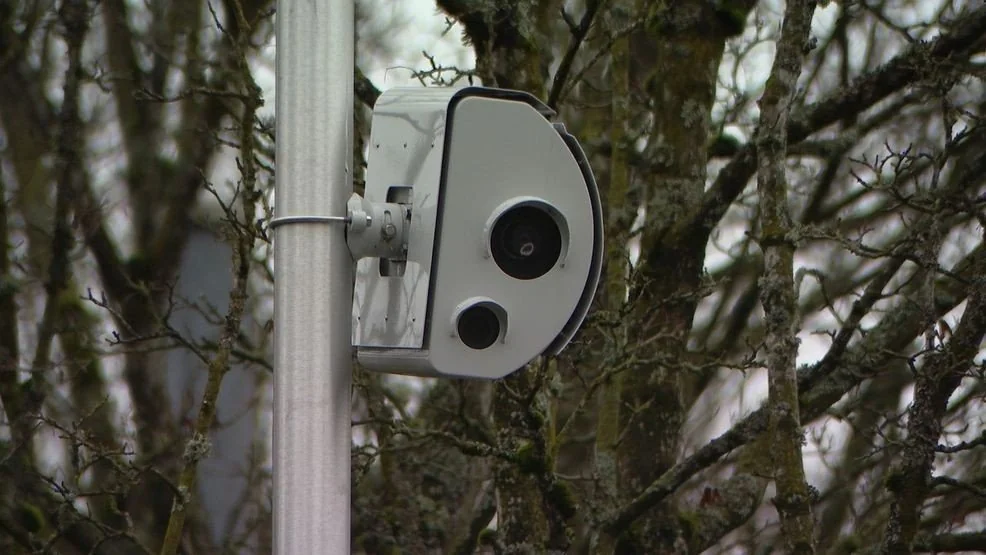
The city of Tacoma is working to add more traffic cameras to dangerous roads to catch speeders as part of the city’s Vision Zero goal of having no traffic deaths or serious injuries by 2035. The city’s sole speed camera on a main thoroughfare has generated more than $1.7 million annually since 2019 and over $2 million in 2024, consistently exceeding combined revenue from nine red light cameras and four school zone cameras. City Spokesperson Maria Lee said “these funds successfully underwrite the City’s broader traffic initiatives, covering costs for the entire traffic enforcement unit as well as essential engineering projects.” Tacoma has created a task force to evaluate placement of new safety cameras considering factors including livability, accessibility, and neighborhood economics, with potential locations including high-crash areas like parks and hospital zones. The expansion follows 2024 state legislation broadening automated enforcement authority, while speeding ticket prices from cameras increased to $145 in 2026, with revenues reinvested in construction projects, road maintenance, and infrastructure changes for pedestrian and cyclist safety.
Matt Perrine, who drives East Bay Street daily for his commute, knows where the enforcement camera catches speeders and believes it’s working: “The speeding used to be pretty bad. There were quite a few accidents in the beginning, but not so much anymore.” His observation that “once you get past the light, then everybody speeds back up” illustrates both the cameras’ effectiveness at specific locations and their limitation in changing driver behavior beyond the enforcement zone. That pattern, drivers slowing for cameras then accelerating afterward, raises questions about whether cameras actually improve safety or simply displace speeding to areas without enforcement.
The revenue generated by the single East Bay Street camera, over $2 million in 2024 alone, suggests either extremely high traffic volume, frequent speeding violations, or both. If tickets are $145 each in 2026 and were presumably lower in previous years, the $2 million revenue represents roughly 14,000 to 20,000 tickets annually depending on ticket price during that period. That averages 40 to 55 tickets per day from one camera, indicating either that many drivers speed past the camera despite knowing it’s there, or that the speed limit is set low enough that normal traffic flow exceeds it.
The fact that one speed camera generates more revenue than nine red light cameras and four school zone cameras combined reveals either that speeding is far more common than red light running, that the speed camera location experiences much higher traffic volume, or that speed camera placement is more strategically positioned to maximize citations. The comparison raises questions about whether camera placement prioritizes safety improvement or revenue generation, a tension that affects public perception of automated enforcement programs.
City Spokesperson Maria Lee’s explanation that funds “successfully underwrite the City’s broader traffic initiatives, covering costs for the entire traffic enforcement unit as well as essential engineering projects” positions camera revenue as enabling traffic safety programs rather than generating profit. The statement that “this structure was designed to maximize community benefit and relieve pressure on the City’s General Fund” acknowledges that camera revenue provides budget relief beyond just covering camera operation costs. Whether that’s appropriate use of traffic enforcement revenue or whether it creates perverse incentive to prioritize revenue over safety depends on perspective about automated enforcement.
The task force evaluating new camera placement considering “livability, accessibility, and neighborhood economics” suggests Tacoma is attempting comprehensive approach rather than simply installing cameras wherever they’d generate most revenue. Potential locations including “high-crash areas like parks and hospital zones” aligns with safety-focused justification for cameras. Whether the task force actually prioritizes safety or whether economic and political considerations dominate placement decisions affects whether expansion achieves stated Vision Zero goals.
The 2024 state legislation broadening authority for cities and counties to use automated enforcement removed previous restrictions that limited where cameras could be installed. Before the law change, cameras were largely restricted to school zones and certain arterials. The expanded authority allows cities like Tacoma to install cameras in more locations based on local traffic safety data rather than state-mandated limitations. Whether that expansion represents positive evolution allowing targeted safety improvements or concerning reduction in oversight that could lead to revenue-driven enforcement depends on how cities implement the new authority.
Tacoma’s updating of municipal code to align with updated state law creates temporary uncertainty about specific rules governing camera use. The process of code revision, public input, and council approval might take months, delaying camera expansion while creating opportunity for community input about where cameras should be placed and how enforcement should be structured. Whether Tacoma’s process includes meaningful public participation or simply rubber-stamps expansion plans affects community buy-in and political support.
Perrine’s comment “I don’t like to see more of [the cameras] collecting money. If they’re going to do something, put cops there” reflects common criticism that automated enforcement lacks the discretion and community engagement of officer-initiated stops. Supporters argue cameras are more objective than officers who might engage in racial profiling or selective enforcement, while critics argue officers can consider context like emergency situations, confused drivers, or minor violations not worth citation. The debate reflects broader tensions about automated versus human-centered law enforcement.
The fact that Tacoma is “not proposing to add another enforcement camera on East Bay Street” despite the existing camera’s high citation volume suggests the city recognizes political sensitivity about appearing to target specific corridors for revenue rather than improving safety across the city. Whether that decision reflects genuine commitment to equitable enforcement or simply political calculation to avoid backlash affects interpretation of the camera expansion program’s goals.
The city’s statement that it “will keep watching the conditions and will work with WSDOT and the Puyallup Tribe on any future evaluations” near River Road indicates the jurisdictional complexity of traffic enforcement in areas where city roads intersect with state highways and tribal lands. Coordination with WSDOT is necessary because state highways require state involvement in traffic management decisions. Coordination with Puyallup Tribe reflects government-to-government consultation requirements and recognition that tribal members and lands are affected by traffic enforcement near tribal areas.
The price increase to $145 per ticket in 2026 represents substantial cost for drivers caught by cameras. For comparison, officer-initiated speeding tickets in Washington typically range from $125 to $250 depending on speed over limit, meaning camera tickets are positioned at lower end but still significant enough to deter violations or create financial hardship for lower-income drivers caught multiple times. Whether the fine level appropriately balances deterrence and fairness depends on perspectives about traffic enforcement philosophy.
The commitment to reinvest camera revenue in “construction projects, road maintenance, and infrastructure changes that could boost safety for pedestrians and cyclists” creates feedback loop where violation revenue funds improvements meant to prevent future violations. If successful, such programs should eventually reduce violations and therefore reduce revenue, creating tension between short-term budget reliance on violation income and long-term goal of reducing violations. Whether Tacoma’s budget planning accounts for declining revenue as safety improves affects sustainability of programs funded by camera citations.
For Vision Zero goal of eliminating traffic deaths and serious injuries by 2035, automated enforcement represents one tool among many needed to achieve such ambitious target. Speed is factor in many serious crashes, so reducing speeding through camera enforcement potentially reduces fatalities. But cameras alone won’t eliminate traffic deaths without complementary strategies including road design changes, pedestrian infrastructure improvements, public transit expansion, and cultural shifts in driver behavior. Whether Tacoma’s Vision Zero plan includes comprehensive strategies or relies too heavily on enforcement affects likelihood of achieving 2035 goal.
The unclear timeline for new camera deployment, with spokesperson unable to specify how many cameras would be added or when, suggests either that planning is still preliminary or that city is being cautious about public announcements given political sensitivity around traffic cameras. Cities that have expanded camera programs have sometimes faced public backlash, ballot initiatives to remove cameras, and accusations of using traffic safety as pretext for revenue generation. Whether Tacoma can build public support for expansion or faces similar resistance depends on how transparently it communicates about camera placement rationale and revenue use.
For drivers like Perrine who navigate Tacoma roads daily, camera expansion means more locations where they need to monitor speed carefully to avoid citations. Whether that translates to safer driving throughout commutes or simply creates more zones where drivers slow briefly before resuming higher speeds affects actual safety outcomes. The goal isn’t to generate citations but to reduce speeding, which ideally means drivers slow down everywhere rather than just near cameras.
The economic equity considerations mentioned in task force factors are important because traffic fines can create disproportionate burdens on low-income residents for whom $145 tickets represent larger percentage of income than for wealthier drivers. Some jurisdictions have implemented income-based fines or payment plans to address these concerns, though Washington State hasn’t broadly adopted such approaches. Whether Tacoma considers economic impacts beyond just camera placement affects equity of enforcement expansion.
The integration of camera expenses with “general traffic safety operations” rather than maintaining separate accounting makes it difficult to assess true costs versus revenues and whether program is revenue-positive or simply cost recovery. Transparent accounting would show camera operation costs, processing costs, administrative overhead, and how much net revenue supports other traffic programs. Whether Tacoma provides such transparency affects public ability to evaluate whether cameras are primarily safety tools or revenue generators.
For neighborhoods where cameras might be installed, the community benefits from reduced speeding must be weighed against concerns about surveillance, equity, and whether enforcement targets their areas disproportionately. Task force consideration of “neighborhood economics” hopefully means evaluating whether enforcement disproportionately affects lower-income areas and whether revenue from those areas is reinvested locally or used for citywide programs that might primarily benefit wealthier neighborhoods.
The Vision Zero goal of zero traffic deaths by 2035 is ambitious target that no major city has achieved, though some have made significant progress. Whether 2035 timeline is realistic or aspirational affects how seriously stakeholders take the goal and how aggressively Tacoma pursues strategies to achieve it. Camera expansion might contribute to progress but won’t alone achieve zero fatalities without comprehensive approach addressing road design, driver behavior, vehicle safety, and systemic factors contributing to crashes.
Tacoma’s camera expansion, generating millions in annual revenue while pursuing Vision Zero safety goals, represents city’s bet that automated enforcement combined with infrastructure investment can significantly reduce traffic fatalities over the next decade. Whether that strategy succeeds in making roads meaningfully safer or simply creates impression of safety through enforcement while deaths continue depends on how effectively cameras change driver behavior, how wisely revenue is invested in safety improvements, and whether comprehensive approach addresses all factors contributing to traffic deaths beyond just speeding.