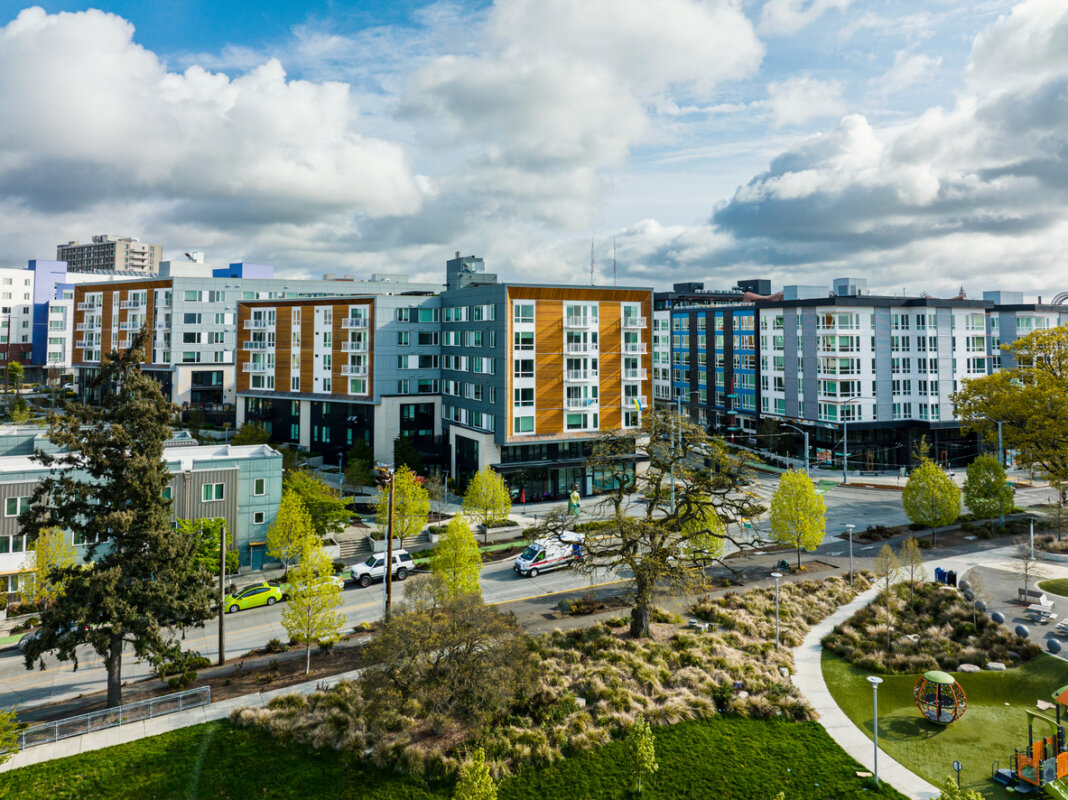
The City of Seattle unveiled a substantial investment in affordable housing, announcing $155 million in funding to support 2,116 affordable rental homes across 20 buildings. This initiative, part of the 2025 Notice of Funding Availability for Affordable Rental Housing, aims to enhance housing stability citywide through new construction, preservation, and stabilization efforts. Mayor Katie Wilson emphasized the importance of this investment, stating “housing is the cornerstone of vibrant, sustainable communities. This investment will build and preserve 2,116 income-restricted homes for workers and families, and help unsheltered residents move into permanent housing.” She noted that expanding Seattle’s housing supply and ensuring affordability is a top priority for her administration.
The funding is strategically allocated across three primary categories addressing diverse housing needs: new production and acquisition receiving $64 million to support creation of 439 new affordable rental homes with at least 20% designated for individuals earning 0-30% of Area Median Income or family-sized units with two or more bedrooms; preservation getting $33 million to rehabilitate 822 existing affordable rental homes across eight properties, addressing deferred maintenance while extending long-term affordability; and a first-time Stabilization fund allocating $58 million to stabilize 855 affordable rental homes, addressing urgent financial challenges by providing resources to housing providers to restructure debt and cover key operating expenses, preventing potential loss of these homes.
The $155 million total divided across 2,116 units represents approximately $73,250 per unit on average, though that figure obscures significant variation between categories. The new production receiving $64 million for 439 units averages roughly $145,785 per new home, reflecting higher costs of construction compared to preservation or stabilization. The preservation category at $33 million for 822 units averages about $40,146 per preserved home, representing rehabilitation costs that extend useful life without full reconstruction expense. The stabilization fund at $58 million for 855 units averages roughly $67,836 per stabilized home, reflecting debt restructuring and operating support that prevents loss of existing affordable housing.
The requirement that at least 20% of new production units serve individuals at 0-30% AMI or be family-sized with two or more bedrooms attempts to ensure the program serves extremely low-income residents and families, not just moderate-income singles. For Seattle’s 2025 AMI of approximately $115,000 for family of four, 0-30% represents annual incomes below $34,500, encompassing people working minimum wage jobs, those on fixed incomes, and individuals experiencing homelessness transitioning to housing. Whether developers can financially sustain projects with 20% of units at such deeply affordable rents, or whether additional operating subsidies will be needed, affects long-term viability.
The preservation category addressing deferred maintenance at existing affordable properties reflects reality that older affordable housing stock deteriorates when nonprofit owners lack capital for major systems replacement. Roofs, HVAC systems, plumbing, and building envelopes eventually fail regardless of how carefully properties are maintained, requiring substantial capital investment. Without preservation funding, properties reach conditions requiring expensive emergency repairs or ultimately becoming uninhabitable, displacing residents. Whether $33 million adequately addresses backlog of deferred maintenance across 822 units, or whether it represents down payment on larger preservation needs, affects whether properties remain viable long-term.
The new Stabilization fund represents recognition that affordable housing providers face financial crises threatening loss of homes even when buildings are physically sound. Rising operating costs for utilities, insurance, property taxes, and services combined with restrictions on rent increases create situations where properties become financially unsustainable despite serving critical needs. The debt restructuring and operating expense support prevents foreclosures or sales to market-rate operators that would displace low-income residents. Whether $58 million adequately addresses financial instability across 855 units or provides temporary relief without solving underlying operating cost problems affects whether stabilization prevents permanent loss of affordable housing.
Mayor Wilson’s characterization of housing as “cornerstone of vibrant, sustainable communities” and her statement that “expanding Seattle’s housing supply and ensuring affordability is a top priority” frames affordable housing as infrastructure investment rather than social welfare. That positioning attempts to build broader political support beyond traditional affordable housing advocates by emphasizing community-wide benefits. Whether that framing succeeds in maintaining funding through budget pressures and political changes affects program sustainability.
The commitment to help “unsheltered residents move into permanent housing” through these units suggests some portion will serve formerly homeless individuals through permanent supportive housing models combining affordable units with social services. Whether the 2,116 units include dedicated homeless housing or simply provide affordable options that free other units for homeless placements through housing mobility affects direct impact on unsheltered population. Seattle’s roughly 14,000 people experiencing homelessness vastly exceeds the 2,116 units funded, meaning this represents incremental progress rather than solution to homelessness crisis.
The 20 buildings receiving funding suggests average of roughly 106 units per building, indicating mid-sized multifamily developments rather than single-family conversions or very large complexes. Whether those buildings are concentrated in particular neighborhoods or distributed citywide affects geographic equity and whether low-income residents have housing options across the city versus being concentrated in specific areas. Equitable geographic distribution allows low-income residents to access different school districts, job centers, and amenities, while concentration can create service efficiency but risks segregation.
The Notice of Funding Availability process involves developers and housing providers submitting proposals competing for limited funding, with city staff and potentially community reviewers evaluating applications against criteria including affordability levels, project readiness, developer capacity, and alignment with city priorities. Whether NOFA process resulted in funding all qualified applications or whether viable projects were rejected due to insufficient funding affects whether city is maximizing affordable housing production or leaving opportunities unrealized due to resource constraints.
The timeline from funding announcement to actual housing availability varies dramatically between categories. New construction requires site acquisition if not already owned, design, permitting, and 18-24 months of construction, meaning new production units likely won’t be occupied until 2027 or 2028. Preservation projects might complete rehabilitation within 6-12 months if work can occur while buildings remain occupied, or longer if residents must be temporarily relocated. Stabilization funding providing operating support might prevent immediate displacement but doesn’t create visible new housing, making impact less politically salient despite potentially serving more people more quickly than new construction.
The federal, state, and local funding sources combining to create the $155 million affect sustainability and political vulnerability. If funding relies heavily on federal programs like HOME Investment Partnerships or Community Development Block Grants, changes in federal administration and congressional priorities could reduce future funding. If Seattle commits significant local resources from housing levy or general fund, those face competition with other budget priorities during economic downturns. Whether the funding represents one-time investment or sustainable annual commitment affects whether Seattle can continue producing and preserving affordable housing at similar scale.
For Seattle’s overall housing needs, 2,116 affordable units represents meaningful but insufficient response to affordability crisis affecting tens of thousands of households. The city’s comprehensive plan targets tens of thousands of new housing units over coming decades, with substantial portion needing to be affordable to low and moderate-income households. Whether this $155 million represents typical annual investment level that will be repeated and expanded, or exceptional commitment unlikely to be sustained, affects whether Seattle makes meaningful progress reducing housing cost burden and displacement pressures.
The emphasis on income-restricted homes “for workers and families” attempts to counter narratives that affordable housing primarily serves non-working individuals, highlighting that many working households can’t afford market-rate housing in Seattle. Teachers, nurses, retail workers, restaurant staff, and other essential workers earning moderate incomes face housing costs consuming excessive portions of income or requiring long commutes from more affordable areas. Whether framing affordable housing as supporting workers rather than homeless or very low-income residents generates broader political support or simply obscures needs of most vulnerable populations affects political sustainability.
The preservation component’s emphasis on “ensuring healthy and stable housing for current tenants” reflects reality that displacement from affordable housing due to deterioration or financial crisis creates cascading problems as residents struggle to find replacement housing they can afford. Preserving existing affordable housing protects current residents from displacement while avoiding the higher cost of producing new units. Whether preservation receives sufficient ongoing investment to maintain aging affordable housing stock or whether deferred maintenance continues accumulating affects long-term supply.
For nonprofit housing providers receiving stabilization funding, the debt restructuring and operating support provides financial lifeline preventing potential foreclosure or forced sale. Whether this represents one-time rescue addressing extraordinary circumstances, or whether operating cost challenges persist requiring ongoing subsidies, affects whether stabilization fund solves problems or creates dependency. If rising insurance, utility, and maintenance costs continue outpacing rental revenue, providers might need repeated stabilization support to avoid financial failure.
The reference to “equitable development” and serving “individuals, families, and seniors with low incomes” indicates attention to demographic diversity and geographic distribution. Whether funded projects actually serve diverse populations across race, age, and household composition, or whether they primarily serve particular demographics, affects whether Seattle addresses full range of affordable housing needs. Projects targeting families with children require different unit sizes and amenities than senior housing, while extremely low-income households need different services and support than moderate-income workers.
The political context of Wilson’s early administration affects interpretation of the $155 million commitment. As one of her first major announcements, it signals priorities and attempts to demonstrate action on campaign promises. Whether the funding represents genuinely new resources Wilson secured or allocation of existing housing levy or federal funds that would have been distributed regardless of who became mayor affects whether it represents policy achievement versus administrative announcement. The statement that “expanding Seattle’s housing supply and ensuring affordability is a top priority” creates accountability for continued investment and production beyond this single funding round.
For Seattle residents struggling with housing costs, whether paying excessive portions of income for rent, experiencing homelessness, or facing displacement from gentrifying neighborhoods, the 2,116 units represent modest progress toward addressing affordability crisis. Whether this level of investment continues and expands, whether regulatory changes enable more affordable housing production by private developers, and whether regional cooperation produces housing at sufficient scale affects whether Seattle makes meaningful progress on affordability or whether crisis continues deepening despite these investments. The $155 million commitment demonstrates recognition of housing crisis and willingness to invest public resources, but whether it represents beginning of adequate response or insufficient effort that fails to match scale of need remains the critical question for Seattle’s housing future.