
Thurston County Public Health and Social Services reported an influenza-related death of a county resident Wednesday, as flu activity remains elevated across Washington. The Washington State Department of Health confirmed 39 flu-related deaths statewide so far in the 2025-26 flu season, a sharp increase from five deaths reported at this time last season.
“Individuals who get sick with flu symptoms should stay home and avoid contact with others, except to get medical care,” Thurston County health officials said. “While most people with flu have mild illness and do not need medical care or antiviral medications, certain people are at increased risk of serious complications, including young children, people 65 and older, pregnant people, and people with certain medical conditions.”
Flu-like illness activity is currently high in Washington, with influenza A the most common strain circulating. Each year, hundreds of thousands of people in the United States are hospitalized with flu-related illnesses. Health officials encouraged residents to stay up to date on flu vaccinations and follow prevention measures including washing hands frequently, avoiding touching eyes and nose, staying home when sick, wearing masks in crowded settings, and cleaning high-touch surfaces.
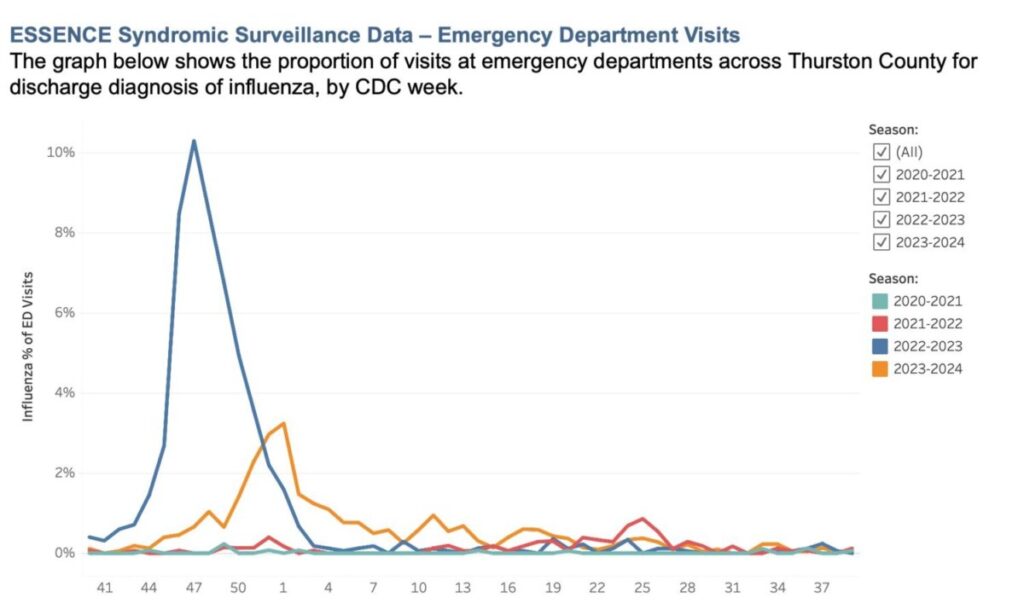
The nearly eight-fold increase in flu deaths from five at this point last season to 39 this year suggests either a more severe flu strain circulating, lower vaccination rates reducing population immunity, or changes in healthcare-seeking behavior affecting outcomes. Whether this represents early surge that will moderate or sustained elevated mortality throughout the season affects projections and public health response intensity.
The emphasis on high-risk groups including young children, people 65 and older, pregnant people, and those with certain medical conditions reflects established patterns where flu complications disproportionately affect those with weakened immune systems or underlying health vulnerabilities. Whether the 39 deaths occurred predominantly in high-risk populations or whether healthier individuals also died affects assessment of strain severity.
The dominance of influenza A aligns with typical seasonal patterns, though whether it’s H1N1 or H3N2 subtype affects severity and vaccine effectiveness. Some flu seasons see vaccine mismatch where circulating strains differ from those included in vaccines, reducing protection.