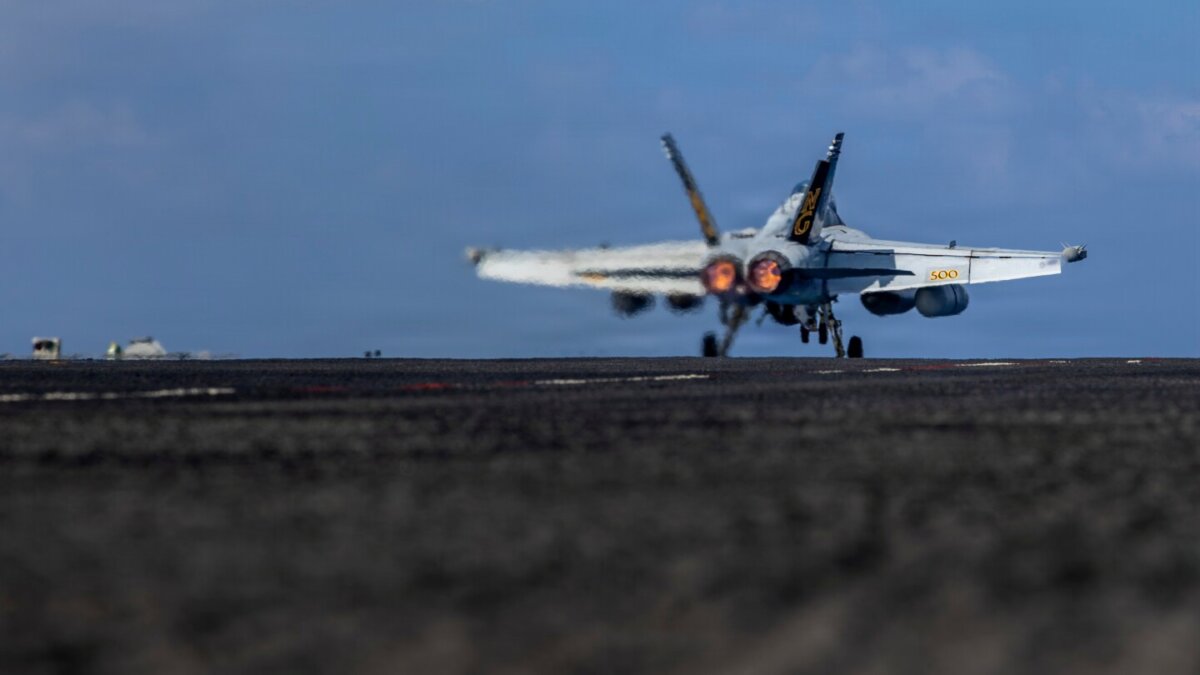
U.S. forces shot down an Iranian drone approaching the aircraft carrier USS Abraham Lincoln in the Arabian Sea on Tuesday, marking a dangerous escalation as Washington floods the region with military hardware amid renewed tensions with Tehran.
The incident occurred about 500 miles from Iran’s southern coast. U.S. officials identified the drone as a Shahed-139, a variant in a class of one-way attack drones that crash into targets and detonate onboard explosives. The drone was flying with “unclear intent” and approached the carrier despite U.S. personnel using unspecified de-escalatory measures, according to Navy Capt. Tim Hawkins, a spokesman for U.S. Central Command. White House press secretary Karoline Leavitt said the drone was “acting aggressively.” An F-35C fighter jet shot down the drone. No American personnel were injured, and no equipment was damaged.
Hours after the incident, Iranian vessels joined by another drone “harassed” a U.S.-flagged tanker, the Stena Imperative, and threatened to board and seize it. A nearby guided-missile destroyer, the USS McFaul, intervened and escorted the ship to safety under defensive air support from the U.S. Air Force. “Iran’s unnecessary aggression near U.S. forces, regional partners and commercial vessels increases risks of collision, miscalculation and regional destabilization,” Hawkins said.
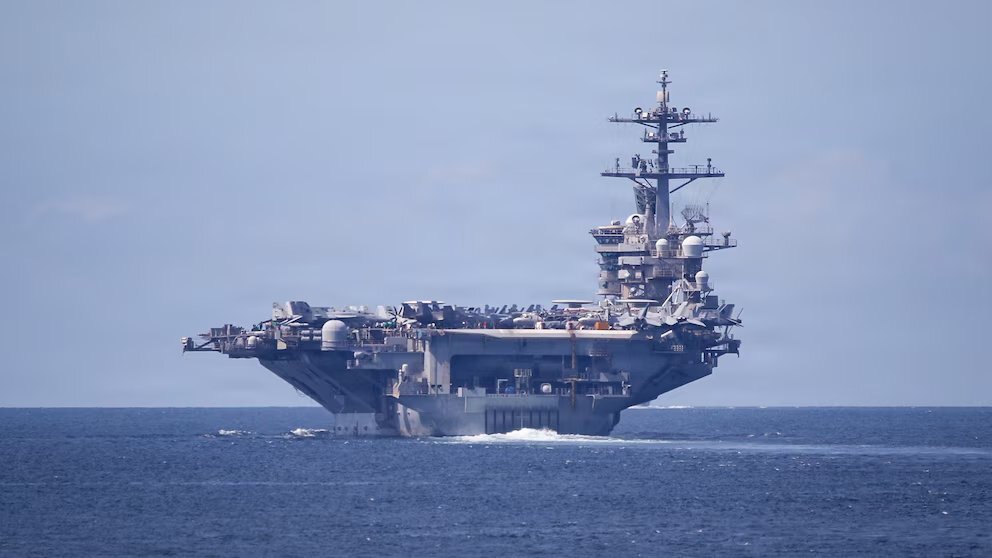
The U.S. military has deployed dozens of aircraft to bases operating near Iran and assembled about 12 warships in or near the Middle East over the past month, part of what President Donald Trump has described as a pressure campaign to reach a new deal aimed at restraining Tehran’s nuclear program. It is unclear whether U.S. forces attempted to contact Iranian counterparts to defuse the conflict before the aircraft was shot down.
Earlier Tuesday, Iranian President Masoud Pezeshkian said he had instructed Iran’s Ministry of Foreign Affairs to “pursue fair and equitable negotiations” with the United States “guided by principles of dignity, prudence, and expediency,” with the caveat that a “suitable environment” must exist “free from threats and unreasonable expectations.” The confrontation strains already tenuous negotiations over an upcoming meeting between senior U.S. and Iranian officials aimed at staving off military conflict.
Those talks were scheduled for Istanbul on Friday, but Iranian officials on Tuesday requested a new format and location. Tehran now wants the talks to happen in Oman with only Iranian and U.S. officials, rather than as a multilateral gathering with Arab and Turkish diplomats. Iranian officials want discussions to focus exclusively on a deal to restrict Iran’s nuclear program in exchange for sanctions relief, rather than broader issues including Tehran’s support for proxies such as Hezbollah and Hamas.