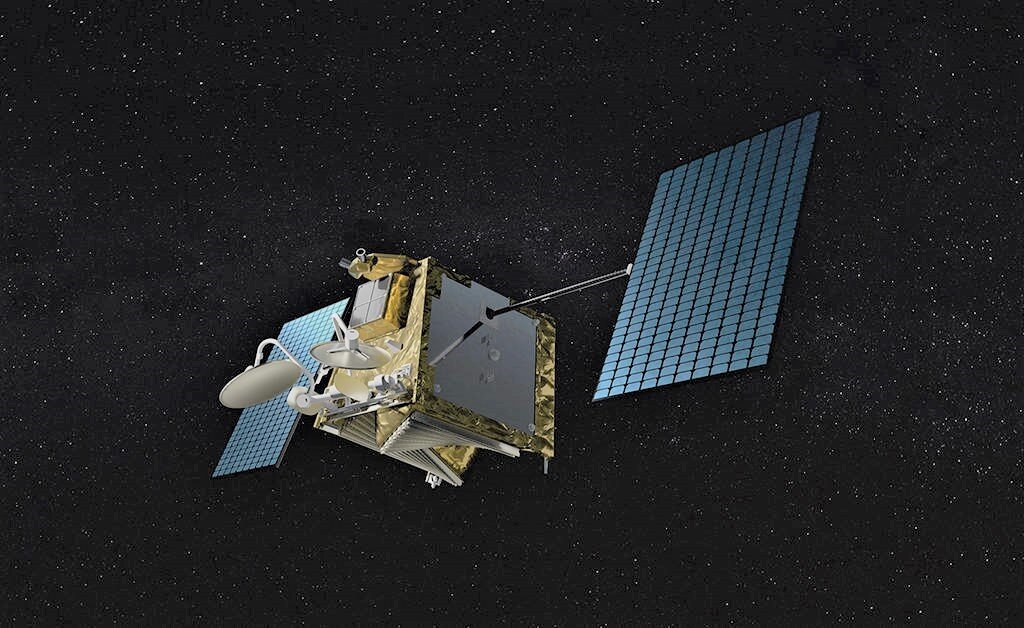
Amazon won Federal Communications Commission approval to launch more than 4,500 second-generation satellites for its Leo broadband network, expanding the constellation to over 7,000 spacecraft with global coverage including polar regions, even as the company struggles to meet deadlines for its first-generation system.
The approval adds to the previously authorized constellation of 3,232 Gen 1 spacecraft. “Amazon Leo Gen 1 performance is impressive on its own, but lots to look forward to with Leo Gen 2: More capacity, more coverage (including polar) and additional throughput, good for customers everywhere, and especially important for big enterprise/gov customers who want max performance to move large amounts of data through our network,” said Rajeev Badyal, vice president of technology for Amazon Leo.
The upgraded constellation will offer high-speed services including satellite TV and 5G via Ku-band and V-band frequencies. SpaceX’s Starlink network, the dominant player in satellite broadband, already uses those frequency bands. While the FCC approved Amazon’s use of most requested frequencies, it deferred Amazon’s request to operate in certain Ka-band ranges and dismissed challenges from Iridium and Viasat.

Amazon has launched 180 Gen 1 satellites over the past year, with another 32 scheduled for launch this week aboard an Ariane 6 rocket. That tally falls far short of the 1,616 satellites the FCC requires Amazon to launch by the end of July. Last month, Amazon asked the FCC to extend the halfway-point milestone deadline to 2028, pledging to have all 3,232 Gen 1 satellites in orbit by mid-2029 as required.
The FCC said half of the newly authorized Gen 2 satellites must be launched by February 2032, with all in operation by February 2035. The approval positions Amazon to compete more directly with Starlink while raising questions about whether the company can meet its ambitious deployment schedule given delays with the first-generation system.