After more than a year of building anticipation, withholding pricing, and watching 160,000 people place reservations for a vehicle they still cannot fully evaluate, Slate Auto is preparing to show its hand. The company will announce pricing for its debut electric truck on 24 June and open non-refundable preorders the same day, marking the moment when consumer interest either converts into actual demand or quietly evaporates.
Slate sent emails to prospective buyers on Thursday offering a $50 refundable reservation as a way to secure a delivery window ahead of the June preorder opening, when the commitment rises to $300 and becomes non-refundable. First deliveries are expected before the end of the year.
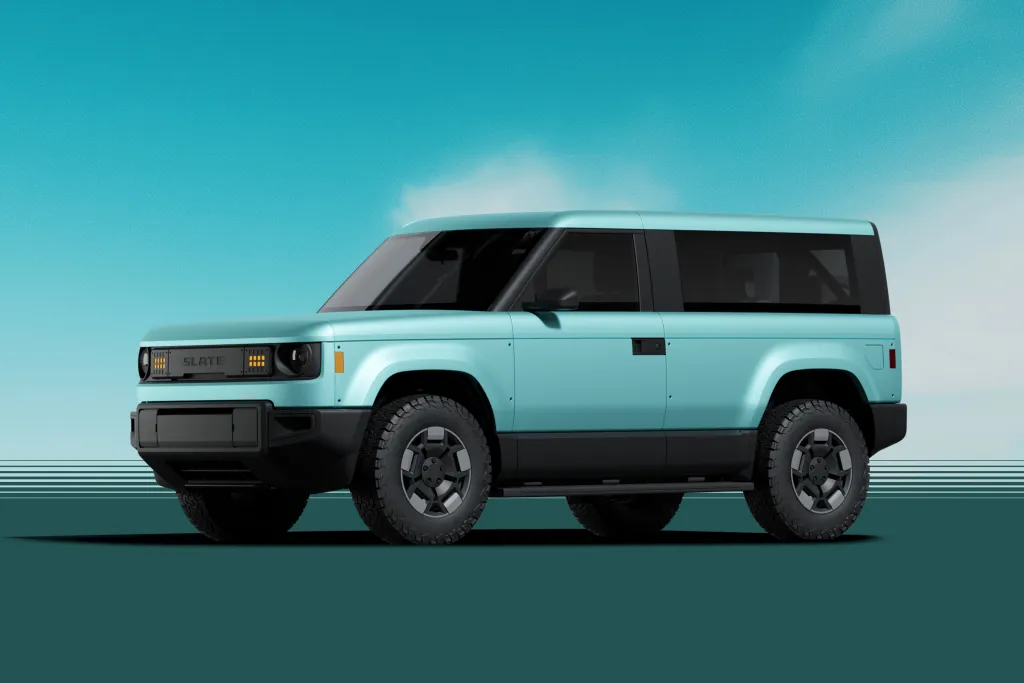
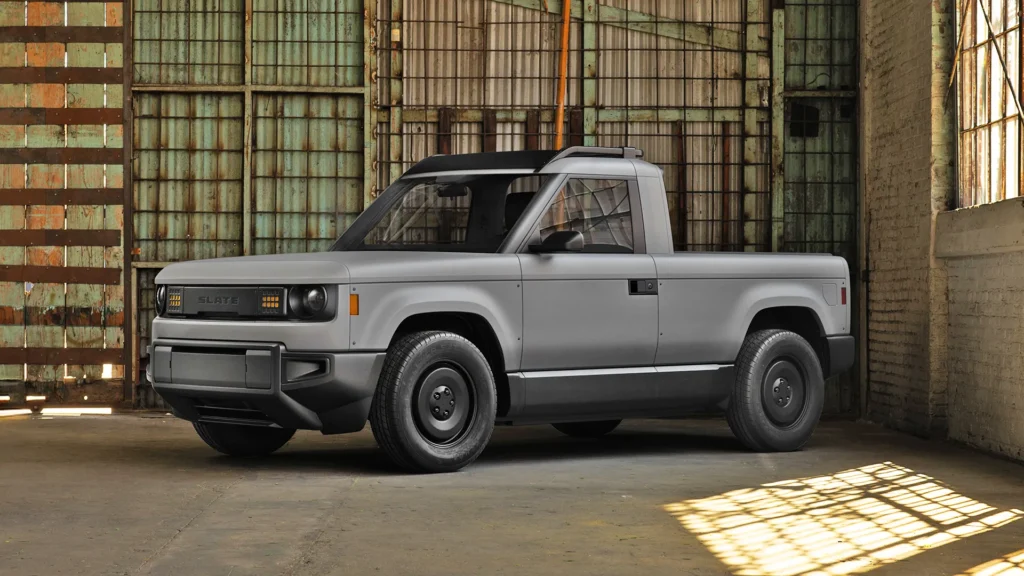
The company has an unusual origin story for the electric vehicle industry. It spent years in complete secrecy before TechCrunch exposed its existence in April 2025, revealing a startup quietly backed by Jeff Bezos with plans to build something the EV market had largely given up on: a genuinely affordable, deliberately simple electric vehicle. No elaborate infotainment screen. No over-the-air software theatrics. Hand-crank windows. No factory paint. A base model that can be driven as a two-seater truck or converted to a five-seater SUV for additional cost.
The original pitch included a price starting under $20,000 after the federal $7,500 EV tax credit. That number became impossible to defend after the Trump administration and Congress eliminated the credit late last year. Slate has since guided only to a starting price in the mid-$20,000 range, a figure that still undercuts most electric vehicles on the market but is meaningfully different from the sub-$20,000 promise that generated the initial wave of excitement.
The 24 June announcement will settle that question. What remains less certain is whether the number Slate reveals lands close enough to what reservation holders imagined to keep them committed. The history of the EV industry over the past decade is littered with startups that generated enormous reservation lists and then struggled to convert them. Lucid, Rivian, Fisker, and others all discovered that the distance between a $100 deposit and a signed purchase agreement is much longer than it appears on paper.
Slate has taken that lesson seriously. In March, the company brought in Peter Faricy, a former Amazon Marketplace vice president, as its new CEO to lead the organisation through its launch. The executive team is heavily populated with former Amazon talent, a reflection of the company’s ties to Bezos and the broader Pacific Northwest technology world. Whether a leadership team built for marketplace commerce can navigate the physical complexity of manufacturing and delivering a vehicle at scale is a question the coming months will answer.
Financially, the company has more runway than most. Slate closed a $650 million Series C round in April, bringing its total funding to approximately $1.4 billion. The majority of that capital appears to have come from TWG Global, the financial firm of co-backer and LA Dodgers owner Mark Walter. Bezos’s level of involvement in recent rounds is less clear. His family office manager stepped down from Slate’s board in May, according to TechCrunch, leaving the degree of his ongoing commitment to the company an open question.
For the 160,000 people who reserved a spot and have been waiting for a number, 24 June is finally the day they get one.