Alaska Airlines placed its largest aircraft order in company history Wednesday, purchasing 110 Boeing jets even as the manufacturer works to rebuild trust following a series of safety incidents including a door panel blowing out on an Alaska flight last year.
The carrier ordered 105 Boeing 737-10 jets and five Boeing 787-10 widebody aircraft in a deal that helps Alaska climb the ranks of the airline industry and greatly expand its international service.
“We are creating the fourth global airline in our country to compete against the big three,” said Alaska Airlines CEO Ben Minicucci.
The announcement was attended by U.S. Secretary of Transportation Sean Duffy, along with officials from both Boeing and Alaska Airlines.
“American manufacturing is back,” Duffy said. “We want competitive airlines, and the more competition that we have with more routes from airlines like Alaska with newer, nicer aircraft, that means the consumer is better served.”
Alaska will begin receiving planes in early 2027, with deliveries extending through 2035. The deal includes options to purchase 35 additional 737-10 aircraft during the same period.
Minicucci said the investment supports the company’s long-term growth strategy and will allow the airline to expand service whilst operating newer, more fuel-efficient planes.
The 737-10 aircraft serves as the backbone of Alaska’s fleet and will be used for a mix of growth and replacement of older Boeing 737 models. Alaska currently operates Boeing 737-8 and 737-9 aircraft and said it retains the flexibility to adjust aircraft models if needed.
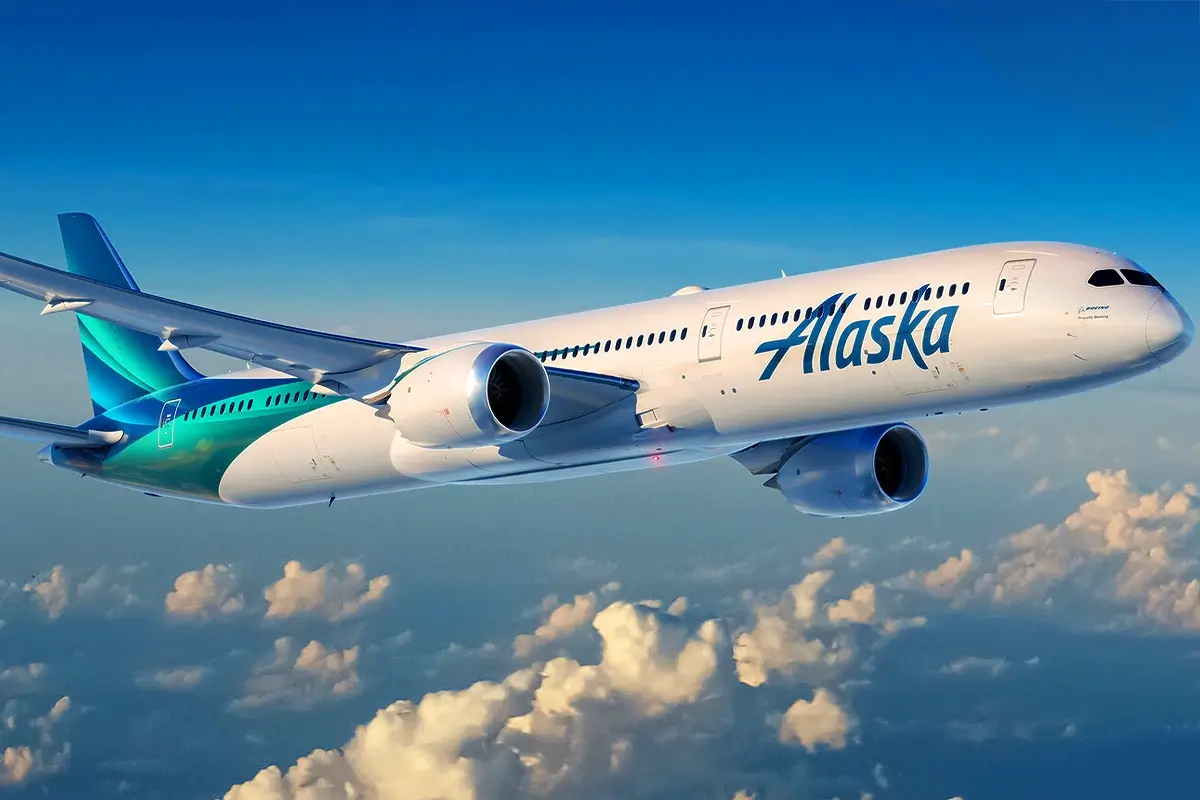
The five additional 787-10 jets bring Alaska’s widebody division to 17 aircraft, including five already in service. The widebody fleet is expected to support long-haul international flights from Seattle.
“We’re flying two routes into Asia today out of Seattle, and we’ve already announced two into Europe, Rome and London, coming in the spring of this year,” said Shane Tackett, the CFO at Alaska Airlines. “Our goal is by 2030 to have 10 or 12 routes out of Seattle internationally.”
Alaska officials expressed confidence in Boeing, which has suffered a series of disasters and mishaps in recent years. Most recently, a door plug panel blew out during an Alaska Airlines flight in January 2024, forcing the pilot to make an emergency landing and causing minor injuries to passengers.
“We’ve been really pleased with their progress over the last 18 months to two years,” Tackett said. “We think they are producing really high-quality, safe aircraft.”
The 737-MAX-10 still awaits federal certification before it can fly, but Boeing CEO Kelly Ortberg said the company is committed to coming through for its customers.
“You’re doubling down, putting your eggs in our basket, and we need to perform and deliver high-quality, safe aeroplanes to you on time,” Ortberg said.
The airline also unveiled a new global livery for its widebody aircraft, which will be featured on its first Boeing 787 painted in Alaska branding. The green and blue colour scheme draws inspiration from the aurora borealis and will be used on long-haul flights to Europe and Asia. Existing aircraft feature the Native elder on the tail.
Alaska Air Group currently operates 413 aircraft across its carriers. The company said it expects its fleet to grow to more than 475 aircraft by 2030 and more than 550 by 2035.
The 110-aircraft order represents a massive vote of confidence in Boeing at a time when the manufacturer desperately needs it. Boeing has faced cascading crises including the 737 MAX crashes that killed 346 people, production quality issues, federal investigations, and the door panel blowout on Alaska Flight 1282.
Alaska ordering from Boeing rather than competitor Airbus signals either genuine confidence in Boeing’s recovery or strategic calculation that the American manufacturer offers better terms, delivery slots, or fleet commonality benefits.
The timing of Transportation Secretary Duffy attending the announcement transforms the order into political theatre celebrating “American manufacturing.” The Trump administration has emphasised bringing manufacturing back to the United States, making Alaska’s Boeing order convenient propaganda.
Duffy’s statement that “American manufacturing is back” glosses over Boeing’s quality control problems that resulted from outsourcing and cost-cutting. Boeing moved significant production to non-union facilities and suppliers whose work has been blamed for quality issues.
Alaska’s 2027 delivery start means the airline waits more than two years for the first plane, reflecting Boeing’s production bottlenecks and certification delays. Airlines typically prefer faster deliveries, but Boeing can’t produce planes quickly enough to meet demand.
The delivery schedule extending through 2035 spreads the financial commitment over more than a decade, reducing annual capital expenditure whilst ensuring Alaska receives planes incrementally as it grows.
The options for 35 additional 737-10 aircraft provide flexibility if Alaska grows faster than expected or needs to accelerate fleet replacement. Options lock in prices and delivery slots without binding Alaska to purchase.
Minicucci’s goal of creating “the fourth global airline” positions Alaska to compete with American, Delta, and United. Currently Alaska operates primarily domestic routes plus limited service to Mexico, Canada, and Costa Rica. Adding extensive European and Asian service transforms the airline’s business model.
The 737-10 being the “backbone of Alaska’s fleet” means the airline continues betting on single-aisle aircraft for most routes. The 737-10 is Boeing’s largest MAX variant, seating approximately 230 passengers and flying up to 3,300 nautical miles.
Alaska operating 737-8 and 737-9 aircraft already means pilots and mechanics know the systems, reducing training costs and operational complexity when adding 737-10s. Fleet commonality provides significant economic advantages.
The five 787-10 widebody jets added to 12 already ordered brings Alaska’s total widebody fleet to 17 aircraft. For context, Alaska traditionally operated only narrow-body aircraft until recently beginning widebody operations.
The current two Asia routes from Seattle likely include Tokyo and another destination, whilst the announced Rome and London flights launching spring 2026 represent Alaska’s first European service ever.
Tackett’s goal of 10 to 12 international routes from Seattle by 2030 means adding roughly two new long-haul routes annually. Potential destinations include Paris, Frankfurt, Seoul, Singapore, and other major cities.
The door plug blowout on Alaska Flight 1282 in January 2024 represents the elephant in the room. The incident, caused by missing bolts on a Boeing-installed door plug, resulted in explosive decompression at 16,000 feet, terrified passengers, and intense federal scrutiny of Boeing’s manufacturing.
Tackett’s statement about being “pleased with their progress” over 18 to 24 months tries to reassure investors and customers that Boeing has improved quality control. Whether that confidence is justified remains debatable given ongoing federal investigations.
The 737-MAX-10 still lacking FAA certification creates uncertainty. Alaska is ordering planes that can’t legally fly yet, betting Boeing will eventually receive approval. Certification delays could push back Alaska’s expansion plans.
Ortberg acknowledging Alaska is “putting your eggs in our basket” and promising to “deliver high-quality, safe aeroplanes” represents Boeing’s CEO trying to rebuild trust whilst admitting the company must prove itself.
The new livery inspired by aurora borealis creates distinct branding for international flights whilst maintaining the Native elder on domestic aircraft. The dual branding strategy differentiates Alaska’s global ambitions from its regional heritage.
Alaska’s fleet growing from 413 aircraft today to 475 by 2030 and 550 by 2035 represents 15 per cent growth by 2030 and 33 per cent growth by 2035, substantial expansion requiring increased pilots, mechanics, and gate space.