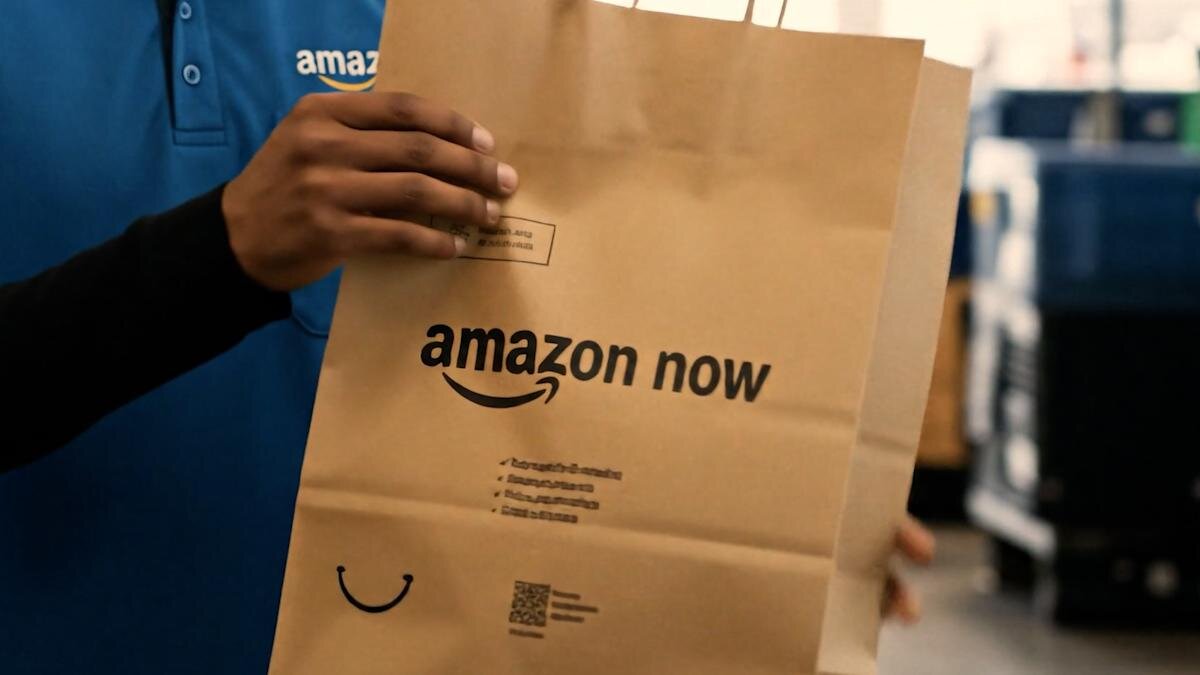
Amazon has introduced a new ultrafast delivery option promising to bring groceries and household items to customers within 30 minutes or less.
The Seattle-based e-commerce company launched Amazon Now on Monday, marking its latest initiative in the ongoing pursuit of faster delivery speeds. The program represents a significant acceleration from the two-day or same-day delivery options currently available to many customers.
Amazon is testing the service in select areas of Seattle and Philadelphia. The company did not specify which Seattle neighborhoods qualify for Amazon Now, but customers can verify eligibility by checking the Amazon marketplace app or website for the 30-minute delivery option.
Permit applications filed for a former Amazon Fresh Pickup location in Seattle’s Ballard neighborhood indicate that site will likely serve as the hub for Amazon Now operations in the city.
One filing states the location will operate 24 hours daily, seven days per week, with a small front-of-house area where drivers collect orders for delivery. Amazon will utilize Flex drivers for this location, gig workers who are not company employees and use their own vehicles to complete deliveries.
Amazon employees will handle order fulfillment in a large back-of-house stockroom. The company projects approximately 240 deliveries from the facility each day, according to the permit filing.
The launch places Amazon in direct competition with established rapid delivery services including Instacart and Uber, the latter of which delivers food and groceries through its Uber Eats platform.
Amazon Now builds upon the company’s broader strategy to establish itself as a major grocery retailer with comprehensive delivery capabilities. The initiative follows years of evolution in Amazon’s physical and digital grocery operations.
After delivery times extended during the pandemic, Amazon restructured its logistics network by regionalizing operations to reduce the gap between order placement and doorstep arrival for Prime members. This strategy included developing same-day delivery sites, which are smaller warehouses located in metropolitan areas stocked with frequently purchased items.
The company currently offers next-day, overnight, and same-day delivery for Prime members, consistently reporting faster delivery speeds each year. In February, Amazon announced it delivered more than 9 billion items within a day during 2024.
Amazon’s physical retail presence includes Amazon Fresh and Whole Foods grocery stores alongside convenience stores. The company previously operated bookstores but has since closed those locations. The brick-and-mortar segment of Amazon’s retail business has experienced significant volatility.
Following the $13.7 billion acquisition of Whole Foods in 2017, Amazon launched Fresh stores several years later with product selections more closely resembling traditional supermarkets than the upscale Whole Foods brand.
Initially, Fresh stores featured extensive Amazon technology including Just Walk Out, which allowed customers to skip traditional checkout lines. However, in 2023 the company modified its approach by slowing expansion, closing underperforming stores, and renovating others to reduce the impersonal atmosphere created by prominent technology displays.
Amazon has simultaneously accelerated delivery services for everyday essentials including fresh produce, diapers, toothpaste, and over-the-counter medications. This push reflects recognition that grocery delivery represents a massive market opportunity.
During an October earnings call following quarterly financial results, Evercore ISI analyst Mark Mahaney questioned Amazon CEO Andy Jassy about whether the company believed it could genuinely shift consumer behavior to view Amazon as their primary grocery destination.
Jassy responded that Amazon’s grocery business, excluding physical store sales, is experiencing rapid growth and generated over $100 billion in gross sales over the past year. “Which would make us a top-three grocery in the U.S.,” Jassy stated.
The CEO’s comments underscore Amazon’s ambition to capture significant market share in the trillion-dollar grocery sector, traditionally dominated by chains including Walmart, Kroger, and Costco.
Delivery fees for Amazon Now will cost Prime members $3.99 per order, while non-Prime customers will pay $13.99. Orders under $15 will incur an additional small basket fee of $1.99.
The pricing structure creates incentives for Prime membership while remaining competitive with other rapid delivery services. Prime members already pay annual or monthly subscription fees for various Amazon benefits including free two-day shipping, streaming services, and other perks.
The 30-minute delivery promise requires sophisticated logistics including inventory management, order fulfillment efficiency, route optimization, and driver availability. Amazon’s use of Flex drivers provides workforce flexibility to handle demand fluctuations throughout the day.
The Ballard location’s 24/7 operation schedule enables Amazon to serve customers during early morning hours, late evenings, and overnight periods when traditional grocery stores may be closed. This extended availability could differentiate Amazon Now from competitors with more limited hours.
Success of the pilot program in Seattle and Philadelphia will likely determine whether Amazon expands the service to additional markets. The company has historically tested new initiatives in Seattle, leveraging its hometown advantage for operational refinement before broader rollout.