
Amazon is expected to cut approximately 14,000 jobs next week in the second phase of a workforce reduction that began in October, bringing total planned cuts to roughly 30,000 employees.
The layoffs will affect workers across Amazon Web Services, retail, Prime Video, and the People Experience and Technology departments, according to sources who spoke on condition of anonymity. The cuts represent about 4% of Amazon’s corporate workforce of 350,000 employees. The company’s total workforce stands at approximately 1.56 million when warehouse and logistics workers are included.
Amazon cut about 14,000 corporate positions in October as part of what CEO Andy Jassy described as a cost-cutting effort to fund the company’s aggressive AI investments. Employees laid off in October were given 90 days to search for new positions internally. The upcoming round follows the same pattern and could begin as early as Tuesday.
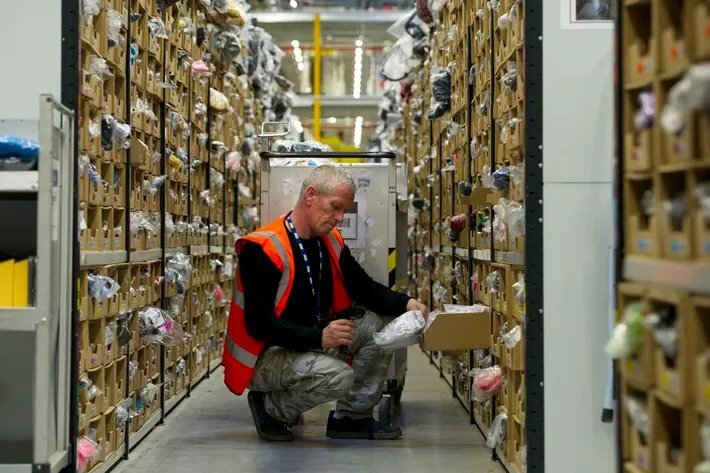
The timing reflects a tension at the core of Amazon’s current strategy: the company is simultaneously investing billions in AI infrastructure while reducing its workforce. Amazon is building a $10 billion campus in North Carolina to expand cloud computing and AI capabilities. Since 2024 began, the company has committed approximately $10 billion each to data center projects in Mississippi, Indiana, Ohio, and North Carolina.
Jassy has been cutting costs aggressively since becoming CEO in 2021. In June, he told employees he anticipated that generative AI would reduce Amazon’s corporate workforce over the next few years. That statement clarified the company’s direction: AI spending increases, human headcount decreases.
Amazon’s workforce doubled during the pandemic as online spending surged with millions staying home. The company is now reversing that expansion. The October layoffs were the largest since 2023, when Amazon cut 27,000 jobs over two months. Adding the upcoming 14,000 cuts brings the total reduction closer to the pandemic hiring surge reversal.
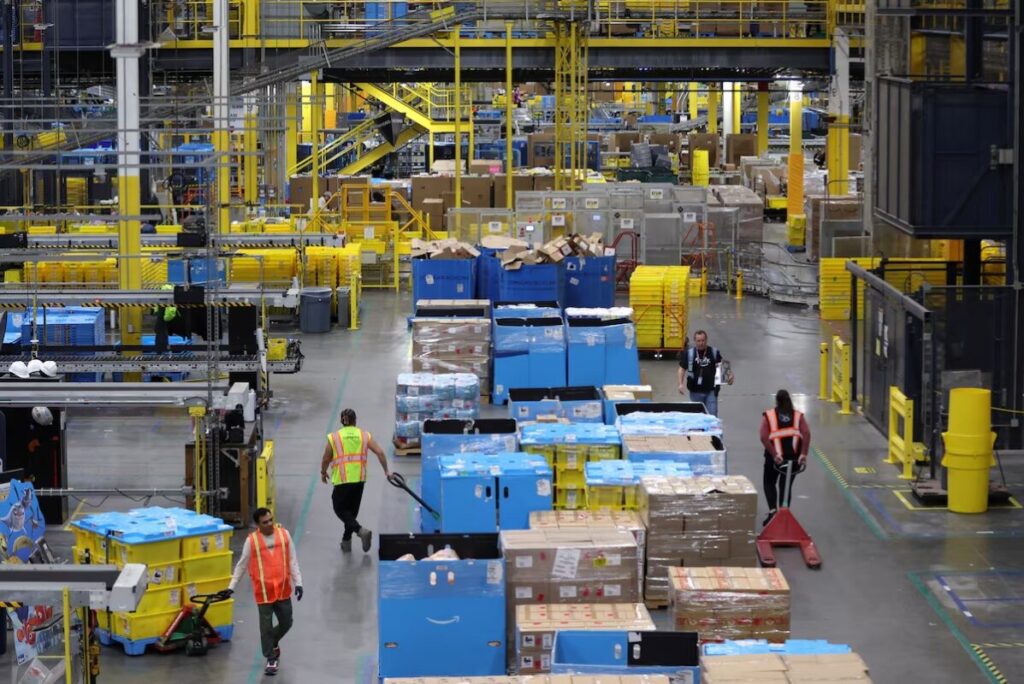
The question for affected employees is whether 90 days provides realistic time to find internal positions when the company is actively shrinking. For Seattle, where Amazon employs thousands of corporate workers, these layoffs will have local economic impact beyond the company itself.
US jobless claims data offers some context: applications for unemployment benefits remain historically low at 200,000 for the week ending Jan. 17, suggesting layoffs across the broader economy haven’t accelerated dramatically. Employers added just 50,000 jobs in December, but the unemployment rate dipped to 4.4%. The labor market shows softening but not collapse.
Amazon’s approach differs from some tech companies that conducted mass layoffs quickly. The phased cuts spread over months may reduce immediate disruption but create prolonged uncertainty for employees wondering if their department comes next.