Portal Space Systems, a Bothell-based space startup, has raised $50 million in a Series A funding round to accelerate development of its highly maneuverable spacecraft, with its first vehicle set for launch as early as this autumn and a new 52,000-square-foot manufacturing facility on the horizon.
The round was led by Geodesic Capital and Mach33, with participation from Booz Allen Ventures, AlleyCorp, and FUSE, building on a $17.5 million seed round announced last year. Portal CEO Jeff Thornburg, who co-founded the company in 2021 following stints at SpaceX and Stratolaunch Systems, said the new funding allows the company to move faster on its core mission. “The thing that’s exciting me the most, and really the company at large, is that it helps us move faster,” Thornburg said. “We’re obviously focused on getting Starburst and Supernova capabilities demonstrated and available to our customers as quickly as we can.”
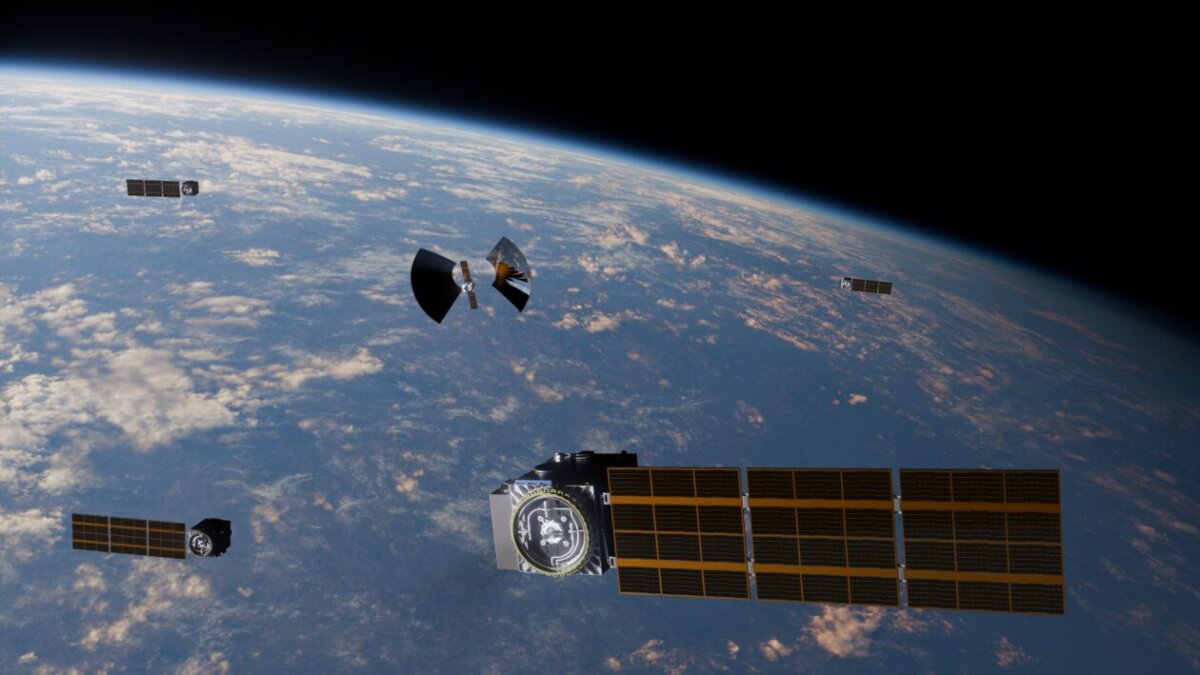
Portal is developing two classes of spacecraft. Starburst uses a conventional thruster system while sharing 81% of its components with the more advanced Supernova platform. Supernova is built around a solar thermal propulsion system that uses focused sunlight to heat ammonia-based propellant, enabling orbital manoeuvres that would typically take weeks or months using traditional systems to be completed in hours or days. “We’ve got a lot of delta-v packed in the Starburst, even though it’s a smaller platform,” Thornburg said.
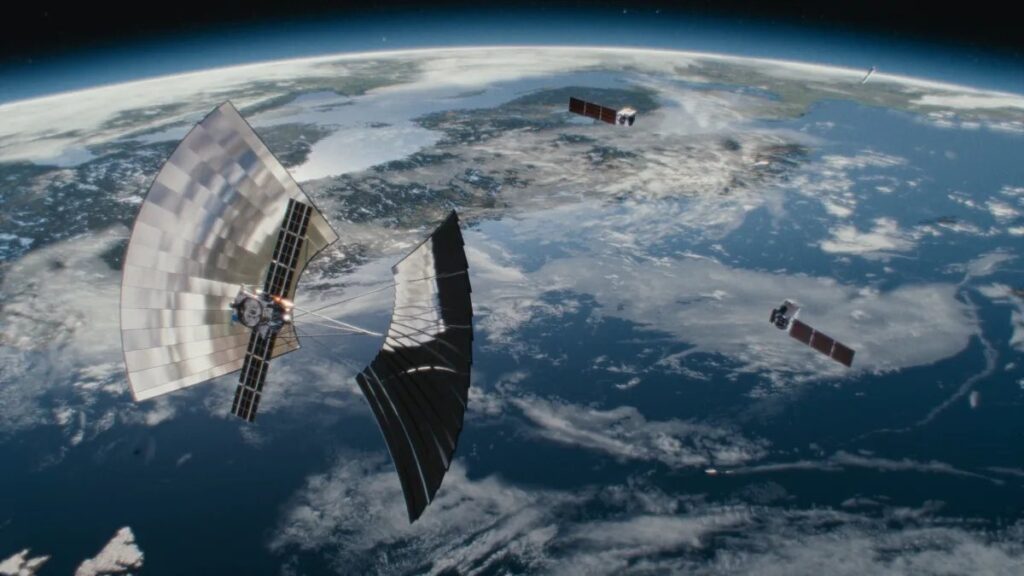
Starburst-1 is being prepared for a potential October launch as a payload aboard SpaceX’s Transporter-18 satellite rideshare mission. It will carry a video camera and edge processing system from TRL11 and a superconducting magnetic actuator from Zenno Space for a yearlong test mission in sun-synchronous orbit. An experimental payload called Mini-Nova was sent into orbit last month to test control software and power systems for both Starburst and Supernova. “Mini-Nova is healthy, and so I think we’re in good shape for what’s to come,” Thornburg said. The first Supernova is scheduled for launch next year, supported in part by $45 million in funding from the US Space Force’s SpaceWERX programme.
The company sees a broad range of applications for its spacecraft across both defence and commercial markets. On the defence side, Thornburg highlighted space domain awareness and the ability to observe difficult-to-track objects in orbit, as well as the capacity to protect and defend against adversarial activity in space. “We have adversaries on orbit doing things that are very confrontational, and I don’t know that we always have equivalent capabilities or deterrence in kind,” he said. On the commercial side, Portal is targeting orbital debris tracking and removal, a market that has grown in urgency following the recent breakup of a Starlink satellite. Portal and Australian venture Paladin Space have announced a partnership to launch an orbital debris tracking and removal service as early as next year. Starlab Space, the industry consortium developing a commercial space station, has already signed a letter of intent to integrate the Portal-Paladin service into future station operations.
Thornburg also pointed to potential applications in NASA’s Artemis moon programme, noting that Supernova has the performance to move between geostationary Earth orbit and cislunar space in ways that could support lunar logistics, communications, and experimentation. “We don’t have a lot of spacecraft that can do that without the aid of a rocket right now,” he said.
Portal currently employs around 40 people and expects to roughly double its workforce by the end of the year. The company is targeting production of up to four spacecraft per month by the end of 2027, a goal that will require both the new manufacturing facility and significant hiring. “We can continue to build Starburst in our existing facility if we want to, for a certain amount of time,” Thornburg said, while noting that Supernova-1 assembly will be among the first uses of the new building.