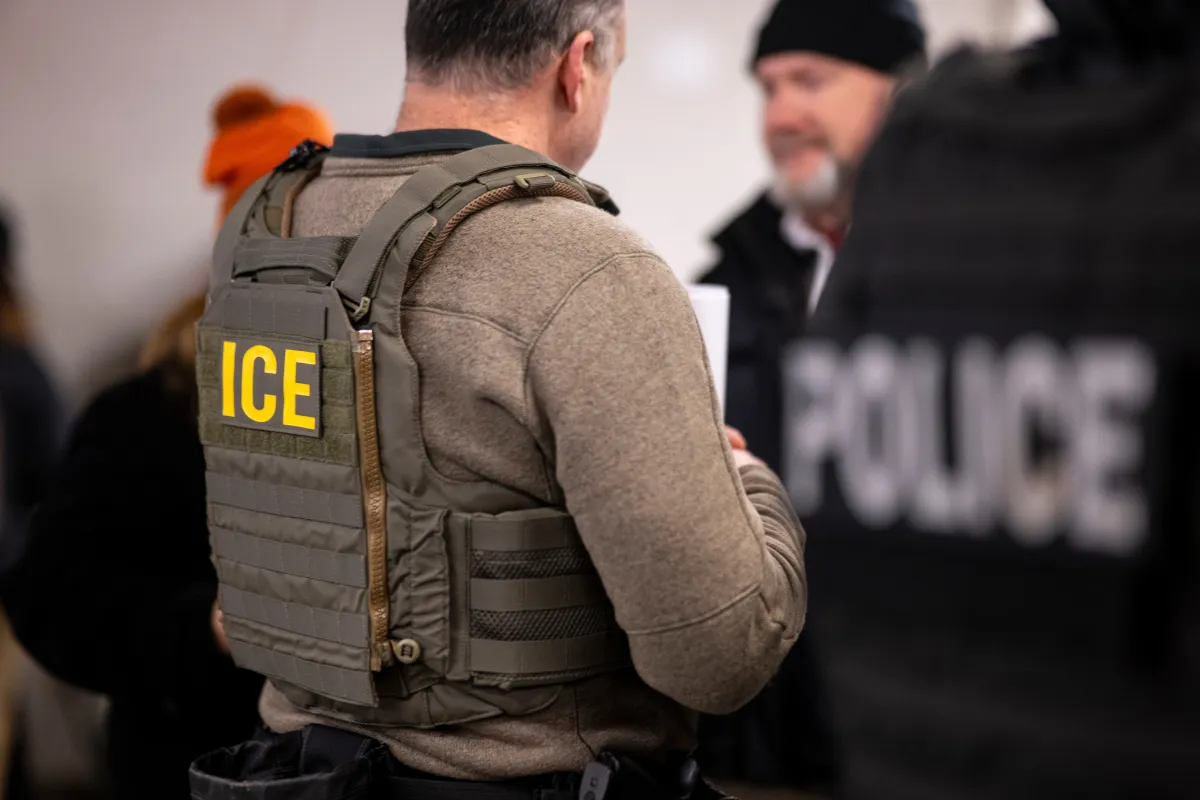
A group of Democratic lawmakers have sent letters to several state governors, including in Arizona, California, Colorado, and Wisconsin, warning that their states are inadvertently sharing drivers’ data with federal immigration authorities.
The letter informed governors that their states are providing US Immigration and Customs Enforcement and other federal agencies “with frictionless, self-service access to the personal data of all of your residents,” through a nonprofit managed by state police agencies called the National Law Enforcement Telecommunications System, or Nlets.
Nlets facilitates the sharing of state residents’ personal data, in this case driver license data, between state, local, and federal police agencies.
The lawmakers asked the group of governors to stop the practice and block access to ICE and “other federal agencies that are now acting as Trump’s shock troops.”
ICE and Nlets did not immediately respond to requests for comment.
For two decades, most states have made their residents’ data, such as drivers’ licenses and other information from each state’s Department of Motor Vehicles database, available for search and retrieval to approximately 18,000 federal and local law enforcement agencies across the US and Canada. This practice allows those agencies to directly access residents’ data without the knowledge or involvement of any state employee, according to the letter.
The letter indicated that it is possible ICE is using drivers’ license photos for their facial recognition app called Mobile Fortify, which agents are using to identify people on the street and relies on 200 million photos.
According to the letter, Nlets facilitated “over 290 million queries for DMV data,” with more than 290,000 queries from ICE and some 600,000 from Homeland Security Investigations during the year before 1 October 2025.
“It is now abundantly clear that a major reason that so few states have locked down the data they share through Nlets is because of an information gap,” reads the letter. “Because of the technical complexity of Nlets’ system, few state government officials understand how their state is sharing their residents’ data with federal and out-of-state agencies.”
The letter stated blocking the agencies’ “unfettered access” would not prevent federal agencies obtaining information from states for solving serious crimes, but taking action would “increase accountability and reduce abuse” by allowing state employees to review data requests first.
The lawmakers noted that some states, including Illinois, New York, Massachusetts, Minnesota, and Washington recently restricted what kind of data ICE can access via Nlets, and reminded the governors that it is up to them to stop the practice at any time.
The revelation that state driver license databases provide direct, unmediated access to federal immigration authorities raises profound questions about data privacy, state sovereignty, and the balance between public safety and civil liberties. The two-decade duration of this practice suggests most state residents have been unaware that their DMV photographs and personal information have been continuously accessible to thousands of law enforcement agencies.
The 290 million annual queries for DMV data through Nlets represents an extraordinary volume of surveillance activity, averaging nearly 800,000 searches daily across all participating agencies. This scale suggests driver license databases have become routine investigative tools rather than resources accessed only during specific investigations targeting particular individuals.
The 290,000 ICE queries and 600,000 Homeland Security Investigations searches in the year preceding 1 October 2025 indicate immigration enforcement agencies constitute significant users of this system, conducting nearly one million combined searches of state DMV databases annually. These numbers reveal immigration enforcement has become a major consumer of state-maintained personal data.
The characterisation of access as “frictionless” and “self-service” emphasises that federal agencies can search state databases without seeking permission, providing justification, or even notifying state officials that searches have occurred. This arrangement effectively privatises state data to federal users without the accountability mechanisms that would exist if state employees mediated access.
The lawmakers’ concern about Mobile Fortify, ICE’s facial recognition app reportedly relying on 200 million photos, highlights how driver license images originally collected for identification purposes are being repurposed for street-level surveillance. The transformation of DMV photos from documents verifying driving privileges into tools for identifying people in public spaces represents significant scope creep.