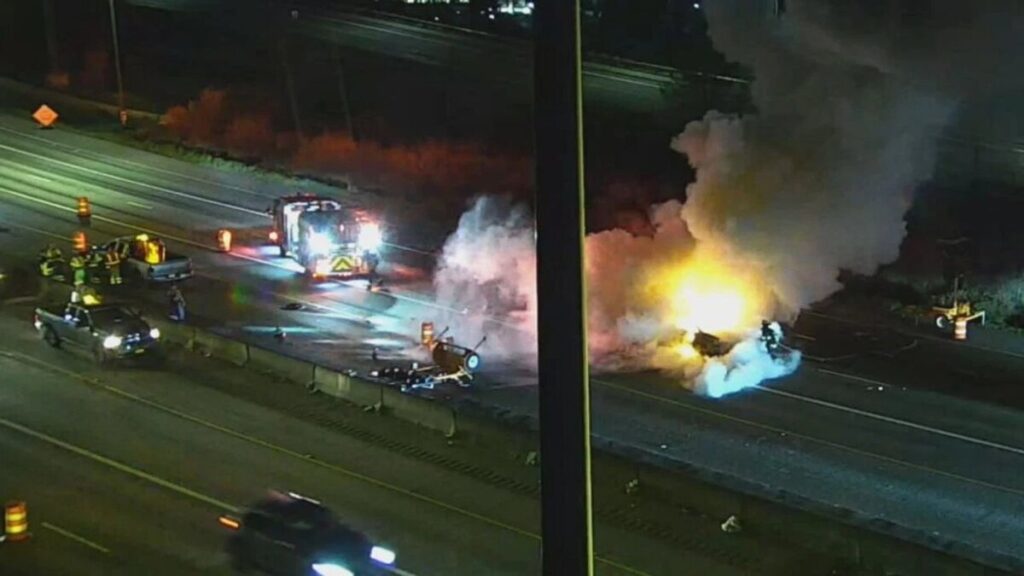
A suspected drunk driver travelled the wrong way through an active work zone on Interstate 405 in Renton overnight, narrowly missing road crews and setting his vehicle ablaze before being arrested by the Washington State Patrol. The crash happened just hours before state transportation officials gathered to honour workers killed on the job, making the timing impossible to ignore.
Flames erupted from the crashed vehicle, shutting down the southbound lanes of I-405 near State Route 167 as first responders worked to contain the fire. Road crews working in the overnight construction zone escaped without injury. The driver was taken into custody on suspicion of driving under the influence.
Later that morning, WSDOT held a memorial ceremony in which each traffic cone was marked with a white rose, one for each of the 61 agency employees killed in work zone crashes since 1950. For those gathered, the overnight incident was not a distant statistic. It was a near miss that had unfolded just hours before they stood in remembrance of colleagues who had not been so fortunate.
The human cost of work zone crashes is not lost on the people who spend their shifts on Washington’s highways. WSDOT maintenance worker Josh Quilici knows it firsthand. Injured in a work zone crash earlier this year that sidelined him for weeks, he said Sunday’s incident struck a deeply personal chord. “This wasn’t my first close call,” Quilici said. “It was the second time in three years I’d been hit by a suspected impaired driver while simply doing my job.”
The numbers behind the memorial tell a troubling story. WSDOT recorded 1,557 work zone crashes statewide in 2025, with fatal incidents rising 30% compared to 2024. The agency identified speeding, distracted driving, and tailgating as the three leading causes. Washington State Patrol Chief John Bastiste said new automated speed cameras installed in work zones detected more than 87,000 violations over the past year, a figure that underscores how frequently drivers are making dangerous choices in areas where workers are present. “Each of these tragedies are indeed preventable. These are choices people are making,” Bastiste said.
In response, WSDOT announced plans to expand its automated speed camera programme from six cameras to 15 by next year, rotating the devices through active work zones across the state in an effort to deter dangerous driving before it turns fatal.