A passenger transport vehicle collided with a docking structure at a Washington, D.C.-area airport Monday afternoon, resulting in eighteen people being transported to hospitals for treatment.
A mobile lounge, which ferries passengers between the terminal building and aircraft at Washington Dulles International Airport, struck the dock at an oblique angle at approximately 4:30 p.m. whilst approaching the building, according to the Metropolitan Washington Airports Authority.
The dock serves as the stopping point where the transport vehicle aligns to allow passengers to enter the concourse area.
All injured passengers sustained non-life-threatening injuries and received transport to medical facilities by fire department personnel, the authority reported.
“The airport is open and operating as normal,” the authority stated, indicating the incident did not disrupt overall airport operations.
Washington Dulles operates nineteen mobile lounges, each capable of carrying up to 102 passengers, according to the airport’s website. These vehicles measure approximately 54 feet (16.5 meters) in length and 16 feet (4.9 meters) in width.
The incident highlights the safety challenges inherent in airport ground transportation systems, where large vehicles must maneuver precisely to connect with fixed infrastructure whilst carrying dozens of passengers. Mobile lounges, whilst efficient for moving large numbers of people across airport tarmac areas, present unique operational risks compared to traditional jet bridges that remain stationary.
The oblique angle at which the mobile lounge struck the dock suggests either driver error, mechanical failure affecting steering or braking systems, or possibly obscured visibility that prevented the operator from accurately judging the vehicle’s position relative to the docking structure. Investigations following such incidents typically examine operator training records, vehicle maintenance logs, and whether environmental factors like weather or lighting contributed to the collision.
The timing at 4:30 p.m. places the incident during a busy period at Dulles, as afternoon flights depart and arrive carrying business travelers and tourists. The vehicle likely carried a significant passenger load, though the exact number aboard at the time of the collision has not been disclosed. The fact that eighteen people required hospital transport suggests either a substantial impact force or that a large percentage of passengers aboard sustained injuries.
The classification of all injuries as non-life-threatening provides reassurance that the collision, whilst serious enough to warrant hospitalization for eighteen people, did not result in critical trauma. Non-life-threatening injuries in such incidents typically include bruises, sprains, minor fractures, or cuts resulting from passengers being thrown against seats or interior surfaces during sudden deceleration.
The fire department’s role in transporting patients indicates a coordinated emergency response involving airport fire rescue units, which are specially trained and equipped to handle incidents on airport property. The transport of eighteen patients would have required multiple ambulances or emergency vehicles, representing a significant mobilization of regional emergency medical resources.
The authority’s statement that the airport continues operating normally suggests the incident affected only the specific mobile lounge involved and the dock it struck, without creating broader disruptions to flight operations or passenger processing. This operational continuity likely required rerouting passengers who would have used the affected dock to alternative mobile lounges or other transport methods.
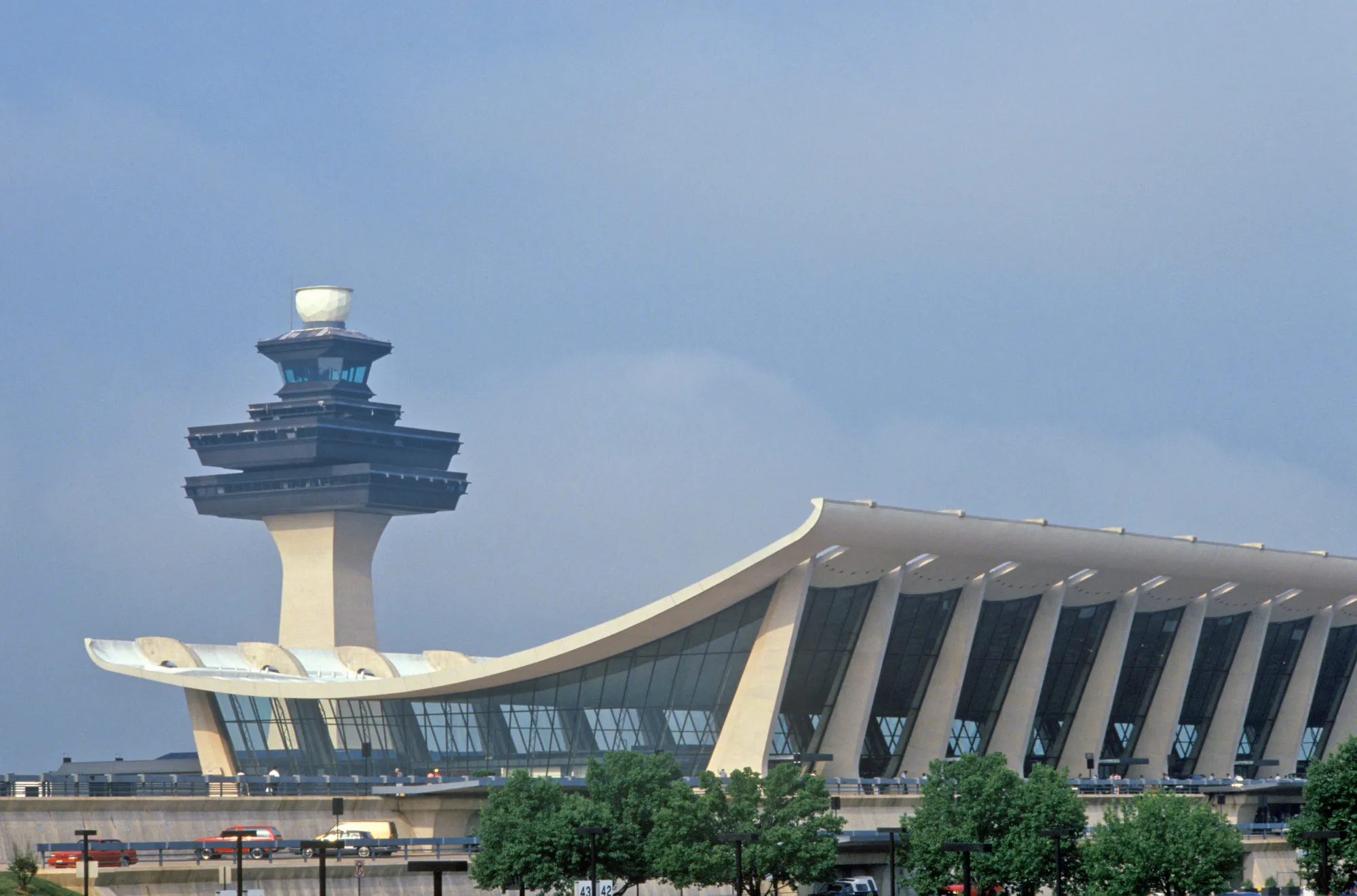
Washington Dulles’s reliance on mobile lounges, rather than the jet bridges common at most modern airports, reflects the facility’s mid-century design when architect Eero Saarinen conceived the terminal. The mobile lounge system, considered innovative when introduced, allows aircraft to park at remote positions on the tarmac without requiring passengers to board buses or walk across the airfield.
The fleet of nineteen mobile lounges at Dulles represents a substantial investment in specialized equipment that requires trained operators, regular maintenance, and replacement parts that may not be readily available given the vehicles’ unique design. The 102-passenger capacity makes each mobile lounge equivalent to roughly two standard airport buses in terms of passenger load.
The vehicles’ dimensions, 54 feet long and 16 feet wide, make them substantially larger than typical buses whilst still requiring precise maneuvering to align with docking structures. The elevated passenger compartments, which adjust hydraulically to match different aircraft door heights or terminal dock levels, add mechanical complexity that creates additional potential failure points.