Farmers across Snohomish County are racing to evacuate livestock to higher ground as the swollen Snohomish River threatens agricultural properties in the valley with potentially devastating flooding.
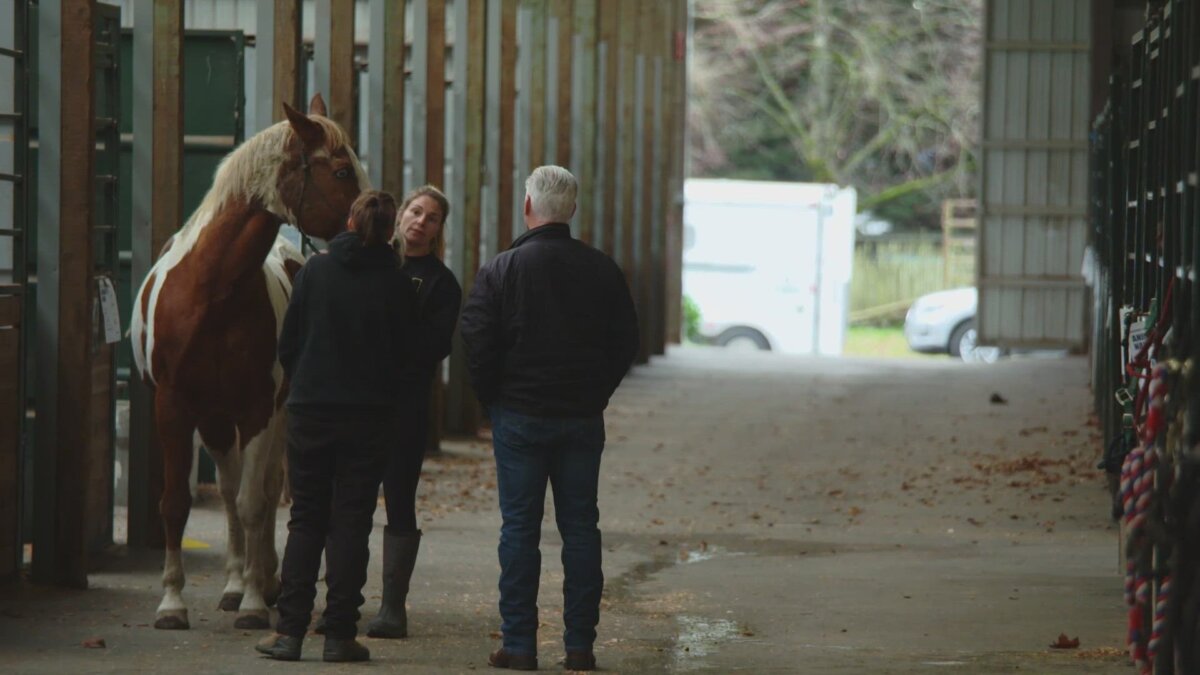
The Evergreen State Fair Park has become a refuge for hundreds of animals this week, with fairground staff working around the clock to accommodate the influx of horses, cattle, goats, and other livestock fleeing low-lying farms.
Amy Craven, a marketing specialist at the fairgrounds, said animal owners arriving with their livestock express profound relief at finding shelter during the crisis.
“They’re very thankful that they have a place that they can go to take their animals,” Craven said.
The emergency shelter has accepted animals continuously throughout the week as river forecasts grew increasingly dire. By Thursday evening, the facility had provided refuge for approximately 171 horses, 104 cows, 94 goats, 21 chickens, and various other farm animals displaced by flood threats.
While the fairgrounds have operated emergency animal shelters multiple times during Craven’s six-year tenure, the current situation dwarfs previous events in both scale and urgency.
“This is the largest one I’ve seen since I’ve been here,” Craven said.
Tuesday brought the heaviest volume of arrivals as deteriorating river conditions prompted widespread evacuations. Natascha Cooper spent that day orchestrating the relocation of approximately 20 horses from her Snohomish farm to the fairgrounds.
The exhausting operation consumed 14 hours of continuous work shuttling animals to safety.
“It was about 14 hours of going back and forth,” Cooper said. “We have some babies here that are anxious, so that took some time as well.”
Cooper’s decision to evacuate came from hard experience. While floodwaters have not yet reached her property this week, previous inundations have created nightmare scenarios that taught her never to wait until the last moment.
“One time it went to the back of the barn,” Cooper recalled. “And the other time it went almost to the roof of the barn when the levees gave out.”
Those traumatic experiences left Cooper determined to protect her animals before another catastrophe unfolds. She expressed deep appreciation for the fairgrounds’ consistent willingness to serve as an emergency shelter.
“There aren’t many places to go in states of emergencies, and they open up every time,” Cooper said. “I would do anything to get them out.”
The fairgrounds typically maintain emergency shelters for five to seven days during flood events, but Craven emphasized that staff will keep animals as long as necessary to ensure their safety.
“We also have to assess what their property looks like once the water recedes,” Craven explained. “Again, our goal is to give them a safe place until it’s safe to go home.”
The evacuation highlights the precarious position of Snohomish Valley agriculture. Farms occupy rich bottomland along the river that provides fertile soil for crops and pastures but becomes a liability during atmospheric river events.
The nearly 400 animals now sheltered at the fairgrounds represent a fraction of the valley’s total livestock population. Many more animals remain on farms where owners are monitoring conditions closely, ready to evacuate if forecasts worsen.
The variety of species seeking shelter demonstrates the diversity of agricultural operations along the river. From large dairy and beef cattle operations to small hobby farms raising goats and chickens, the flooding threat affects producers of all scales.
Cooper’s 14-hour evacuation ordeal illustrates the physical demands of moving large animals during emergencies. Each horse requires individual loading, transport in specialized trailers, and settling into unfamiliar surroundings while stressed by the chaotic situation.
Young horses, which Cooper described as “babies,” present additional challenges during evacuations. Inexperienced animals may resist loading, panic during transport, or struggle to adapt to temporary housing, requiring extra time and patience from handlers.
The past flooding Cooper described, with water rising nearly to barn roofs, demonstrates the extreme hazards animals face when trapped by rapidly rising water. Horses and cattle cannot swim indefinitely and will drown if they cannot reach dry ground or escape flooded structures.
The levee failure Cooper mentioned represents a particular nightmare scenario for valley farmers. Levees designed to protect agricultural land can breach catastrophically during extreme flood events, releasing walls of water that inundate properties within minutes.
The Evergreen State Fair Park’s infrastructure makes it uniquely suited for emergency animal sheltering. The facility maintains extensive barns, covered stalls, fenced paddocks, and feed storage that can quickly be repurposed to house evacuated livestock.
The fairgrounds’ elevated location provides safety from the very flooding threatening valley properties. While farms along the river face inundation risk, the fairgrounds sits on higher terrain immune to all but the most catastrophic regional flooding.
Staff experience managing large numbers of animals during the annual fair translates directly to emergency shelter operations. Workers familiar with animal care, feeding schedules, and facility management can rapidly accommodate hundreds of unexpected guests.
The repeated activations over six years reflect both the frequency of serious flooding in Snohomish County and the fairgrounds’ institutional commitment to community support. Each event reinforces relationships with farmers who know they can count on this resource during crises.
The current event’s unprecedented size, with nearly four times as many animals as staff typically see, reflects the severity of meteorological conditions. The atmospheric river bringing record rainfall has created flooding potential across a wider geographic area than normal events.
Craven’s emphasis on assessing properties before animals return acknowledges the complex recovery process farmers face. Receding water leaves behind mud, debris, damaged fencing, contaminated water sources, and potentially unsafe structures that must be addressed before livestock can safely return.