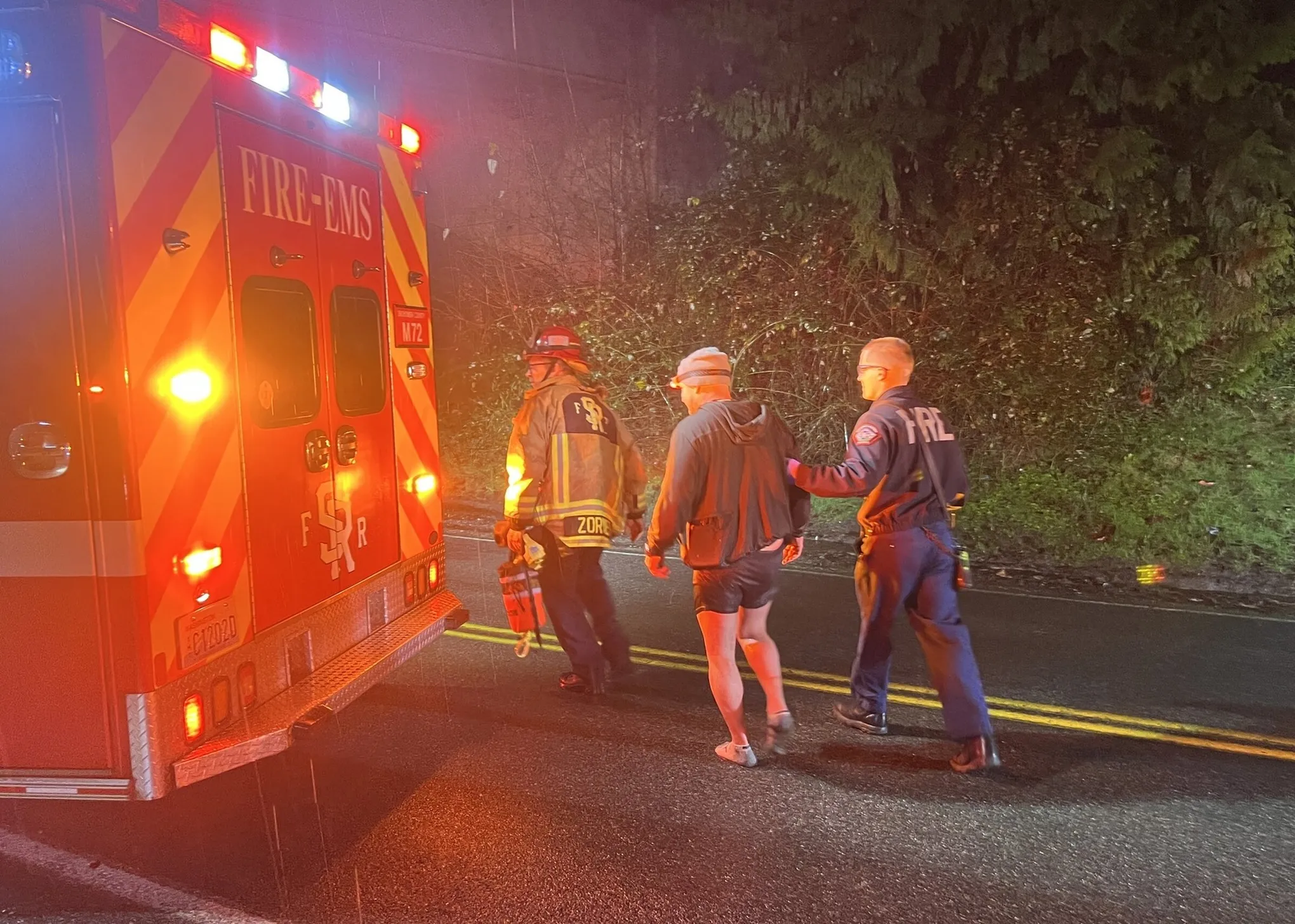
Fire crews rescued two people trapped by floodwaters near the Skykomish River in Snohomish County Monday night as heavy rainfall caused rivers across the region to surge toward flood stage.
According to fire officials, the individuals called for help just before 9 p.m. from a campsite near Levee Road, on the south side of U.S. Highway 2 between Startup and Gold Bar.
Using drones and water rescue craft, fire crews reached the pair and transported them to safety around 9:45 p.m., completing the operation in less than an hour.
Crews at the scene said it had not been determined whether either person would require hospital transport for treatment, but both were alert and communicating with fire personnel following the rescue.
According to National Oceanic and Atmospheric Administration flood forecasts, the Skykomish River was expected to reach major flood stage around 10 p.m., near the time of the rescue operation.
Gold Bar Police said officers were conducting door-to-door notifications in the Moonlight Drive neighborhood, near the Wallace River, to warn residents of potential flooding hazards.
The late-night rescue highlights dangers that campers and outdoor enthusiasts face during atmospheric river events bringing heavy rainfall to western Washington. Rivers can rise rapidly, trapping people in low-lying areas and campsites along riverbanks.
The Levee Road location places the campsite in an area vulnerable to Skykomish River flooding. Levees provide some flood protection but can be overtopped or breached during major events, creating dangerous conditions.
The south side of Highway 2 between Startup and Gold Bar includes undeveloped land and informal camping areas that people use for recreation. These locations offer river access but lack the safety infrastructure of established campgrounds.
The 9 p.m. call for help indicates the individuals recognized their dangerous situation as darkness fell and water continued rising. Calling for assistance before conditions became more severe likely prevented a more difficult rescue.
Drone technology has transformed water rescue operations by allowing responders to locate victims, assess conditions, and plan approach routes before deploying personnel into hazardous environments. Aerial views show water depth, current speed, and safe paths.
Water rescue craft designed for flood conditions can navigate swift currents and debris-filled water that would be impassable for standard boats. These specialized vessels protect rescuers while allowing them to reach stranded individuals.
The 45-minute rescue timeline from initial call to extraction demonstrates efficient coordination between dispatch, rescue teams, and on-scene personnel. Rapid response prevents hypothermia and other complications from extended exposure.
The assessment that both individuals were alert and talking indicates they likely avoided serious injury or severe hypothermia. However, flood victims can experience delayed medical issues requiring monitoring even when initially appearing unharmed.
The NOAA forecast predicting major flood stage at 10 p.m. meant the river would inundate areas well beyond normal banks, threatening structures and infrastructure in the floodplain. Major flood stage represents the highest category of river flooding.
The Gold Bar Police door-to-door notifications in the Moonlight Drive neighborhood demonstrate proactive evacuation warnings. Officers personally contacting residents ensures message delivery to people who may not monitor weather alerts or emergency notifications.
The Wallace River location of the Moonlight Drive neighborhood indicates a different waterway than where the rescue occurred, showing flooding threatened multiple areas simultaneously. The Wallace River flows into the Skykomish, and both were rising.
Door-to-door warnings allow officers to assess resident intentions, provide specific evacuation guidance, and identify vulnerable individuals who may need transportation assistance. This personal contact proves more effective than general alerts.
The Monday night timing meant darkness complicated both the rescue operation and evacuation warnings. Nighttime evacuations pose additional risks as people navigate unfamiliar routes in low visibility.