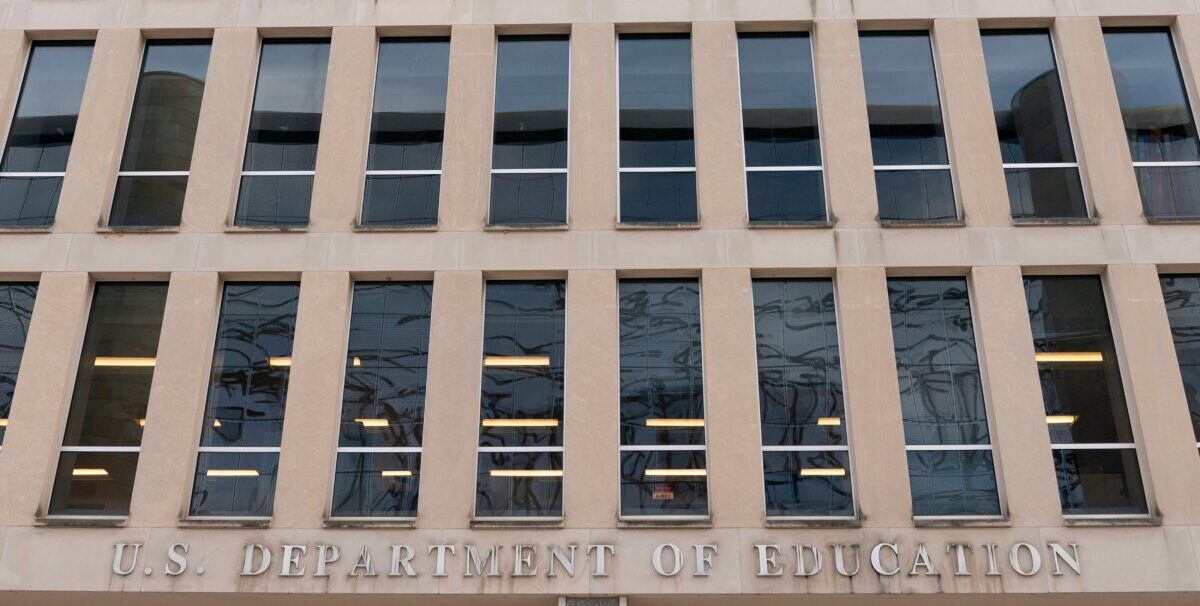
Four Washington school districts, Cheney, Sultan, Tacoma, and Vancouver, are under investigation by the U.S. Department of Education’s Office for Civil Rights for allegedly allowing students to join sports based on gender identity rather than biological sex, which the federal government claims discriminates against women and girls. The districts are among 18 entities in 10 states facing Title IX investigations announced Wednesday, with Assistant Secretary for Civil Rights Kimberly Richey stating “we will leave no stone unturned in these investigations to uphold women’s right to equal access in education programs.” Vancouver Public Schools confirmed Thursday it was notified of the investigation but is “unable to provide further comment while the investigation is pending,” while the announcement came the same week the Supreme Court heard oral arguments on the future of Title IX, indicating the Trump administration is aggressively pursuing policies that reinterpret Title IX protections as requiring exclusion of transgender girls from girls’ sports rather than as prohibiting discrimination based on gender identity.
The framing that allowing transgender girls to participate in girls’ sports “discriminates against women and girls” represents fundamental reinterpretation of Title IX that reverses Obama and Biden administration guidance. Those previous administrations interpreted Title IX’s prohibition on sex discrimination to include gender identity discrimination, meaning schools that excluded transgender students from facilities, activities, or sports consistent with their gender identity were violating Title IX. The Trump administration’s Department of Education now argues the opposite: that including transgender girls in girls’ sports violates Title IX by discriminating against cisgender girls. That 180-degree reversal creates legal uncertainty for school districts that must navigate conflicting interpretations of federal civil rights law depending on which administration is in power.
The four Washington districts under investigation, Cheney near Spokane, Sultan in Snohomish County northeast of Seattle, Tacoma in Pierce County, and Vancouver in Clark County, represent geographic diversity across Eastern and Western Washington, urban and suburban communities, suggesting complaints were filed by organized groups targeting multiple districts rather than isolated local disputes. Whether the complaints came from students, parents, advocacy organizations, or political groups affects interpretation of whether these represent genuine grassroots concerns about competitive fairness or coordinated campaign to force policy changes aligned with conservative positions on transgender issues.
The Washington School Directors’ Association has provided guidance that districts should generally allow transgender students to participate in activities consistent with their gender identity, following state anti-discrimination laws that include gender identity as protected category. Washington’s Law Against Discrimination prohibits discrimination based on gender identity in public accommodations including schools. That creates tension between state law requiring inclusion and federal investigations suggesting inclusion violates federal law, forcing districts to choose between complying with state requirements and avoiding federal sanctions.
The practical reality is that very few transgender girls participate in school sports in any given district. Studies consistently show that transgender students represent roughly 0.5% to 1% of adolescent populations, and only a fraction of those students participate in athletics, meaning most schools have zero or maybe one transgender girl seeking to play on girls’ teams. The political attention and federal investigations are disproportionate to the actual frequency of situations where transgender athletes’ participation affects competitive outcomes or other students’ opportunities. That disproportion suggests the issue functions more as culture war flashpoint than as widespread policy problem requiring federal intervention.
The claims about competitive advantage assume that transgender girls inherently have physical advantages over cisgender girls that make competition unfair. But that assumption ignores several complicating factors: transgender girls who begin hormone therapy before or during puberty don’t develop typical male physical characteristics; athletic performance varies enormously within sex categories with many cisgender girls outperforming many cisgender boys; sports already accommodate wide variation in physical characteristics without requiring everyone to compete in identical circumstances; and many transgender girls have been on puberty blockers or hormone therapy for years, potentially eliminating or significantly reducing any theoretical advantages from natal sex.
The investigation timing, announced the same week the Supreme Court heard oral arguments on Title IX’s future, is clearly coordinated political messaging. The Trump administration is using multiple pressure points, federal investigations of school districts, Justice Department briefs in Supreme Court cases, proposed federal regulations, to push its interpretation of Title IX as requiring exclusion of transgender students from single-sex spaces and activities. Whether courts accept that interpretation or maintain precedent that Title IX prohibits gender identity discrimination affects not just athletics but also bathroom and locker room policies, housing assignments, and other aspects of school operations.
For the school districts under investigation, the process involves responding to complaints, providing documentation about policies and specific situations involving transgender athletes, potentially being required to change policies or face loss of federal funding, and defending decisions that comply with state law while federal government claims they violate federal law. Districts spend significant staff time and potentially legal fees responding to investigations that might ultimately be dismissed if courts rule against the administration’s interpretation or if future administrations reverse course again.
The reference to “upholding women’s right to equal access in education programs” frames transgender inclusion as threat to women’s opportunities, echoing arguments from some feminist organizations that transgender women’s participation in women’s sports undermines Title IX’s original purpose of ensuring girls and women have equal athletic opportunities. That position has been contested by other feminist organizations and civil rights groups who argue that excluding transgender women and girls from women’s spaces and activities is sex discrimination that Title IX prohibits, and that true equality requires inclusion of all women and girls regardless of transgender status.
The 18 entities in 10 states facing investigations suggests this is coordinated national campaign rather than organic response to local situations. Conservative legal organizations have explicitly stated their strategy of filing complaints in multiple jurisdictions to create test cases, impose costs on districts implementing inclusive policies, and pressure schools to adopt exclusionary policies even before legal questions are definitively resolved. Whether that strategy succeeds in changing school policies or whether districts maintain inclusive approaches despite federal pressure depends on local political dynamics, legal advice about compliance obligations, and willingness to risk federal sanctions.
For transgender students in the four Washington districts, the investigations create hostile environment regardless of outcomes. Having federal government investigate whether your participation in school activities constitutes discrimination against other students sends message that your existence is problem requiring federal intervention. That messaging affects mental health and sense of belonging for vulnerable population that already experiences elevated rates of depression, anxiety, and suicidal ideation. Whether investigations find violations or not, the process itself harms transgender students by signaling their participation is controversial federal matter rather than routine school policy.
The Cheney School District, in Eastern Washington’s more conservative political environment, might face different local pressures than the three Western Washington districts in areas generally more supportive of LGBTQ rights. Whether districts in different political contexts respond similarly or differently to federal investigations affects whether national culture war issues produce uniform results or whether regional variation persists despite federal pressure.
Sultan School District, serving relatively small community northeast of Seattle, likely has very few if any transgender students participating in athletics, making federal investigation seem particularly disproportionate. When districts with minimal or no actual situations involving transgender athletes face investigations based on policies rather than specific competitive fairness complaints, it reveals that investigations target policies themselves rather than responding to actual harms experienced by cisgender girls.
Tacoma Public Schools, as large urban district, probably has more transgender students than smaller districts but still represents tiny fraction of total athletic participation. The district serves diverse community including significant communities of color, military families from Joint Base Lewis-McChord, and varying socioeconomic backgrounds, making one-size-fits-all policies challenging and requiring careful navigation of competing values and legal requirements.
Vancouver Public Schools’ Thursday response that it’s “reviewing the allegations” but “unable to provide further comment while the investigation is pending” represents careful public relations approach that avoids either defending policies that federal government is challenging or abandoning transgender students by immediately changing policies under pressure. Districts face difficult communications challenges when federal investigations create public controversy over policies that previously weren’t widely contested locally.
The Supreme Court oral arguments on Title IX’s future that occurred the same week as investigation announcements involve cases about whether Title IX requires schools to allow transgender students to use facilities and participate in activities consistent with their gender identity. How the Court rules affects whether the Trump administration’s investigations have legal foundation or whether they represent federal overreach contradicting Title IX’s actual requirements. A ruling that Title IX doesn’t protect against gender identity discrimination would validate investigations. A ruling that it does would undermine them.
For Washington State’s political leadership, including Governor Ferguson, Attorney General-elect Nick Brown, and state education officials, these federal investigations create state-federal conflict where Washington law requires inclusion that federal government claims violates federal law. Whether state officials defend districts against federal investigations, provide legal support, or pressure districts to comply with federal demands affects how conflicts are resolved and whether state or federal law prevails in practice.
The broader question is whether excluding transgender girls from girls’ sports actually protects opportunities for cisgender girls or whether it simply discriminates against vulnerable population for political purposes. Proponents of exclusion argue that allowing transgender girls to compete creates unfair advantages that deny cisgender girls opportunities to win, receive scholarships, or gain recognition. Opponents argue that vanishingly few transgender girls participate in sports, that those who do rarely dominate their competitions, that individual physical variation within sex categories dwarfs any theoretical sex-based advantages, and that exclusion harms transgender girls far more than inclusion harms anyone else.
The four Washington school districts now face months or potentially years of federal investigation, uncertainty about policy direction, potential loss of federal funding if found in violation, and political controversy in their communities regardless of how they respond. Whether investigations ultimately change policies, get dismissed as legally unfounded, or become moot due to court rulings or future administration changes, the process itself imposes costs on districts and harms to transgender students that persist regardless of eventual outcomes. For now, Cheney, Sultan, Tacoma, and Vancouver find themselves at the center of national culture war over transgender rights, Title IX interpretation, and the question of whether inclusion or exclusion better serves the goal of equal educational opportunity for all students.