Governor Bob Ferguson has declared an emergency proclamation following the shutdown of the Olympic Pipeline after a fuel leak near Everett disrupted jet fuel transportation to Seattle-Tacoma International Airport.
On Wednesday, Ferguson announced the shutdown had interrupted jet fuel transportation to SEA Airport. The proclamation ensures adequate fuel supplies can be delivered to SEA Airport whilst the Olympic Pipeline remains offline.
“We are in close communication with our state and federal partners,” Ferguson stated. “This declaration will help the airport maintain its fuel supply whilst the pipeline is offline and limit disruptions to travellers.”
The Olympic Pipeline system, a crucial 400-mile network transporting refined petroleum products across the Pacific Northwest, has been temporarily shut down following a recent incident, BP Pipelines North America, Inc. confirmed Wednesday.
The 16-inch pipeline, which had resumed operations early on Sunday after a successful leak test, was halted again on Monday afternoon, according to BP. This decision was made to investigate an increase in product observed at a collection point within the response site.
According to the Department of Ecology, “Whilst doing cleanup, responders came across some additional product which was reported to us as diesel. Out of caution, BP shut down the line.”
Response crews have started excavation of the pipelines to facilitate a thorough visual inspection, BP stated. However, a timeline for the completion of repairs remains unavailable.
Further updates will be provided as more information becomes available, according to BP.
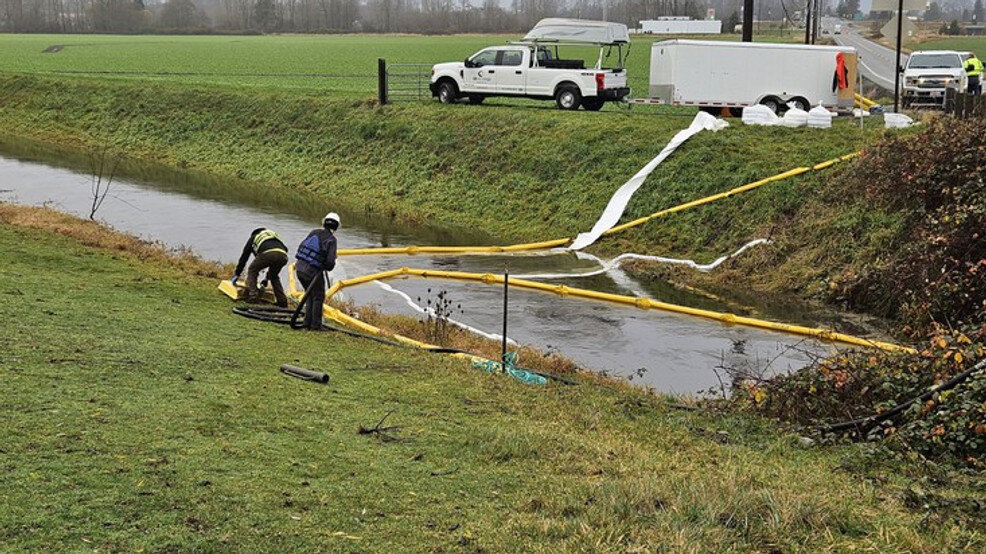
The recent release was initially reported after a sheen was discovered in a drainage ditch in a field. Responders have deployed boom and oil recovery equipment to contain and clean up the released product, though the exact amount of released and recovered product is still being assessed, according to BP.
The Olympic Pipeline, which runs from Whatcom County, Washington, to Portland, Oregon, plays a vital role in delivering petrol, diesel, and jet fuel to key locations, including Seattle, SeaTac, Tacoma, and Vancouver, Washington, as well as Portland, Oregon.
In a statement, the Port of Seattle indicated they are aware of a continued disruption to the Olympic Pipeline that provides fuel around the region, including to SEA Airport.
Aircraft fuelling is managed by the airlines, and there are no impacts to flights at this time. As the situation evolves, SEA operations is working closely with airline partners and Washington state departments on contingency plans.
Additionally, travellers should continue to check with their airlines for the status of their specific flight.
Governor Ferguson’s emergency proclamation following the Olympic Pipeline shutdown reflects the critical importance of pipeline infrastructure to regional transportation systems and the economic disruption that can result when key fuel distribution networks experience failures requiring emergency governmental intervention to ensure continuity of essential services.
The Olympic Pipeline’s role as a 400-mile network transporting refined petroleum products from refineries in Whatcom County to population centres throughout the Puget Sound region and into Oregon makes it essential infrastructure with limited redundancy. When the pipeline shuts down, alternative fuel delivery methods including trucking and rail become necessary but cannot immediately replace the volume and efficiency of pipeline transportation, creating supply constraints that threaten aviation operations, commercial transportation, and consumer fuel availability.