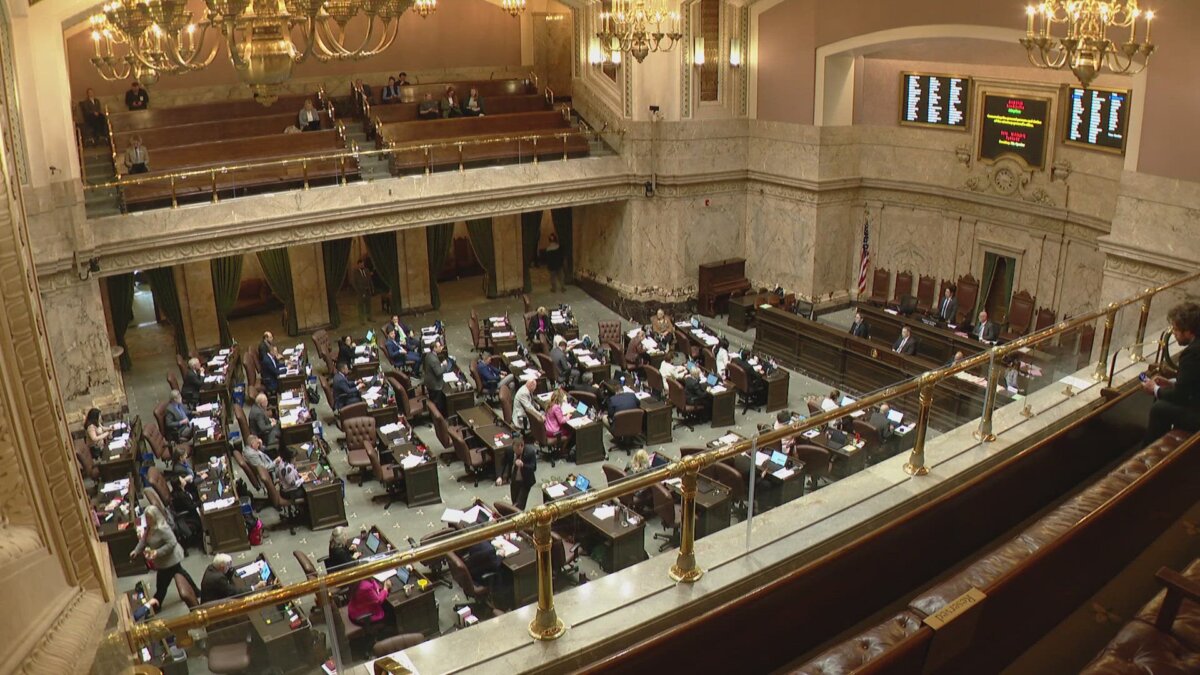
The Washington House approved a 9.9% income tax on earnings above $1 million after more than 24 hours of continuous debate, bringing the state closer to implementing its first broad-based income tax despite fierce opposition from Republicans, business groups, and eight Democrats who broke ranks.
The measure would affect approximately 30,000 Washington households and generate roughly $4 billion annually for the state’s general fund starting in 2029, according to the Washington State Budget and Policy Center. The vote came after lawmakers waded through dozens of proposed amendments in what Rep. Brianna Thomas from West Seattle called “24 hours of uninterrupted Thunderdome” before the final roll call.
Supporters framed the tax as necessary to fund services that benefit working families while making wealthy residents contribute what they called their fair share. “It’s going to help feed our people. It’s going to provide behavioral health. It’s going to fill the gaps,” said Rep. Lisa Parshley from Olympia. The revenue would expand the working families tax credit to 460,000 additional homes and fund free breakfast and lunch for all K-12 students, according to Gov. Bob Ferguson, who called the vote “historic” in a statement.

Opponents warned the tax represents the first step toward a broader income tax that could eventually hit middle-class earners and drive businesses out of Washington. “This is not a tax on millionaires. This is a tax on all of us. It’s just a matter of when,” said Rep. Joshua Tenner from Orting. Rep. Jim Walsh from Aberdeen raised concerns about long-term economic consequences. “I’m deeply concerned that by changing our traditions, and changing our taxes and changing our culture, we are going to chase the next revolution away,” Walsh said.
Eight Democrats joined all House Republicans in voting against the measure, suggesting unease about the policy even within the majority party. The defections highlighted divisions over whether Washington should abandon its longstanding rejection of income taxes, which voters have turned down at the ballot box 10 times since the 1930s. Critics argue the state constitution treats income as property and therefore requires uniform taxation, setting up what could become a Supreme Court battle if the law passes.
Business organizations issued a joint statement condemning the tax as harmful to Washington’s economic competitiveness. The Washington Roundtable, Association of Washington Business, Seattle Metropolitan Chamber of Commerce, Bellevue Chamber of Commerce, and Greater Spokane Inc. wrote, “With the House and Senate having passed the first ever income tax in Washington state, and Governor Ferguson having indicated he will sign it, the business community continues to urge state leaders to work towards a sustainably managed budget and a tax code that will ensure Washington’s competitiveness.”
The Senate could vote on the measure as early as Wednesday. If senators approve it, the bill heads to Ferguson’s desk, where he has pledged to sign it into law. Ferguson said the tax would apply to less than one half of one percent of state residents while making life “more affordable for millions.” The vote ended with cheers from supporters on the House floor, though opponents promised to continue fighting through possible legal challenges and citizen initiatives to repeal the tax.