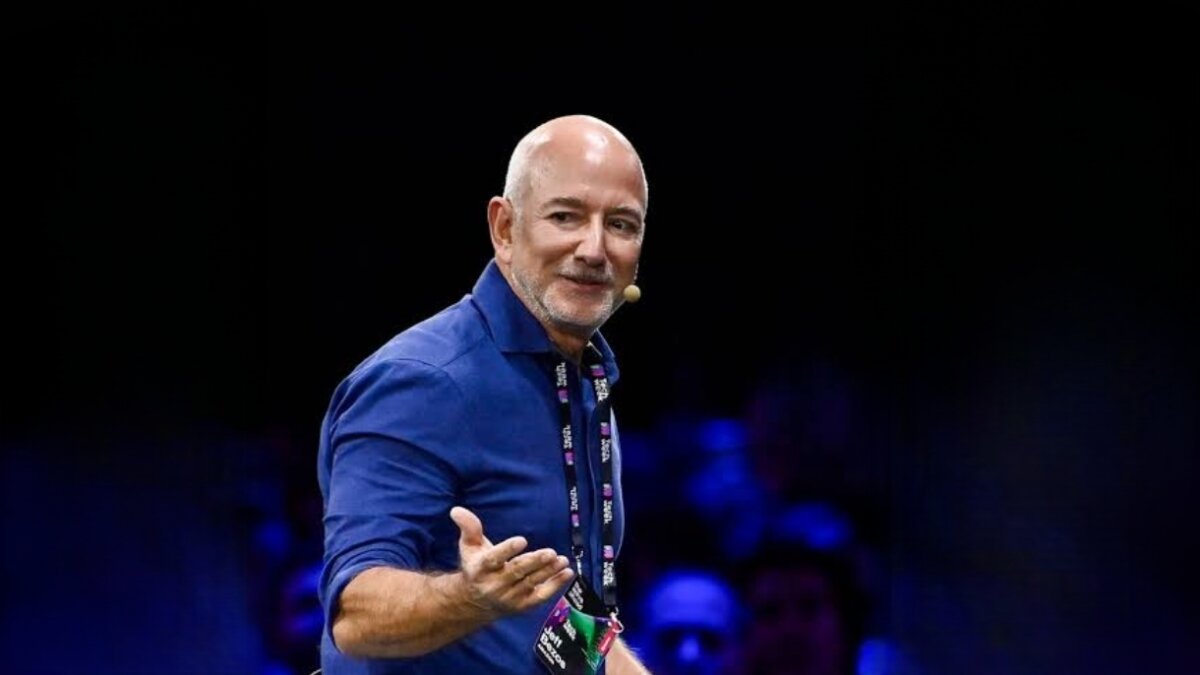
Jeff Bezos is targeting as much as $100 billion for a new fund that would acquire manufacturing companies and employ AI to automate their operations, entering the ultra mega-fund arena where SoftBank’s Vision Fund experience demonstrates the difficulty of deploying massive capital without undercutting returns.
Raising such a behemoth vehicle is one thing, but deploying that capital without undercutting returns is quite another. This is a reality that SoftBank, whose first two Vision Funds are the largest private funds ever raised, knows well. Vision Fund I held its first close in 2017, with commitments totaling just under $100 billion. The Japanese bank and its CEO, Masayoshi Son, said at the time that the fund “was created as a result of SoftBank’s strongly held beliefs that the next stage of the Information Revolution is underway, and building the businesses that will make this possible will require unprecedented long-term investment.”
While SoftBank has achieved some successes, investing in companies such as OpenAI and chip designer Arm, it has also experienced high-profile failures, including booking a loss of more than $14 billion due to the bankruptcy of shared office space provider WeWork. The Vision Fund series posted a $32 billion loss in the 2023 fiscal year after the bankruptcy.
After posting an annual profit in 2020, SoftBank did not do so again until March 2025. Its second Vision Fund held a final close on $65.8 billion in December 2019, a huge amount but around 33% down from its predecessor. Nearly nine years after Vision Fund I launched, it has returned just 0.61x investors’ initial commitments, according to PitchBook data.

Signing onto large mega-funds comes with its own set of risks: the potential for infighting within a larger general partnership, a heightened need for category-defining exits and a tendency to overpay on deals. If a mega-fund fails to cinch huge winners, a few big losses can have a particularly damaging effect on its overall returns, according to Steven Buibish, PitchBook’s director of US private equity research.
Such losses could be especially acute given the rapid and unpredictable development of AI. “There are a lot of AI-backed companies, but there’s more capital than there is realized returns, and it is an unanswered question for ultra mega-funds in particular of where this is going,” said Michael Ewens, a Columbia Business School professor of finance. “In private markets, especially in the growth and startup space, it’s not obvious where the opportunities are.”
Mega-funds have been backing a relatively small number of unicorns with hundreds of millions or even billions of dollars at a time. There is, however, a risk that these companies will become overcapitalized, as was the case with some companies added to SoftBank’s portfolio during the last tech boom. “There is a tension in raising too much money, because you become a victim of your own valuation,” Ewens said.
On the private equity side, deploying capital at the top end of the scale can create structural challenges, considering there are only so many viable large private company targets, said Buibish. Ultra mega-funds can become reliant on a favorable IPO market, which is susceptible to volatility spikes, such as those brought on by tariffs and geopolitical turmoil this past year. “There needs to be a clear plan to execute and be prepared for an exit quickly if the market is open, otherwise you may be stuck holding a huge asset for much longer than you’d like,” Buibish said.