A man wanted for sexual assault and domestic violence in Seattle triggered an early-morning standoff in Kent on Wednesday after pointing a handgun at officers who came to arrest him.
The confrontation began around 3:14 a.m. when Seattle police requested assistance from Kent officers to locate a suspect believed to be inside his apartment in the 11100 block of Southeast 208th Street. Kent officers arrived and spotted the suspect’s vehicle parked outside, confirming his likely presence.
When officers knocked on the apartment door, the man quickly opened it and pointed a handgun directly at the officers, according to Kent police. One officer fired a single shot in response to the immediate threat. The suspect then retreated back inside and shut the door. No officers were injured in the exchange.
Police established a perimeter and called in Valley SWAT to manage the barricaded suspect situation. Officers used loudspeakers attempting to persuade the man to surrender peacefully. Although he looked outside at them, he refused to respond to commands.
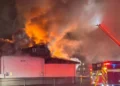
A short time later, the suspect’s mother came out of the apartment and informed officers he was still inside, alone. Soon after, smoke began drifting from the unit. She confirmed the sprinkler system had activated inside the apartment.
Fire crews from Puget Sound Fire Authority responded to the scene. Investigators later determined a small fire had occurred inside the apartment. As a precaution, officers evacuated neighboring units.
Officers continued negotiating with the suspect throughout the standoff. At 5:53 a.m., more than two hours after the initial confrontation, the man finally exited the apartment but did not comply with commands to surrender.
A police K9 was deployed to apprehend him, and officers took the 48-year-old Kent man into custody. Police said he was not struck by the officer’s gunfire but did sustain injuries from the K9 bite.
The Valley Independent Investigative Team was called to handle the investigation, following standard protocol when officers discharge weapons.
The pre-dawn timing of the warrant service reflects common law enforcement practice of approaching suspects when they are likely home and fewer bystanders are present. Early morning operations reduce risks to neighbors but require officers to work in darkness with heightened alertness.
The suspect’s immediate response of pointing a weapon created a deadly force situation requiring split-second officer decisions. Firearms training emphasizes threat assessment and appropriate responses when weapons are pointed at officers or others.
The single shot fired demonstrates measured response despite extreme danger. Officers receive training to use minimum necessary force, though situations involving weapons pointed at police typically justify lethal response.
The suspect’s choice to retreat inside rather than continue threatening officers transformed an active shooting situation into a barricaded suspect standoff. This tactical shift allowed time for specialized resources to arrive and de-escalation attempts.
Valley SWAT brings specialized training and equipment for managing barricaded suspects. These tactical teams handle situations too dangerous or complex for patrol officers, including armed subjects refusing to surrender.
Loudspeaker negotiations represent standard de-escalation techniques. Crisis negotiators attempt verbal persuasion to achieve peaceful resolution without additional force, even when suspects initially refuse to respond.
The suspect looking outside but remaining silent indicated awareness of police presence without willingness to comply. This partial engagement suggested some level of rational decision-making despite refusal to surrender.
The mother’s exit provided critical intelligence that no hostages or other occupants remained inside. This information allowed tactical teams to focus on apprehending one individual rather than managing potential hostage scenarios.
The smoke and activated sprinkler system introduced urgent complicating factors. Fire in occupied structures creates immediate life safety concerns requiring coordination between law enforcement and fire personnel.
Puget Sound Fire Authority’s response addressed potential fire spread and ensured the building remained structurally sound during the standoff. Firefighters cannot enter active tactical scenes without law enforcement clearance due to safety concerns.
The neighboring unit evacuations protected residents from multiple hazards including fire, potential gunfire penetrating walls, and tactical operations. Displaced residents likely waited in temporary locations until the situation resolved.
The two-hour-plus duration represents relatively quick resolution for barricaded suspect situations. Some standoffs extend many hours or even days as negotiators work to achieve peaceful surrender.
The suspect’s final exit without following surrender commands meant officers still faced uncertain danger. His refusal to comply with instructions prevented officers from confirming he was unarmed before approach.
K9 deployment provided less-lethal force option for controlling a non-compliant suspect. Police dogs can quickly apprehend subjects while reducing close-quarters risks to officers, though bites cause injury.
The suspect now faces multiple charges beyond the original Seattle warrants. Pointing weapons at officers, creating a standoff, and other actions during the incident add serious felonies to his legal troubles.
The Valley Independent Investigative Team’s involvement ensures objective review of the officer-involved shooting. Independent investigations help maintain public trust when officers use force, particularly firearms.