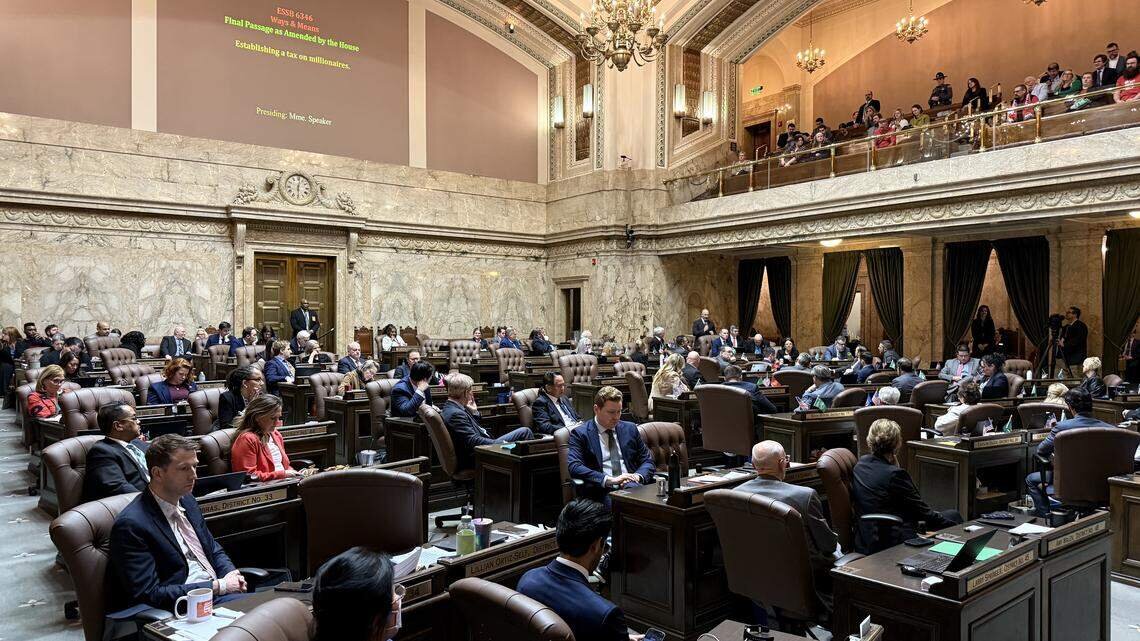
The fight over Washington’s first income tax is just getting started after the Legislature passed the bill March 11 and sent it to Gov. Bob Ferguson’s desk, with legal experts predicting an almost certain court challenge that could reach the state Supreme Court.
Former Attorney General Rob McKenna believes the case will end up before the state Supreme Court because the state Constitution currently views income as “property.” Under that interpretation, any tax on income must be uniform and cannot exceed 1%. The new bill would impose a 9.9% tax on households making over $1 million per year, but only on earnings above that threshold.
To make such a tax constitutionally permissible, McKenna says the state needs to amend the Constitution through a public vote. He argued that Democrats avoided that path because they feared voters would reject it, instead hoping the Supreme Court will reinterpret how the Constitution treats income. Washington voters have rejected income tax proposals 10 times since the 1930s.
If the tax survives court battles, it could open the door for additional changes. Critics worry this could lead to income taxes at the city level in Seattle or at the county level across the state, creating a patchwork of local income taxes on top of the state levy.
Republicans warn that high taxes might drive wealthy residents and business owners out of Washington. The timing of former Starbucks CEO Howard Schultz’s announcement that he relocated to Miami the same day the House passed the tax fueled speculation about capital flight. Business groups including the Association of Washington Business and Seattle Metropolitan Chamber of Commerce have already condemned the measure.
The legal challenge will likely center on whether the Supreme Court upholds decades of precedent treating income as property or adopts a new interpretation that would allow graduated income taxes without a constitutional amendment. The court’s composition has changed significantly since it last addressed income tax questions, potentially shifting how justices might rule on the issue.