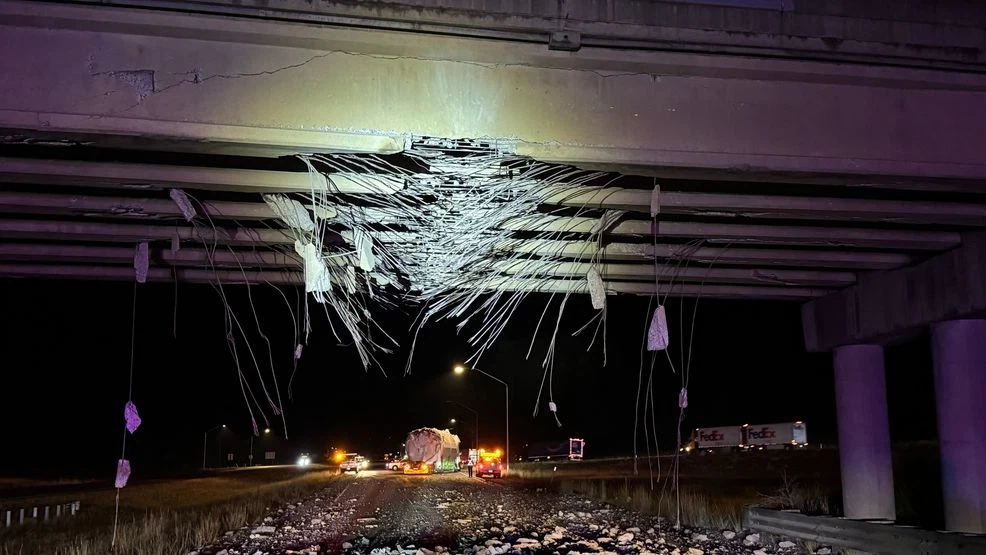
Drivers on northbound SR 167 have been restricted to one lane since one of the overpasses at Third Avenue Southwest was struck by an over-height vehicle in September.
WSDOT indicates permanent repairs will commence on 19 November.
However, that will require an overnight closure of all northbound lanes between Stewart and Ellingson roads.
Following that, drivers will continue dealing with just one northbound lane until the work is completed.
The duration remains unknown, but work will proceed 24 hours daily, seven days weekly, until finished.
On I-90, WSDOT quickly demolished part of an overpass damaged by an oversised load in October. There is now a missing section of the overpass at Bullfrog Road near Cle Elum.
Work on replacing that section will begin by the end of the month.
WSDOT indicates short-term full closures of westbound I-90 will be required during the construction process, and they could occur day or night.
Work is expected to be completed by January.
The near-simultaneous bridge repair projects on SR 167 and I-90 highlight the persistent problem of over-height vehicle strikes damaging highway infrastructure across Washington, incidents that create substantial repair costs, traffic disruptions, and safety hazards whilst revealing gaps in commercial vehicle compliance and route planning systems.
The September strike on the Third Avenue Southwest overpass above northbound SR 167 has already imposed two months of lane restrictions on a critical freight and commuter corridor connecting Tacoma, Renton, and points south to Seattle and eastside employment centres. The reduction from multiple lanes to a single northbound lane creates bottlenecks that amplify congestion during peak periods, extending commute times and reducing highway capacity at a chokepoint where traffic volumes regularly exceed design thresholds.
WSDOT’s announcement that permanent repairs beginning 19 November will require overnight closure of all northbound lanes between Stewart and Ellingson roads reflects the impossibility of safely conducting structural repairs whilst maintaining traffic flow beneath active construction. The complete closure, whilst disruptive, enables contractors to work efficiently without traffic management constraints that slow progress and increase worker exposure to passing vehicles.
The continuation of single-lane restrictions even after the overnight closure indicates the repair process involves multiple phases where full lane restoration cannot occur until specific structural elements are completed. Bridge repairs typically progress through sequences including damage assessment, temporary support installation, damaged element removal, replacement component fabrication and installation, concrete curing, and final inspection before lanes can safely reopen.
The indefinite timeline coupled with 24-hour, seven-day work schedules demonstrates WSDOT’s commitment to minimising disruption duration through intensive construction efforts rather than standard business-hours operations. Around-the-clock work, whilst more expensive due to night shift premiums and lighting requirements, can reduce project duration by 50% or more compared to daytime-only schedules, ultimately decreasing total economic impact on commuters and freight operations.
The I-90 incident near Cle Elum, where WSDOT rapidly demolished the damaged overpass section at Bullfrog Road following an October strike by an oversised load, illustrates the immediate safety response required when structural integrity is compromised. The quick demolition prevents potential collapse that could cause catastrophic consequences if damaged elements fell onto the interstate carrying high-speed traffic including heavy trucks.
The missing overpass section creates a visually dramatic gap in the structure crossing I-90, serving as a stark reminder of the forces involved when oversised vehicles contact bridges designed with specific clearance heights that commercial operators are obligated to respect. The damage severity requiring complete section replacement rather than repair indicates the impact transferred enormous energy into structural elements, causing failures beyond field remediation capacity.